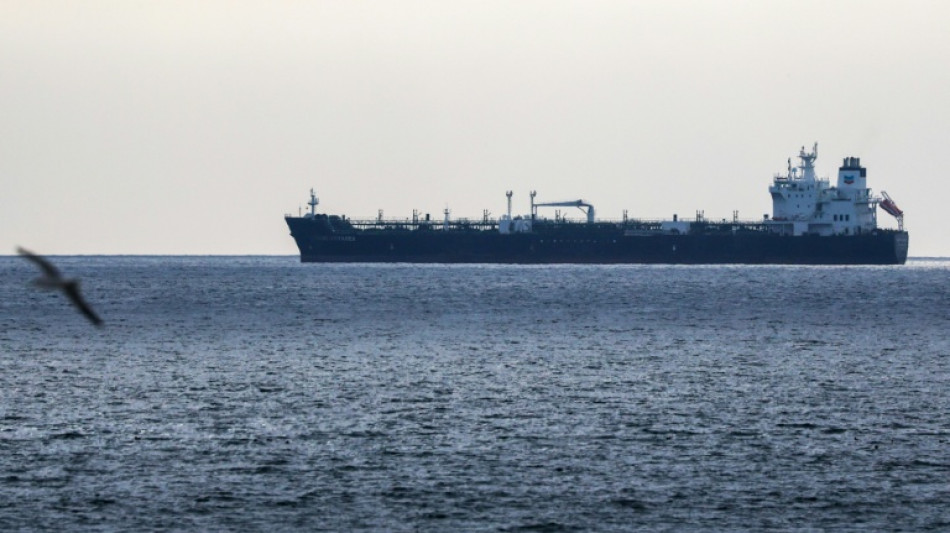
Moscow pushes US to ease more oil sanctions / Photo: Patrick T. Fallon - AFP

 Bank of Japan hikes rates to 31-year high to battle inflation

 AI doomsday warnings unlikely to slow IPOs but questions linger

 In Brazil's Amazon, the hunt for oil fuels hopes and fears

 Baby orangutans in India expose 'frightening' scale of trafficking

 Oversight Board blasts 'inadequate' Meta safeguards for AI deepfakes

 Harry makes first public appearance since return to UK

 Princess Diana's brother makes new explosive claims against Charles

 Trump admin overhauls key protection for endangered species

 Mbappe draws political fire over Ceuta t-shirt controversy

 Third malaria death in Germany from outbreak tied to Frankfurt airport

 AtlasClear Holdings Reports Preliminary Fiscal 2026 Revenue of Approximately $20.1 Million, Up 85%; Revenue Plus Interest Income of Approximately $21.9 Million

 'Another arrow to the quiver': World Bank posts record private capital mobilization

 Ireland to boycott Eurovision 2027 over Gaza

 India's Tata Sons reappoints N. Chandrasekaran as chairman

 Germany urges EU action against China to defend carmakers

 Japan eyes changing prostitution law to punish sex buyers

 Modi pitches India as global chipmaking hub

 Ukraine plans record defence spending in 2027

 NASA scan discovers new, 'once in a century' Moon crater

 Most stocks rise as Fed hikes and indicates drive to curb inflation

 UK-Sudanese author pens book to give children 'African history of Africa'

 Argentine judge orders suspension of Falklands oil project

 US Fed raises rates to tackle 'too high' inflation, irking Trump

 Turkey releases 106 protesters, jails more LGBTQ activists

 Candidate for UN chief calls for AI regulation akin to nuclear weapons

Moscow on Friday urged the United States to lift more sanctions on its oil exports to stabilise the global energy markets, upended by the war in the Middle East.
The United States has eased some sanctions imposed over Russia's full-scale offensive on Ukraine, prompting backlash from Western allies who say proceeds from Moscow's oil sales fund that war.
US-Israel strikes on Iran and Tehran's retaliatory attacks across the Gulf region have virtually halted transit through the strategically vital Strait of Hormuz, sending global oil prices spiralling.
The United States has temporarily allowed the sale of oil from Russia -- one of the world's largest oil producers and exporters -- that is at sea, as oil prices hold above $100 a barrel.
Kremlin spokesman Dmitry Peskov told reporters that US and Russian interests had "aligned" over the need to stabilise the global energy market.
"Such actions by the United States will, to some extent, help stabilise the market," he said at a briefing.
But he added: "without significant volumes of Russian oil, market stabilisation is impossible."
- Sanctions relief 'inevitable' -
Russia could come out of the Middle East war as one of the big winners, with surging oil prices helping to cover a widening gap in Moscow's public finances.
Every extra $11-per-barrel would bring Russia an extra $28 billion a year, according to the pro-Kremlin Izvestia newspaper.
Moscow has posted budget deficits in every year since it ordered troops into Ukraine as President Vladimir Putin massively ramped up spending on the military to fund the war.
Oil-and-gas revenues were running at a five-year low at the start of 2026, hit by sanctions, production issues and Ukrainian retaliatory attacks on energy facilities.
Russia's economic envoy Kirill Dmitriev said earlier on Friday that it was "increasingly inevitable" that Washington would have to lift more sanctions on Moscow.
"The United States is effectively acknowledging the obvious: without Russian oil, the global energy market cannot remain stable," Dmitriev posted on Telegram.
"Amid the growing energy crisis, further easing of restrictions on Russian energy sources appears increasingly inevitable, despite resistance from some in the Brussels bureaucracy," he added.
- G7 resistance -
Europe has pushed back on the plan.
French President Emmanuel Macron, whose country holds the rotating presidency of the G7, said that the Strait of Hormuz's shutdown "in no way" justified lifting the sanctions on Russia.
"The consensus was that we should not change our position on Russia and should maintain our efforts on Ukraine," Macron said after a video call with other G7 leaders discussing the economic fallout from the US-Israeli war with Iran.
Germany's Economy Minister Katherina Reiche said Berlin was "concerned that we are further filling Putin's war chest."
On Thursday, the US Treasury issued a licence authorising the delivery and sale of Russian crude oil and petroleum products that have been loaded on vessels on or before 12:01 am Eastern Time March 12, through 12:01 am on April 11.
The move came after Washington last week temporarily allowed Russian oil that was stranded at sea to be sold to India.
Treasury Secretary Scott Bessent insisted that the India authorisation was a "narrowly tailored, short-term measure."
He said in a statement it would not provide "significant financial benefit to the Russian government, which derives the majority of its energy revenue from taxes assessed at the point of extraction."
The European Union banned maritime imports of Russian crude in 2022, while pipeline exports via Ukraine to Hungary and Slovakia have been effectively blocked since January.
Ukraine says the Druzhba pipeline pumping oil to the two landlocked countries was damaged by Russian strikes.
Terje Aasland, the energy minister of Norway, not an EU member, said last week he expected soaring prices to reopen a debate inside the bloc about a ban on Russian gas imports, set to come into effect in 2027.
Putin earlier this week offered to supply oil to Europe should it reverse on sanctions, but only on a "long-term" basis and "free from political pressure."
A.Leibowitz--CPN

