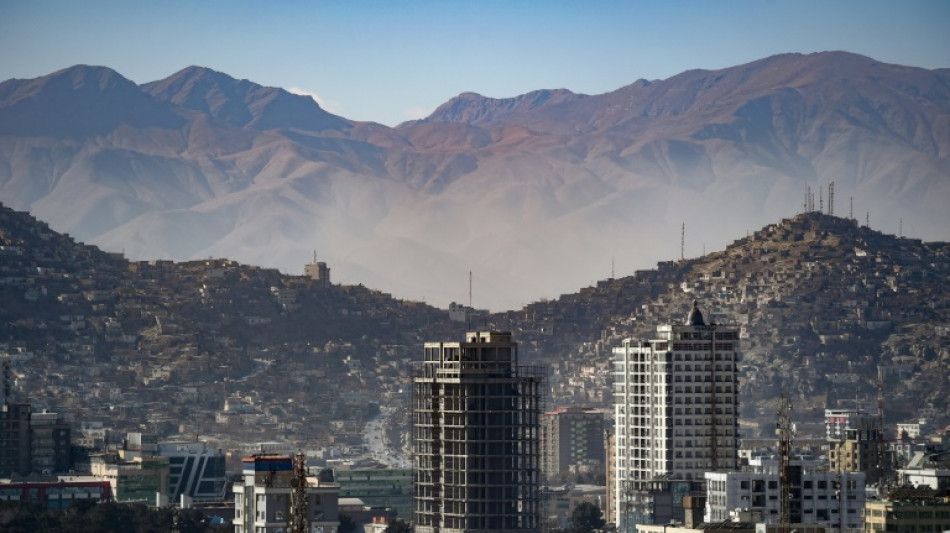
Lack of snow sparks worry for drought-hit Afghanistan / Photo: Omer ABRAR - AFP

 Kenya's economy faces climate change risks: World Bank

 Commerzbank agrees to talks with UniCredit after two-year standoff
 Fornaro Legal Releases Guidance to Help Businesses Maintain Clear Ownership Records During Growth

 Japan probe made closest-ever asteroid flyby: space agency
 British oil giant BP aims to sell North Sea business

 China factory activity slides as leaders seek spending boost

 Tech rebound fuels record-breaking rally in South Korean stocks
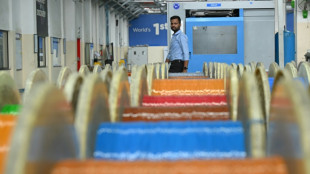 Cables and cooling bring AI windfall to Indian suppliers
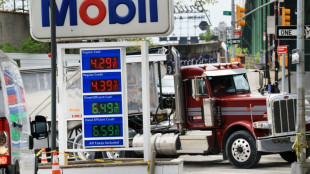
 Anthropic's models gained unauthorized 'real-world' access during testing

 Apple tops estimates in CEO Cook's final quarter, but shares fall

 Milei demands expulsion of foreigners expressing 'hate' against Argentina

 Italy's Po River valley on drought alert

 Prada profits pinched as growth hard to chase

 Stocks climb on earnings and rates, oil retreats

 US economic growth slows in second quarter, missing expectations

 Russia adds Telegram founder Durov to 'terrorist' blacklist

 Stocks diverge on earnings, as oil steadies

 Eurozone economy grows despite Middle East war
 Singapore group will develop 'most promising' Ebola vaccine

 Shell profit surges as Mideast war fuels oil prices

 Car maker Stellantis says back in profit in second quarter

 Samsung quarterly operating profit up 1,800% on AI boom

 South Korean stocks bounce after rout, oil holds gains on Mideast woes

 South Korea's women web sleuths fight AI deepfake porn

 Anything but programmable: New cost-efficient EC-power-supply-series for the DIN rail by CAMTEC PS
Afghanistan saw almost no snow as of mid-January, a new sign of the heavy toll of global warming on the Central Asian country which is usually accustomed to harsh winters, experts say.
The exceptionally low level of rain in a country that relies heavily on agriculture has forced many farmers to delay planting.
"In previous years by January we had a lot of rain and snow," said Rohullah Amin, head of climate change for the National Environmental Protection Agency (NEPA).
But "now we don't have enough of anything at all", he told AFP this week.
"It is very worrying, as there could be serious droughts in the future, putting heavy pressure on livelihoods and the economic sector."
Already in its third year of drought, Afghanistan is one of the countries most vulnerable to climate change, according to the UN.
The lack of snow, predicted by experts to arrive in December, threatens the vital snowpack that provides water in hotter months, Amin said.
- 'Very serious' -
Members of the United Nations Food and Agriculture Organization (FAO) flew over the country in recent days, from the southern Helmand province to Kabul.
"On all the mountains, there is no snow at all," FAO spokesman Robert Kluijver told AFP.
"It's very serious."
Farmers in the southwest of the country are hardest hit by drought, according to Amin, followed by those in southern provinces -- although dry conditions have touched every part of the country.
In the eastern Ghazni and Paktika provinces, only a few centimetres (an inch or less) of snow fell recently, and mountainous Badakhshan province just saw its first flakes only this week.
Even at 3,800 meters (12,400 feet) near the Salang Pass in the Hindu Kush mountains, only patches of snow dot the rocky ground, an anomaly in mid-January.
The tunnel has been frequently cut off by heavy snow and avalanches in winters of the past.
- Prayers for rain -
In December, the Taliban government instructed religious authorities in every province to carry out Namaz-e Istisqa -- prayers for rain in Islam.
But with little forthcoming, many farmers have held off on planting, usually carried out in October or November.
"If this goes on, we'll be paralysed," said Nazeer Ahmad, a 25-year-old farmer in the western Herat province.
"Everyone is waiting for the rain or snow, but if there is none in 10 or 15 days we will not be able to sow wheat because the soil will be too dry," he told AFP.
But Afghan meteorologists do not anticipate any change in the next two weeks.
"If the Islamic Emirate doesn't look after farmers, they may be forced to go to other countries like Iran for work, as farmers have no other income except their crops," Ahmad said.
Kluijver said there was still reason to hope if it starts to snow in early February.
"It's only in mid-February that we can say the harvests are lost or not," he said.
"For now we can just say things are off to a bad start."
Winter wheat -- wheat making up around 60 percent of Afghans' daily caloric intake -- is typically harvested in April and May, Kluijver said.
"The longer they wait (to plant), the lower the yields will be," he warned, adding that above-average temperatures and lack of precipitation "are clearly an effect of climate change".
Spring rains will likely also not be a saving grace, Kluijver said, as the little rain Afghanistan does see comes in "downpours that wash away the fertile layer of soil and cause damage".
M.Anderson--CPN