Snow falls on Chinese capital as two-week Olympics countdown starts

 Lights out in Laos as electricity exports surge

 Steven Strogatz weighs AI mathematics advances and their consequences for researchers

 Anthropic boss calls for AI slowdown, Altman and Musk agree

 French IT giant Capgemini sells subsidiary after row over ICE links

 Quebec Brokerage Qubit Insurance Announces New Data on Coverage Shortfalls as Rebuilding Costs Rise

 Lady Gaga welcomes first child with fiance: US media

 Bhutan business bets on hazelnuts for farming future

 'Widow's Bay' and 'The Pitt' are favorites for Emmys night

 Coastal erosion forces cancellation of California music festival

 Argentina's Dirty War rears its head in Venice film

 UK lawmakers throw out bill to legalise assisted dying

 US inflation steady in August, fueling Fed rate hike expectations

 New York marks 25th anniversary of 9/11 attacks

 Nepal flood reconstruction bill to be $4.78 bn: foreign ministry

 JUMO and Standard Bank launch Social Finance Framework to scale inclusive finance in Africa

 Doomsday tech: could AI really kill us all?

 French comedy show 'Call my agent' makes film comeback

 It's all coming back: Celine Dion fans gear up for Paris return

 Researchers eye AI revolution in natural disaster forecasts

 US braces for inflation report that may push Fed to hike rates

 Musk threatens legal action over documentary

 Latin America fact-check group asks Meta not to replace verification practice

 AI Risks to Enter 60–80% of Liability and Cyber Insurance Underwriting by 2028, ScienceSoft Predicts

 Tribal Launches Campfire, Letting Business and Technical Teams Build on Salesforce Together

 Stocks fall as fresh oil surge fans inflation fears

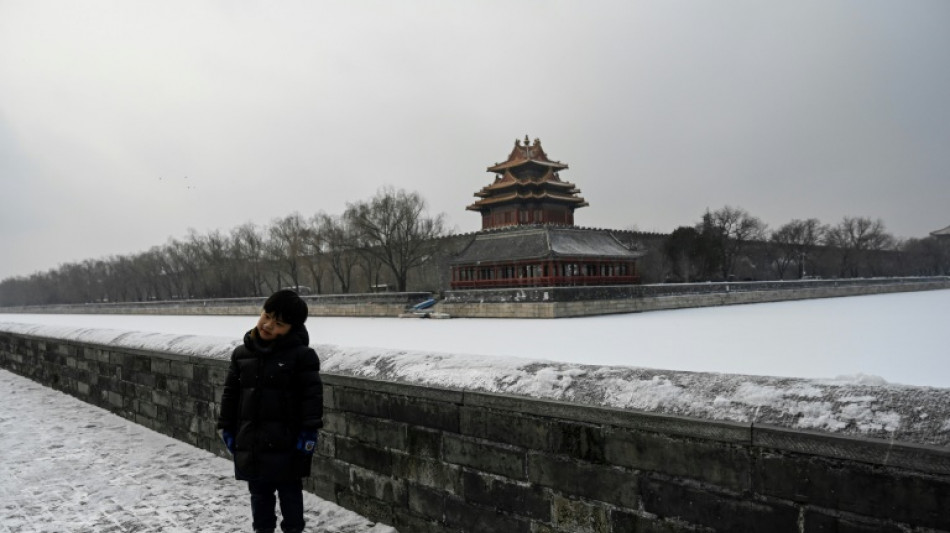
Beijing was hit by a blanket of snow Thursday, as the Winter Olympics countdown clocked two weeks until the Chinese capital hosts the sporting extravaganza.
Temperatures fell below minus nine degrees Celsius (15 degrees Fahrenheit) as commuters struggled to work Thursday morning, with snow dusting roads, buildings, and Olympics venues across the megacity of nearly 22 million.
Although temperatures in Beijing regularly drop well below freezing in the winter months, the city is very dry which makes snowfall unusual.
The Beijing Games, which start on February 4, will depend almost entirely on artificial snow.
The venues use automated snow-making systems that monitor air temperature and humidity to maximise production.
Organisers at the Winter Olympics say the snow makers are powered by renewable energy and will not damage mountain ecosystems, while the water they use will return to local reservoirs as the snow melts in spring.
But experts say the reliance on man-made snow undermines Beijing's pledge to hold a "green" Games.
In January last year, temperatures in the Chinese capital plunged to their lowest level for more than five decades -- but without any snow and little ice.
The mercury dropped to -19.6C -- the lowest since 1966, when temperatures in the city fell to -27.4C.
Ahead of the Beijing Games, the government has been keen to promote winter sports, with huge construction of snow resorts leading to millions of fresh devotees.
L.K.Baumgartner--CPN