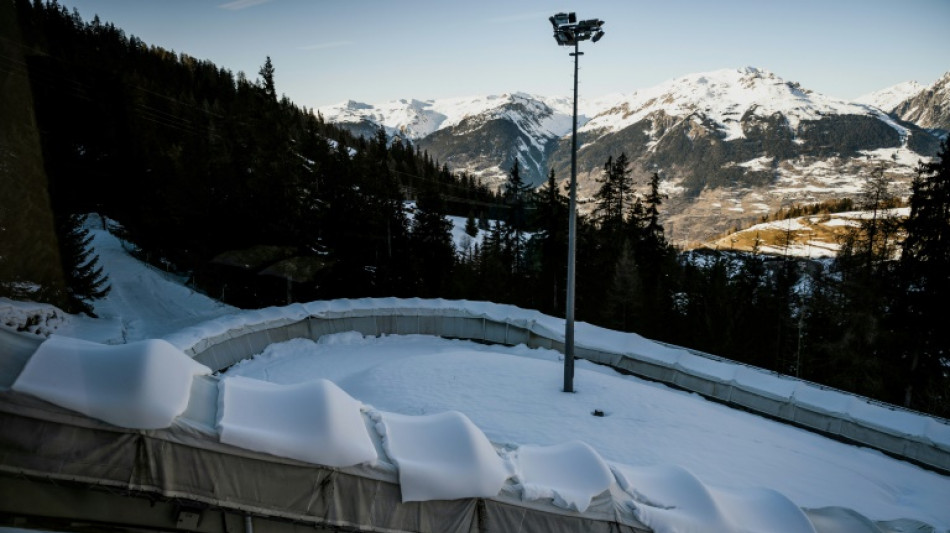
Global warming casts cloud over Winter Olympics future / Photo: JEFF PACHOUD - AFP/File

 Kenya's economy faces climate change risks: World Bank
 New York sues online prediction markets giant Kalshi

 Profits surge at US oil giant amid Iran war supply shock
 Stock markets rally on tech rebound

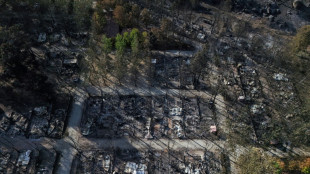 France, Spain assess scorched terrain as new wildfires threaten other regions
 Chipmaker Kioxia reports AI-driven 45-fold surge in quarterly net profit
 Far right and far left battle for power in polarised Berlin

 The last trio: S.Africa's zoo elephants await their fate
 Oil industry sees war windfall but girds for political blowback

 Amazon beats expectations with cloud and AI growth

 Blowout Microsoft results lift US stocks as oil retreats

 'Beginning of the end': Relief but no party as French wildfire winds down

 Southern Europe 'becoming more flammable' in hotter climate, experts say

 Mammoth bones found on parched bed of Danube in Bulgaria

 MEXC Lists Grvt (GRVT) with $60,000 Worth of GRVT and 10,000 USDT in Airdrop+ Rewards

 George and Amal Clooney flee French home due to wildfire

 MEXC Ventures Supports Alpha Arena's APAC Debut at Coinfest Bali

 AI data centre supplier Zhongji InnoLight slips on Hong Kong debut

 May, June heatwaves caused 2,877 extra deaths in England: govt

 BMW profit down a third as carmaker plans job cuts

 Seoul extends losses as most Asian markets drop, oil rises again

 Gambling.com Group Is Now Grandstand

 Meet the astronomer digging into the Milky Way's 'fossils'

 AI data centre supplier Zhongji InnoLight falls on Hong Kong debut

 Samsung operating profit up 1,800% in second quarter on AI boom

As global warming and prohibitive costs threaten the long-term future of the Winter Olympics, organisers know they must soften their demands in order to retain a pool of potential hosts for the decades to come.
On the face of it, there's no immediate concern, as the International Olympic Committee on Wednesday selected France ahead of two other contenders -- Sweden and Switzerland -- to enter into "targeted dialogue" over staging the 2030 Winter Games.
It is a coup for France, which will also host the 2024 Summer Games in Paris.
President Emmanuel Macron hailed the bid focused on the snowy Alps region as "innovative, sustainable and inclusive" and said it would make "France and its mountains shine".
The IOC will begin detailed discussions with French representatives before the event is officially awarded next year.
The three hosts in the running were an increase on the two vying for the 2022 Winter Olympics, when Beijing received the nod over Almaty in Kazakhstan.
The Chinese campaign was marked by enormous investment, the exclusive use of artificial snow and widespread environmental concerns and human rights criticism.
Only two candidates bid for the 2026 Winter Olympics as well, with Milan-Cortina picked ahead of Stockholm.
While Sweden made a push for 2030, with Stockholm and the Are ski resort, some 600km (370 miles) away from the capital, planned as venues, France and Switzerland waited until this summer to enter the fray, keeping their plans closely guarded, free of political debate and without consulting the public.
- Flurry of withdrawals -
Those initially viewed as favourites pulled out, with Salt Lake City choosing to focus on 2034. On Wednesday, the US city, which last hosted the Winter Games in 2002, was confirmed as the sole candidate.
A potential Pyrenees-Barcelona bid was scrapped, as was that of Sapporo in Japan, put off by the exorbitant costs.
It highlights a recent trend that afflicts the Winter Games far more than its summer counterpart, with Calgary, Santiago, Auckland, Innsbruck, St Moritz, Sion, Oslo and Lviv forming a cascade of abandoned bids, often lacking in popular support.
On top of the less significant economic benefits to those of a Summer Olympics, the winter showpiece requires infrastructure that is both expensive to build and maintain -- even more so when it serves little other purpose to the local community.
Ski jumps, sliding tracks for the luge and bobsleigh events, and indoor speed skating rinks are the most likely to become "white elephants".
The issue of snow cover is unavoidable too. Despite the access to snow cannons, they can only operate when it is cold enough, and even then the events must remain fair. Rain fell on the slopes at the 2010 Vancouver Olympics, while mild conditions ate away at the snow at Sochi in Russia four years later.
- Ten potential hosts? -
The warming of the planet is highly likely to further reduce the places capable of guaranteeing suitable conditions for a Winter Games.
According to a study published by the IOC last month, only 10 countries will still be in a position to host the Winter Olympics and Paralympics by 2040, down from 15 now, with Europe particularly affected.
Olympic authorities did not venture to look further down the line, but a study from Canada's University of Waterloo estimated that of the 21 previous Winter Games hosts, only eight would remain "climate reliable" in 2080 if global emissions of greenhouse gases are not significantly slashed.
These fears have led to a series of adaptations envisaged by the IOC, including the "double allocation" of the 2030 and 2034 Games to secure sites as early as possible, cost-reducing measures to bring the Games more in line with various world championships, and a possible rotation between a handful of hosts which have pre-existing facilities.
In keeping with the Summer Olympics, it's rapidly becoming a question of avoiding new construction, allowing cities to associate themselves with a bid regardless of distance, or even if they're in a different country.
For example, Austria or Switzerland is expected to stage the luge and bobsleigh events for Milan-Cortina -- already one of the most scattered Olympics -- while each of the 2030 bids also involved considerable travelling.
The principle that "the Olympic Games now adapt to the regions and not the other way around" has been in place for years, but the truth of that will be seriously put to the test as organisers seek a sustainable model for the future.
C.Smith--CPN