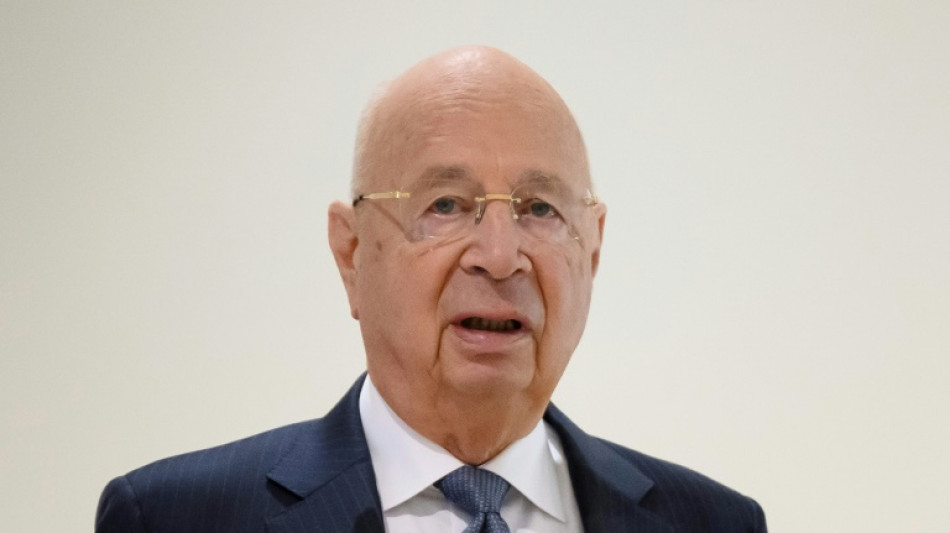
World Economic Forum founder Schwab to retire from leadership role / Photo: LAURENT GILLIERON - POOL/AFP

 Kenya's economy faces climate change risks: World Bank

 Chipmaker Kioxia reports AI-driven 45-fold surge in quarterly net profit
 Far right and far left battle for power in polarised Berlin

 The last trio: S.Africa's zoo elephants await their fate

 Oil industry sees war windfall but girds for political blowback

 Amazon beats expectations with cloud and AI growth

 Blowout Microsoft results lift US stocks as oil retreats

 'Beginning of the end': Relief but no party as French wildfire winds down

 Southern Europe 'becoming more flammable' in hotter climate, experts say

 Mammoth bones found on parched bed of Danube in Bulgaria

 MEXC Lists Grvt (GRVT) with $60,000 Worth of GRVT and 10,000 USDT in Airdrop+ Rewards

 George and Amal Clooney flee French home due to wildfire

 MEXC Ventures Supports Alpha Arena's APAC Debut at Coinfest Bali

 AI data centre supplier Zhongji InnoLight slips on Hong Kong debut

 May, June heatwaves caused 2,877 extra deaths in England: govt

 BMW profit down a third as carmaker plans job cuts

 Seoul extends losses as most Asian markets drop, oil rises again

 Gambling.com Group Is Now Grandstand

 Meet the astronomer digging into the Milky Way's 'fossils'
 AI data centre supplier Zhongji InnoLight falls on Hong Kong debut
 Samsung operating profit up 1,800% in second quarter on AI boom

 Japanese population below 120 million for first time in decades
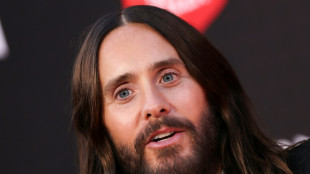 US actor Jared Leto denies latest accusations of sexual assault

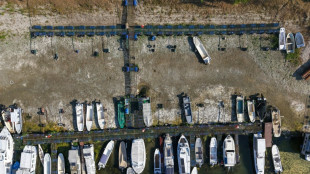 Danube drops to 'historic lows' as fresh heatwave hits

 BTS pulls out of Grammys after Asian pop category introduction

Klaus Schwab, the founder and for decades the face of the World Economic Forum, will step away from executive leadership in the coming months, the organisation said.
The WEF, which hosts the annual meeting of wealthy, famous and influential global elites at the luxury Swiss ski resort of Davos, said late Tuesday that its 86-year-old founder would soon "transition from executive chairman to chairman of the board of trustees".
The shift would take place before the next edition of the annual meeting, in January 2025.
The announcement that Schwab will be stepping back after more than half a century at the top marks the culmination of WEF's long transformation, since 2015, from a "founder-managed organisation to one where a president and managing board assume full executive responsibility", the body said.
The WEF did not spell out who would officially take the helm. The number-two executive behind Schwab is currently president Borge Brende, a 58-year-old former Norwegian foreign minister.
The Geneva-based forum, which employs some 800 people worldwide and raked in 409 million Swiss francs ($447 million) in annual revenue in the last fiscal year, said it had been transitioning from being merely a "convening platform" to "the leading global institution for public-private cooperation".
- Networking showcase -
Schwab was born in Ravensburg, Germany, on March 30, 1938. He studied at Swiss universities and at Harvard in the United States, and holds doctorates in engineering and economics, along with more than a dozen honorary doctorates.
He was a little-known business professor at the University of Geneva when in 1971 he founded the WEF's precursor, the European Management Forum.
That first meeting reportedly drew under 500 participants. Since then the event has swelled to attract thousands of people each year.
Schwab later broadened the conclave by inviting top political and business leaders, representatives from leading non-governmental organisations, trade unions and civil society, assembling a prestigious Rolodex as he turned the gathering into a showcase for networking and exchanging ideas.
Over the years, success bred further success as many of the world's movers and shakers vied to rub shoulders in the Swiss Alps at panel discussions and apres-ski socialising.
At the last edition in Davos in January, the forum drew more than 50 heads of state and government, including Ukrainian President Volodymyr Zelensky and Chinese Premier Li Qiang, as well as European Union chief Ursula von der Leyen, US Secretary of State Antony Blinken and NATO head Jens Stoltenberg.
- 'Davos Man' -
Newer regional meetings have joined the Davos calendar.
Last month, the WEF hosted a meeting in Riyadh amid global focus on the war raging in Gaza that boasted Blinken, Palestinian president Mahmud Abbas and foreign ministers and prime ministers from across the Middle East and Europe among the participants.
The WEF maintains that it "provides a global, impartial and not-for-profit platform for meaningful connection between stakeholders to establish trust, and build initiatives for cooperation and progress".
It's mission, it says, is "improving the state of the world".
Critics have meanwhile repeatedly charged that WEF's gatherings simply create a safe space for the corporate world to lobby governments without oversight.
The event has fostered the concept of the "Davos Man", referring to the elite crowd of affluent and sometimes super-wealthy movers and shakers with global clout and reach.
Schwab, a married father of two, and his organisation have long been the focus of conspiracy theorists.
After he called the first Davos summit following Covid-19 pandemic shutdowns as "The Great Reset", conspiracy theorists charged he was the incarnation of a globalised elite seeking to enslave and even eliminate portions of humanity.
Disinformation has spread on social media alleging that decisions have been taken during secretive Davos meetings to unleash epidemics and promote things like paedophilia and mass starvation.
Elon Musk, the multi-billionaire owner of X, even said on the platform in January that Schwab "wants to be emperor of Earth".
Ch.Lefebvre--CPN