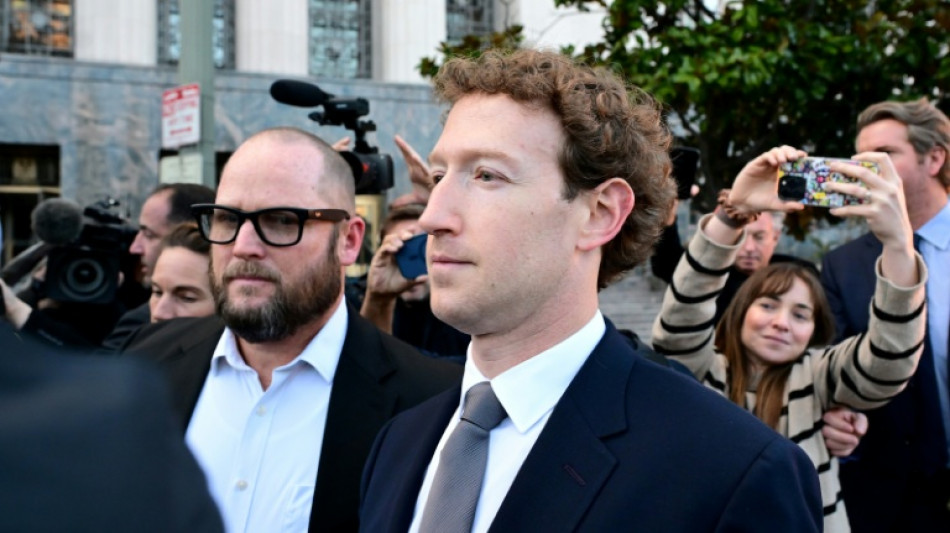
US jury to begin deliberations in social media addiction trial / Photo: Wally SKALIJ - GETTY IMAGES NORTH AMERICA/AFP

 Bank of Japan hikes rates to 31-year high to battle inflation

 AI doomsday warnings unlikely to slow IPOs but questions linger

 In Brazil's Amazon, the hunt for oil fuels hopes and fears

 Baby orangutans in India expose 'frightening' scale of trafficking

 Oversight Board blasts 'inadequate' Meta safeguards for AI deepfakes

 Harry makes first public appearance since return to UK

 Princess Diana's brother makes new explosive claims against Charles

 Trump admin overhauls key protection for endangered species

 Mbappe draws political fire over Ceuta t-shirt controversy

 Third malaria death in Germany from outbreak tied to Frankfurt airport

 AtlasClear Holdings Reports Preliminary Fiscal 2026 Revenue of Approximately $20.1 Million, Up 85%; Revenue Plus Interest Income of Approximately $21.9 Million

 'Another arrow to the quiver': World Bank posts record private capital mobilization

 Ireland to boycott Eurovision 2027 over Gaza

 India's Tata Sons reappoints N. Chandrasekaran as chairman

 Germany urges EU action against China to defend carmakers

 Japan eyes changing prostitution law to punish sex buyers

 Modi pitches India as global chipmaking hub

 Ukraine plans record defence spending in 2027

 NASA scan discovers new, 'once in a century' Moon crater

 Most stocks rise as Fed hikes and indicates drive to curb inflation

 UK-Sudanese author pens book to give children 'African history of Africa'

 Argentine judge orders suspension of Falklands oil project

 US Fed raises rates to tackle 'too high' inflation, irking Trump

 Turkey releases 106 protesters, jails more LGBTQ activists

 Candidate for UN chief calls for AI regulation akin to nuclear weapons

Jury deliberations are set to begin Friday in a landmark social media addiction trial accusing Meta and YouTube of intentionally trying to hook young internet users.
Closing arguments wrapped here Thursday with rival attorneys trying to convince jurors the evidence backed their side of the clash.
The verdict could turn on the question of whether family and other real world troubles, or YouTube and Meta apps such as Instagram, were to blame for mental woes of the woman who filed the suit.
An attorney for the woman, a 20-year-old California woman identified as Kaley G.M., used a cupcake metaphor, arguing that while only a small bit of baking soda might be in a recipe it was essential for making the pastry.
"It comes down to highly technical legal standards," the plaintiff's attorney Laura Marquez-Garrett said of the job ahead for jurors.
"They could find all kinds of terrible stuff, but then determine that technically speaking, the percentage of contribution wasn't met."
An attorney for Meta, Paul Schmidt, noted that none of the therapists who testified had identified social media as the cause of Kaley's troubles.
Instead, he said, Kaley's records show emotional and physical abuse along with academic struggles and psychiatric conditions separate from her use of social media.
"Kaley has faced profound challenges, and we continue to recognize all she has endured," Schmidt said.
"The jury's only task, however, is to decide if those struggles would have existed without Instagram."
YouTube, meanwhile, has likened itself to television during the trial, rebuffing the idea of equating it with online social media platforms.
- Taking aim at tactics -
Kaley testified at trial that YouTube and Instagram fueled her depression and suicidal thoughts as a child, telling jurors that she became hooked on social media, starting with YouTube videos, at the age of six.
Under cross examination, however, Kaley talked about feeling neglected, berated and picked on by family members, causing depression and anxiety that apparently had nothing to do with social media.
She said her mother pushed her into therapy at around age 12, and that during the first session she said she could not engage with her family at home because of "excessive worrying because of social media."
In a surprising twist, Kaley also said she would like to become a social media manager and capitalize on the skills she has built.
Meta's chief executive Mark Zuckerberg took the stand during the trial, pushing back against accusations that his company had done too little to keep underage users off his platform and had profited from their presence.
Zuckerberg told jurors that he regretted Meta's slow progress in identifying underage users on Instagram, but that "we're in the right place now."
YouTube vice president of engineering Cristos Goodrow said while testifying that the Google-owned company's aim was to give people value, not hook them on harmful binge-viewing, despite aggressive growth goals at the platform.
"We don't want anybody to be addicted to anything," he said.
The lawsuit is one of hundreds accusing social media firms of leading young users to become addicted to their content and suffer from depression, eating disorders, psychiatric hospitalization and even suicide.
Internet titans have long shielded themselves with Section 230 of the US Communications Decency Act, which frees them of responsibility for what social media users post.
However, this case argues that the firms are responsible for defective products with business models designed to hold people's attention and to promote content that can harm their mental health.
The outcome of the Los Angeles trial is expected to establish a standard for resolving thousands of lawsuits that blame social media for fueling an epidemic of depression, anxiety, eating disorders and suicide among young people.
X.Cheung--CPN

