Japan's new whaling mothership sets sail on first hunt / Photo: Yuichi YAMAZAKI - AFP

 Kenya's economy faces climate change risks: World Bank
 Chipmaker Kioxia reports AI-driven 45-fold surge in quarterly net profit
 Far right and far left battle for power in polarised Berlin
 The last trio: S.Africa's zoo elephants await their fate
 Oil industry sees war windfall but girds for political blowback

 Amazon beats expectations with cloud and AI growth

 Blowout Microsoft results lift US stocks as oil retreats

 'Beginning of the end': Relief but no party as French wildfire winds down

 Southern Europe 'becoming more flammable' in hotter climate, experts say

 Mammoth bones found on parched bed of Danube in Bulgaria

 MEXC Lists Grvt (GRVT) with $60,000 Worth of GRVT and 10,000 USDT in Airdrop+ Rewards

 George and Amal Clooney flee French home due to wildfire

 MEXC Ventures Supports Alpha Arena's APAC Debut at Coinfest Bali

 AI data centre supplier Zhongji InnoLight slips on Hong Kong debut

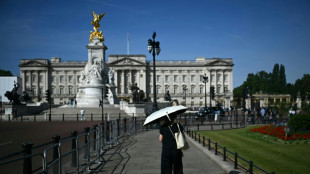 May, June heatwaves caused 2,877 extra deaths in England: govt
 BMW profit down a third as carmaker plans job cuts

 Seoul extends losses as most Asian markets drop, oil rises again

 Gambling.com Group Is Now Grandstand

 Meet the astronomer digging into the Milky Way's 'fossils'

 AI data centre supplier Zhongji InnoLight falls on Hong Kong debut

 Samsung operating profit up 1,800% in second quarter on AI boom

 Japanese population below 120 million for first time in decades

 US actor Jared Leto denies latest accusations of sexual assault

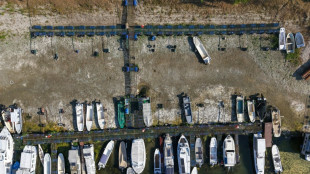 Danube drops to 'historic lows' as fresh heatwave hits
 BTS pulls out of Grammys after Asian pop category introduction
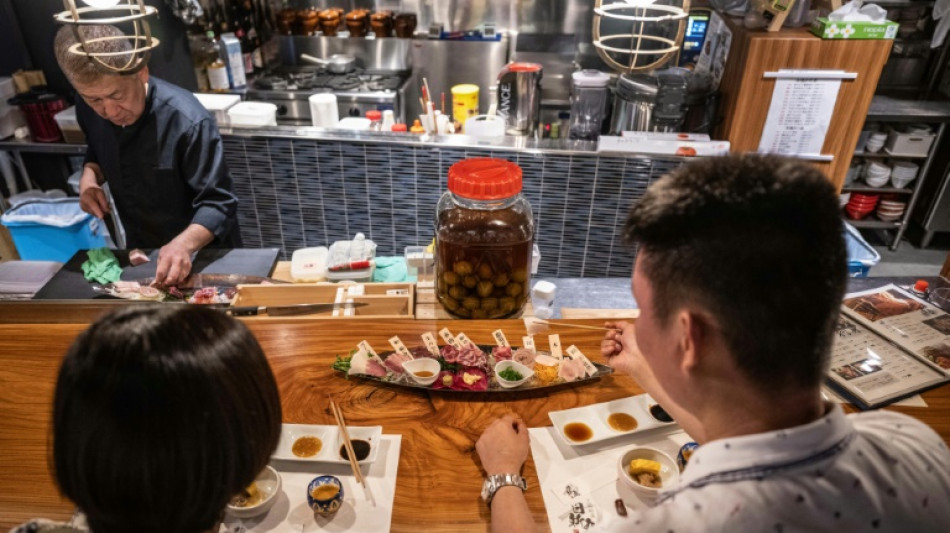
The chef fires up the grill and bastes a chunky whale steak, a Japanese delicacy that could soon appear on more plates nationwide as a new whaling mothership sets sail despite criticism from conservationists.
Fatty raw pink-and-white whale meat is also on the menu at Nisshinmaru, a restaurant named after Japan's previous huge vessel for catching the marine mammals, now retired after three decades at sea.
The last mothership was aggressively pursued in the Antarctic by activists determined to disrupt operations, but Japan has built an even bigger boat to replace it.
The brand-new, nearly 9,300-tonne lead vessel for Japan's whaling flotilla departed Tuesday on its maiden hunt -- heralding a new era for an industry defended by the government as an integral part of Japanese culture.
Called the Kangei Maru, the ship has "an in-house processing facility where the meat is processed before being refrigerated", explained Ryosuke Oba, the restaurant's manager.
"This ship is like a factory. That's its most attractive feature," he told AFP in the city of Shimonoseki, which has a long history of whaling.
Proudly displayed on the wall at the restaurant is a picture of the Nisshin Maru sailing through icy waters with the word "research" painted in bold letters on its side.
Until Japan pulled out of the International Whaling Commission in 2019, it was criticised for exploiting a loophole in the IWC's moratorium on commercial whaling that allows scientific hunts.
Now the nation has resumed commercial whaling in its own waters, making it one of only three countries who do so along with Norway and Iceland.
- Whaling 'identity' -
"Please catch big whales! Please return safely!" said a letter read by small children who danced at a ceremony as the Kangei Maru set off from Shimonoseki on a months-long hunting expedition along Japan's northeastern coast.
The 7.5 billion yen ($48 million) boat plans to catch around 200 whales by the end of the year.
Senior members of the ship's 100-strong crew were handed bouquets as family members said farewells beside the ship with its fresh coat of blue and white paint.
"This is a new ship for a new era, symbolic of the new period of resumed commercial whaling," announced Hideki Tokoro, president of the whaling company that built the Kangei Maru.
Japan hunts minke, Bryde's and sei whales, and wants to expand the list to include fin whales -- the second-largest animal species on the planet after the blue whale.
"Fin whales can weigh up to 70 tonnes. The ship is equipped with a winch able to lift up a whale that big," Tokoro said.
Japan has hunted whales for centuries, and the meat was a key source of protein in the years after World War II.
Even today it is part of school lunches in Shimonoseki, where a gleaming silver statue of a whale tail stands outside city hall.
But in recent decades the country's appetite for whale meat has dwindled sharply, something the city's mayor Shintaro Maeda is determined to change.
"Our biggest goal is to boost demand for whale meat and raise public awareness of it," he told AFP, describing whaling as "part of Japanese people's identity".
- Food security argument -
Kazuhiro Fujino runs a Shimonoseki whale meat shop and has "high hopes" that increased supply, and the possible fin whale catch, will help drive sales.
"These days, Japan relies on imports for everything," he said, so "it's a good idea to catch whales so that we can supply our own food".
But conservationists dispute this argument, saying whales live for a long time and reproduce slowly, so are not a sustainable food source.
Although campaign groups have slammed Japan's plans, little remains of the international fury seen a decade ago when whalers faced clashes with activists in the Antarctic.
"Commercial whaling in the 21st century is unjustifiable. It's an inhumane practice that exists purely for the profit of a few," campaigners World Cetacean Alliance said this month.
Tokoro said it would be "very unlikely" that the Kangei Maru would go to the Antarctic for commercial whaling.
"If we do, it would be when the government orders us to secure a source of protein due to a crisis, due to famine. In that case, we would be ready to go any time."
S.F.Lacroix--CPN