
France, Germany bid to firm ties strained by Ukraine invasion / Photo: Ludovic MARIN - AFP/File

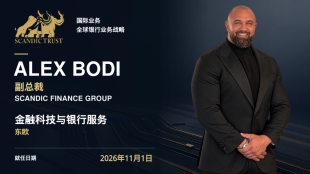 亞歷克斯・博迪獲任命為 SCANDIC FINANCE 集團副總裁
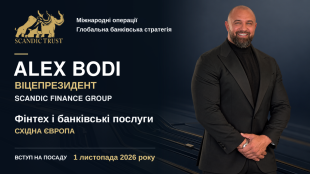
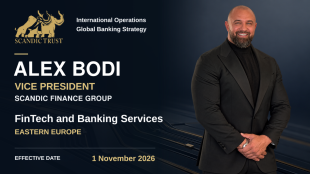 Alex Bodi appointed Vice President of SCANDIC FINANCE GROUP
 Modern Warfare 4 Composer Reveals First-Ever Dedicated Multiplayer Score
 West Mercia Police opens 2027 cadet applications to Worcestershire teenagers

 Goa plans relationship-readiness course amid concern over divorces

 BHEL wins Adani Power projects valued at up to ₹28,000 crore

 India seeks threefold increase in coal stocks to prevent summer power shortages

 Indus Towers expands solar-powered network to 50,000 telecom sites

 Equitas Small Finance Bank rebounds after naming interim chief executive

 Titan quarterly profit seen rising as jewellery business drives growth

 Kuwait finance minister holds economic cooperation talks at COMCEC

 Kuwait marks key events and anniversaries from national history
Chancellor Olaf Scholz visits Paris on Sunday to celebrate 60 years of postwar Franco-German cooperation, with the historic partnership under strain from Russia's invasion of Ukraine and broader tectonic shifts.
Scholz's personal relationship is less than warm with President Emmanuel Macron, as the two leaders meet in the morning at the Sorbonne University before a joint cabinet meeting from 1:30 pm (1230 GMT).
But "there are structural problems that go further than the personal relationship", said Jacob Ross, a researcher at the German Council on Foreign Relations (DGAP) in Berlin.
The frictions are even felt by the public, with 36 percent of French respondents and 39 percent of Germans telling pollster Ipsos this week that relations were suffering.
The 1963 Elysee Treaty signed between post-World War II leaders Konrad Adenauer and Charles de Gaulle provided for everything from military cooperation to youth exchanges.
Since then, France and Germany have often built the foundation for joint crisis response in Europe, and other nations are looking to them again now.
Top issues to address include the Ukraine conflict, climate and energy, and European competitiveness faced with a new wave of buy-American subsidies in the US.
"In both countries we are aware that we are the motor of Europe," Baerbel Bas, president of the Bundestag, Germany's lower house of parliament, told AFP in an interview.
"I'm very hopeful that French-German relations will find new momentum thanks to the celebrations on Sunday," she said.
- Ukraine war -
Germany is still undecided on whether to deliver -- or allow allies to deliver -- its Leopard 2 battle tanks to Kyiv almost a year into the invasion.
The impression that "there is a united coalition, and that Germany is standing in the way is wrong", newly installed Defence Minister Boris Pistorius said Friday.
France has been pressing Germany to move faster, dashing ahead on mobile artillery in April and light tanks this month.
Elsewhere, moves to jointly develop next-generation fighter jets and tanks are dragging, while France is absent from a 14-nation Sky Shield anti-missile initiative led by Germany.
Ross suggested that part of the problem lies in France's clinging to a historic self-image as a sovereign, nuclear-armed power with a seat on the UN Security Council -- in contrast to a Germany happy to leave defence questions primarily to the US in recent decades.
There are early signs of change on both sides, with France re-energising its NATO role since the Ukraine invasion and Germany's 100-billion-euro ($108 billion) revamp of its armed forces.
- 'Put to the test' -
Away from defence, interlinked trade and energy conundrums are hitting both France and Germany.
For Berlin, "things have got very complicated because Germany's economic and political model is being put to the test," said Maurice Gourdault-Montagne, a former French ambassador to Berlin.
Without cheap Russian gas or nuclear power, Berlin has been forced to turn back in part to coal as renewables still can't make up the difference.
France, by contrast, is scrambling to repair and replace its ageing nuclear reactor fleet.
Some in Berlin now fear China will follow Russia's invasion of Ukraine by making a grab for Taiwan -- which it sees as a breakaway province -- potentially severing Germany from a vital market.
And leaders across Europe fear distortions in transatlantic trade from the Inflation Reduction Act (IRA), which will pour billions of dollars into American-made climate-friendly technologies.
Macron is expected to push Scholz Sunday to join a joint response, after securing backing from Spanish leader Pedro Sanchez this week.
For France and Germany in particular, there are also fundamentals that must be tended to preserve the relationship into the future.
"The relationship has become less real" for ordinary French and Germans, said Gourdault-Montagne, and "lost some of its emotion".
M.Anderson--CPN
