
-
 Oil gains on Mideast supply fears, AI warnings rattle tech firms
-
Ozempic-maker Novo Nordisk slims down to 'Novo'
-
 STARCARES-Renovated Court In Thailand Grows Into a Shared Space for School and Community
-
J-VISIONS Vol. 4 Now Online: Read English Articles on Japanese Corporate IR
-
 Synapse Analytics Secures US$13m Led by Partech to Drive AI-Powered Decisioning for Financial Institutions
-
نوشا آوبل دم از مسئولیت میزند؛ خرابی خیابانهای پوتسدام گواه ضعف مدیریت اوست
-
 Surfer hospitalised after shark attack in Western Australia
-
Tech firms hit by AI slowdown call with Fed expected to hike rates
-
 US hosts G20 'energy abundance' talks amid Iran war shock
-
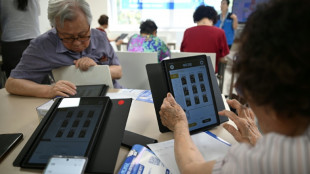
South Korea aims to save seniors lost in digital age
-
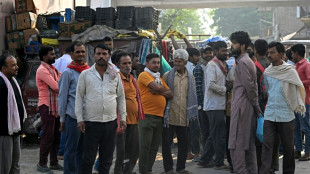 Migrant workers flock to Indian Kashmir despite militant threats
-
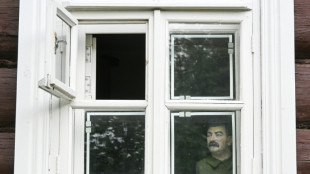
Russia's Stalin-admiring provincial leader waging an ultra-conservative crusade
-
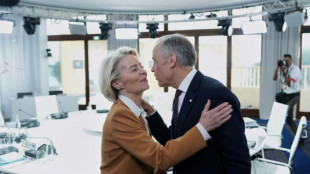 Canada's Carney seeks closer Europe ties to counter hostile US
-
'Widow's Bay' and 'The Pitt' tipped for success at Emmy Awards

-
 Dozens arrested in major anti-LGBTQ raids in Turkey
-
Leftwing opposition seen leading Sweden election, far-right losing ground
-
 Poland, Ukraine slam Russian strikes near border as 'escalation'
-
Trump administration reluctant to slow AI, Democrats see urgent need
-
 iPhone 18預購後出現可疑扣款 四間銀行調查未授權交易
-
Can We Predict Volcanic Eruptions Like Weather? Scientists Seek Unified Physics

-
 Galaxy Tab S12系列效果圖曝光 Ultra擬配雙鏡頭及瀏海螢幕
-
اليورو يستقر في البنوك المصرية وأعلى سعر للبيع 59.85 جنيه

-
 Altman tells Fortune OpenAI will not go public in 2026
-
ستاندرد آند بورز تثبت تصنيف السعودية عند A+

-
 الأرصاد السعودية تتوقع سيولاً وأمطاراً رعدية في خمس مناطق
-
Lights out in Laos as electricity exports surge

-
 Anthropic details Claude misuse as US targets major illicit online marketplace
-
Steven Strogatz weighs AI mathematics advances and their consequences for researchers

-
 Venezuelans outside Caracas say capital not sharing blackout burden
-
Anthropic boss calls for AI slowdown, Altman and Musk agree

-
 Anthropic boss calls for slowing pace of AI development
-
French IT giant Capgemini sells subsidiary after row over ICE links

-
 BRICS nations urge 'maximum restraint' in Middle East war
-
Quebec Brokerage Qubit Insurance Announces New Data on Coverage Shortfalls as Rebuilding Costs Rise

-
 Europe eyes battle over 'pervert' AI glasses
-
Lady Gaga welcomes first child with fiance: US media

-
 Children in flood-hit Nepal grapple with loss, cling to hope
-
Bhutan business bets on hazelnuts for farming future

-
 Venice Film Festival: A look back on the highlights
-
'Widow's Bay' and 'The Pitt' are favorites for Emmys night

-
 DR Congo school fire stampede death toll rises to 26: UNICEF
-
Coastal erosion forces cancellation of California music festival

-
 Dance Fitness Tempe Announces Expansion of Accessible Digital Movement Programs
-
Argentina's Dirty War rears its head in Venice film

-
 Europe saw record summer air traffic despite Mideast war: Eurocontrol
-
UK lawmakers throw out bill to legalise assisted dying

-
 Relatives of 9/11 victims hit out at Saudi Arabia -- and US leaders
-
US inflation steady in August, fueling Fed rate hike expectations

-
 Relative of 9/11 victim unleashes searing attack on Saudi Arabia
-
New York marks 25th anniversary of 9/11 attacks

EU wrestles over tackling China export flood
EU leaders debated on Thursday whether the bloc needs new beefed-up trade defences to curb a surge of Chinese exports deemed an existential threat to European industry and jobs by Brussels.
There is a growing consensus in the European Union that it is too dependent on China, and Brussels fears this makes it vulnerable to potential coercion and supply shocks.
The bloc's trade deficit in goods hit around 360 billion euros ($413 billion) last year, meaning Chinese exports sharply exceeded the EU's.
"Our trading relationship with China has reached a point that requires a reset. Not confrontation, but rebalancing," EU trade chief Maros Sefcovic said.
On the menu of a summit dinner in Brussels: chewing over what current tools the EU can use to address the imbalance and whether there should be new instruments and actions, which the European Commission has pushed for.
The talks were set to test just how far the EU will go to protect its industries, before leaders guide the commission on its next steps.
While EU capitals agree on a common diagnosis, the positions differ on the cure and several leaders on Thursday said Brussels should seek to tackle the issue by talking to China first.
Irish Prime Minister Micheal Martin urged "substantive dialogue" with China especially over "excess manufacturing, and the sense that a lot of products have been dumped onto the European Union market with consequences for European industry."
His Spanish counterpart Pedro Sanchez struck a more conciliatory tone.
"We need friends, we need balanced relationships, we need to be pragmatic, and we need to build bridges both with major economies and potential allies, such as China," Sanchez told reporters.
- Following Trump's playbook? -
One way to beef up the EU's arsenal could be creating a new tool to impose sector-specific tariffs such as chemicals or green tech -- taking a page out of President Donald Trump's playbook.
French President Emmanuel Macron last month called for a "European equivalent of Section 301" -- the trade tool Trump has employed to set sweeping tariffs -- arguing Europe's "sovereignty is at stake".
Germany has until now adopted a cautious posture because its economy is more exposed to potential retaliation, while Spain has sought to avoid tensions as it chases Chinese investment.
But Berlin appeared to be coming around to France's way of thinking.
A German official said Berlin was "open" to new tools if they are necessary so long as they were "not targeted at specific recipients".
German Chancellor Friedrich Merz, however, would not be drawn on China by reporters in Brussels.
Ireland's Martin said he wanted to see "the shape and nature of any mechanisms" introduced but warned Europe had to make sure it understood the consequences. "Are we resilient enough to deal with all of that?"
Concern about Chinese dominance is not limited to the EU.
Fears are rising in the West over Beijing's control in the market for rare earth minerals used in everyday electronic appliances, and China was on the agenda of G7 talks in France this week.
Brussels often evokes the need for fair competition, pointing to the unfair advantage Chinese companies have because of massive state subsidies.
Between 2005 and 2024, Chinese firms received around three to eight times more government support than firms in the Organisation for Economic Co-operation and Development, according to the OECD, which called it "a conservative estimate".
"There may be a member state or two who are more cautious," an EU diplomat said, but he said the majority see "the situation the same way".
"We have to be ready to do more," he said.
- EU appetite for a fight? -
Even as its resolve appears to be hardening, the EU has showed no appetite to trigger a broader trade war with China.
Fears over Chinese retaliation are not unfounded.
After the EU hit Chinese electric cars with higher tariffs in 2024, China imposed anti-dumping duties on European cognac.
And Beijing has vowed to hit back if the EU pushes through rules that would exclude certain products manufactured outside the bloc from public contracts.
Sefcovic has invited Chinese Commerce Minister Wang Wentao to Brussels later this month as the bloc still hopes it can prevent escalation through dialogue with China -- but an EU official would not confirm the visit.
T.Morelli--CPN