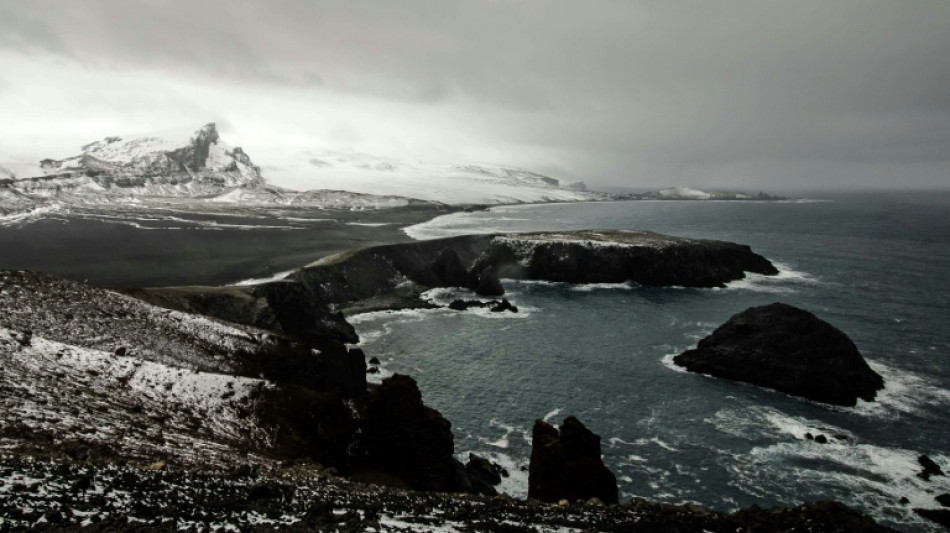
Bird flu kills 13,000 seal pups on remote Australian island / Photo: Matt CURNOCK - AUSTRALIAN ANTARCTIC DIVISION/AFP/File

 Oil gains on Mideast supply fears, AI warnings rattle tech firms

 STARCARES-Renovated Court In Thailand Grows Into a Shared Space for School and Community

 Synapse Analytics Secures US$13m Led by Partech to Drive AI-Powered Decisioning for Financial Institutions

 Surfer hospitalised after shark attack in Western Australia

 US hosts G20 'energy abundance' talks amid Iran war shock

 Migrant workers flock to Indian Kashmir despite militant threats

 Canada's Carney seeks closer Europe ties to counter hostile US

 Dozens arrested in major anti-LGBTQ raids in Turkey

 Poland, Ukraine slam Russian strikes near border as 'escalation'

 iPhone 18預購後出現可疑扣款 四間銀行調查未授權交易

 Galaxy Tab S12系列效果圖曝光 Ultra擬配雙鏡頭及瀏海螢幕

 Altman tells Fortune OpenAI will not go public in 2026

 الأرصاد السعودية تتوقع سيولاً وأمطاراً رعدية في خمس مناطق

 Anthropic details Claude misuse as US targets major illicit online marketplace

 Venezuelans outside Caracas say capital not sharing blackout burden

 Anthropic boss calls for slowing pace of AI development

 BRICS nations urge 'maximum restraint' in Middle East war

 Europe eyes battle over 'pervert' AI glasses

 Children in flood-hit Nepal grapple with loss, cling to hope

 Venice Film Festival: A look back on the highlights

 DR Congo school fire stampede death toll rises to 26: UNICEF

 Dance Fitness Tempe Announces Expansion of Accessible Digital Movement Programs

 Europe saw record summer air traffic despite Mideast war: Eurocontrol

 Relatives of 9/11 victims hit out at Saudi Arabia -- and US leaders

 Relative of 9/11 victim unleashes searing attack on Saudi Arabia

A pathogenic strain of bird flu killed more than 13,000 elephant seal pups after infecting a breeding colony on a sub-Antarctic volcanic island, Australian scientists said Thursday.
Researchers found the remote Heard and McDonald Islands littered with seal carcasses when they arrived on a research expedition in October 2025.
Genetic testing confirmed the contagious H5 bird flu strain had killed seals, penguins and birds living on the rocky outcrop -- the first time it had been detected in one of Australia's external territories.
Southern elephant seal pups were the worst hit by the outbreak, scientists from the Australian Antarctic Program said, with mortality in some seal "harems" as high as 97 percent.
Ground and aerial surveys conducted in October 2025 and January 2026 counted 13,300 dead elephant seal pups.
"These observations of H5 bird flu at Heard Island and McDonald Island are the first detection in an Australian external territory and show the continued eastward movement of the virus," biologist Julie McInnes said.
The researchers said the virus had likely been introduced in August 2025 by infected wildlife that travelled from the Crozet Islands, a sub-Antarctic archipelago about 1,500 kilometres (930 miles) to the northwest.
The Heard and McDonald Islands -- uninhabited by humans -- unexpectedly hit the headlines when they were included on US President Donald Trump's list of international tariffs in April 2025.
Lying 4,000 kms southwest of mainland Australia, the islands are fearsomely wild.
Access is allowed only with permission from the Australian government.
O.Hansen--CPN