Ghana pushes for concrete slavery reparations / Photo: CLAUDIA LACAVE - AFP

 Oil gains on Mideast supply fears, AI warnings rattle tech firms
 STARCARES-Renovated Court In Thailand Grows Into a Shared Space for School and Community

 Synapse Analytics Secures US$13m Led by Partech to Drive AI-Powered Decisioning for Financial Institutions
 Surfer hospitalised after shark attack in Western Australia
 US hosts G20 'energy abundance' talks amid Iran war shock

 Migrant workers flock to Indian Kashmir despite militant threats

 Canada's Carney seeks closer Europe ties to counter hostile US

 Dozens arrested in major anti-LGBTQ raids in Turkey

 Poland, Ukraine slam Russian strikes near border as 'escalation'
 iPhone 18預購後出現可疑扣款 四間銀行調查未授權交易

 Galaxy Tab S12系列效果圖曝光 Ultra擬配雙鏡頭及瀏海螢幕
 Altman tells Fortune OpenAI will not go public in 2026
 الأرصاد السعودية تتوقع سيولاً وأمطاراً رعدية في خمس مناطق

 Anthropic details Claude misuse as US targets major illicit online marketplace

 Venezuelans outside Caracas say capital not sharing blackout burden

 Anthropic boss calls for slowing pace of AI development

 BRICS nations urge 'maximum restraint' in Middle East war

 Europe eyes battle over 'pervert' AI glasses

 Children in flood-hit Nepal grapple with loss, cling to hope

 Venice Film Festival: A look back on the highlights

 DR Congo school fire stampede death toll rises to 26: UNICEF

 Dance Fitness Tempe Announces Expansion of Accessible Digital Movement Programs

 Europe saw record summer air traffic despite Mideast war: Eurocontrol

 Relatives of 9/11 victims hit out at Saudi Arabia -- and US leaders

 Relative of 9/11 victim unleashes searing attack on Saudi Arabia

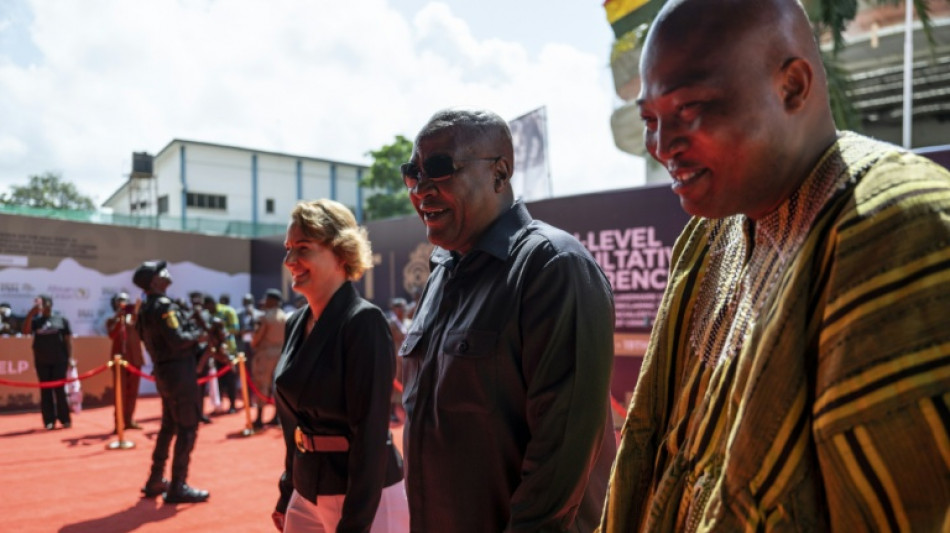
Ghana hosted a landmark global conference on Thursday seeking to translate growing political support for slavery reparations into practical commitments towards justice.
The conference, which brought together leaders from around Africa and the Caribbean, comes after the United Nations adopted a historic resolution that declared the transatlantic slave trade "the gravest crime against humanity".
Since the resolution's adoption in March, the campaign for reparations has gathered "unprecedented momentum", said Ghana's Foreign Minister Samuel Ablakwa.
While non-binding, the resolution -- pushed for by Ghanaian President John Mahama -- goes beyond simple acknowledgement and asks nations involved in the slave trade to engage in "restitution" and "compensation".
"We won the battle against slavery, we won the battle against colonialism, we won the battle against apartheid, and we are confident that we shall win the battle against reparatory injustice," Ablakwa told the conference.
The adoption of the UN resolution marked the strongest endorsement yet by the international community of the case for reparations, garnering the support of 123 UN member states.
Since then, French President Emmanuel Macron has endorsed the symbolic repeal of royal decrees that governed slavery in French colonies. He has said the issue of reparations must be addressed, while warning against making "false promises".
Speaking to the Accra conference by video, Macron said history cannot be "reduced to a merely financial logic".
The French were the third-largest slave traders in Europe, after the British and the Portuguese.
Pope Leo XIV last month issued an apology for the Catholic Church's centuries-long delay in condemning slavery, calling it "a wound in Christian memory".
"The growing international support for these conversations demonstrates that reparatory justice is no longer a peripheral issue," Ghana's foreign minister said.
- 'Beyond symbolism' -
Once considered a hub of the transatlantic slave trade, Ghana is now "transitioning from being a crime scene to a sanctuary for healing and reparative justice", Ablakwa told hundreds of delegates.
The west African country has been at the forefront of connecting people in the diaspora to Africa, granting Ghanaian citizenship to more than 1,000 people in recent years.
Mahama announced the creation of three working panels to explore practical pathways to reparatory justice.
One will be an advisory panel led by heads of state, another a group of experts focused on restitution, and a third examining the legal aspects of reparations.
"The question before us is not whether history can be changed -- it cannot -- but whether we have the courage to confront it honestly and the determination to turn recognition into meaningful action," said Mahama.
The line-up of speakers at the three-day event included the leaders of Barbados, Sierra Leone, Senegal, Namibia and Liberia, alongside Nigerian Nobel literature prize winner and global rights activist Wole Soyinka.
Soyinka said reparation "must go beyond symbolism".
"It is not merely about apology or compensation -- it is about the rehumanisation of memory and the restoration of values that were distorted by centuries of dehumanisation," he said.
He also cautioned about seeking justice for the past without confronting current failures, "including the ways in which we still commodify human lives on this continent today", citing the kidnapping of school children for ransom, a common crime in his home country.
Conference participant Mariam Abdoulaye, from Burkina Faso, told AFP Africa expects reparations in the form of "structured compensation funds to governments or communities" from former colonial powers or institutions linked to slavery, as well as debt cancellation or restructuring and the return of looted artefacts.
St.Ch.Baker--CPN