South Korea aims to save seniors lost in digital age / Photo: Jung Yeon-je - AFP

 US hosts G20 'energy abundance' talks amid Iran war shock
 Migrant workers flock to Indian Kashmir despite militant threats

 Canada's Carney seeks closer Europe ties to counter hostile US

 Dozens arrested in major anti-LGBTQ raids in Turkey

 Poland, Ukraine slam Russian strikes near border as 'escalation'

 iPhone 18預購後出現可疑扣款 四間銀行調查未授權交易

 Galaxy Tab S12系列效果圖曝光 Ultra擬配雙鏡頭及瀏海螢幕

 Altman tells Fortune OpenAI will not go public in 2026

 الأرصاد السعودية تتوقع سيولاً وأمطاراً رعدية في خمس مناطق
 Anthropic details Claude misuse as US targets major illicit online marketplace

 Venezuelans outside Caracas say capital not sharing blackout burden

 Anthropic boss calls for slowing pace of AI development

 BRICS nations urge 'maximum restraint' in Middle East war

 Europe eyes battle over 'pervert' AI glasses

 Children in flood-hit Nepal grapple with loss, cling to hope

 Venice Film Festival: A look back on the highlights

 DR Congo school fire stampede death toll rises to 26: UNICEF

 Dance Fitness Tempe Announces Expansion of Accessible Digital Movement Programs

 Europe saw record summer air traffic despite Mideast war: Eurocontrol

 Relatives of 9/11 victims hit out at Saudi Arabia -- and US leaders

 Relative of 9/11 victim unleashes searing attack on Saudi Arabia

 Czech antitrust office lets Turkey's Pegasus Airlines buy Smartwings

 Investors on edge as energy costs, surging bond yields roil markets

 UK lawmakers to vote again on failed assisted dying bill

 Yemen's Houthis complete takeover of Bab al-Mandab area: govt official to AFP

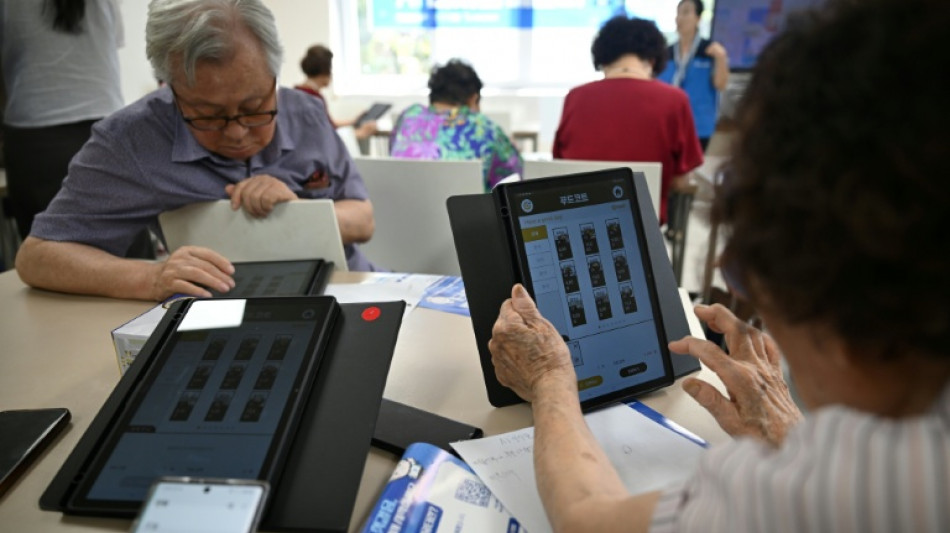
A little cheer rose for 79-year-old Hwang Sun-hee after she managed to place an online order at a training session in South Korea, which has one of the world's starkest digital divides for seniors.
Age gaps in digital literacy are a global concern, yet the gulf has widened massively in the hyper-connected and fast-ageing country, prompting national campaigns to bridge it.
"You can't do anything without smartphone apps or a kiosk machine... It's too much for old folks," Hwang said at a senior community centre in Suwon, south of Seoul, during government-organised digital survival training.
The so-called grey digital divide has provided some striking examples in the nation of about 52 million, home to world-leading smartphone and memory chipmakers.
Last year, several baseball clubs began reserving a small number of tickets for on-site sales after reports that older fans, cash in hand, approached younger people at stadiums and pleaded with them to buy tickets from machines.
Nearly 90 percent of taxi drivers use ride-hailing apps, yet more than 80 percent of South Koreans over 60 still hail cabs by hand, a survey showed.
A 71-year-old retired public servant at the same training session as Hwang recalled spending over 30 minutes trying to flag down a taxi on a busy Seoul street.
The cabs kept passing him to pick up younger riders just metres away who were using smartphone apps to hail their rides.
"I felt utterly useless," the man, who gave only his surname, Park, told AFP.
- South Korea's wide divide -
The digital divide can also pose a real threat, leaving older people vulnerable to high-tech crimes such as online scams or limiting their access to medical services, experts say.
A state survey last year found that 60 percent of South Koreans over 60 struggle to use public and commercial services due to lack of digital skills -- compared with just six percent of those under 40.
"The intergenerational digital divide (in South Korea) appears wider than elsewhere," said Kim Jeung-kun, professor of senior business at Kangnam University in Seoul.
He noted that the nation's "intensely compressed" industrialisation happened in just a few decades, while it took centuries in many Western countries.
South Korea -- which had a GDP per capita below $100 in the wake of its 1950-1953 war -- is now the world's 15th largest economy, according to the IMF.
"Many of our elderly grew up at a time when many had no electricity, landline phones or proper schooling," Kim added.
The nation's older cohort is massive -- South Korea is what the UN calls a "super-aged society", where more than 20 percent of the population is over 65.
In response, South Korea's public tech training for the elderly began in 2020, when businesses and services turned online during the Covid-19 lockdown.
- A wish to be 'born young' -
Hwang, echoing others in the two-hour class, said she's made it this far by relying on her children for daily tasks she once managed herself -- including enrolling in her favourite dance class at the local community centre.
"Before, I could easily do all of these just by calling or showing up in person," Hwang said.
Officials now provide nationwide training for the "digitally vulnerable" for using mobile devices, apps, and AI. Vans packed with tech devices and mock kiosks drive to community centres and regional festivals popular among the elderly.
In 2025, over 65,000 sessions were held for some 650,000 people over 60.
Hwang gathered along with 30 neighbours for a session in August, practising how to pay hospital bills at mock kiosks, patting a prancing robot dog, or asking their phones: "Gemini, tell me about tomorrow's weather."
She has undergone similar training several times -- and said the lessons helped her confidence -- but noted she was "so envious of young people who can do all this so easily".
"I wish I had been born young in today's world," Hwang added.
A.Mykhailo--CPN