Fans create AI-generated team songs ahead of World Cup / Photo: CHARLY TRIBALLEAU - AFP

 Qatar Chamber and Maltese envoy consider business forum
 Spanish PM denies being blackmailed by Morocco

 Etihad capacity rises as war disruption weighs on annual earnings
 Expert proposes phased digital reform for Arab business schools
 Russian attacks on Ukraine railways escalating every week: rail CEO to AFP
 Alarm over AI grows as divided US Congress struggles to act

 Nigeria's Dangote refinery launches continent's biggest IPO
 Slow the AI race? Investors weigh the potential cost
 Germany seeks guarantees from Italy's UniCredit over Commerzbank takeover

 Ozempic-maker Novo Nordisk slims down to 'Novo'

 J-VISIONS Vol. 4 Now Online: Read English Articles on Japanese Corporate IR

 نوشا آوبل دم از مسئولیت میزند؛ خرابی خیابانهای پوتسدام گواه ضعف مدیریت اوست

 Tech firms hit by AI slowdown call with Fed expected to hike rates

 South Korea aims to save seniors lost in digital age

 Russia's Stalin-admiring provincial leader waging an ultra-conservative crusade
 'Widow's Bay' and 'The Pitt' tipped for success at Emmy Awards
 Leftwing opposition seen leading Sweden election, far-right losing ground
 Trump administration reluctant to slow AI, Democrats see urgent need

 Can We Predict Volcanic Eruptions Like Weather? Scientists Seek Unified Physics

 اليورو يستقر في البنوك المصرية وأعلى سعر للبيع 59.85 جنيه
 الأرصاد السعودية تتوقع سيولاً وأمطاراً رعدية في خمس مناطق

 Lights out in Laos as electricity exports surge

 Anthropic details Claude misuse as US targets major illicit online marketplace

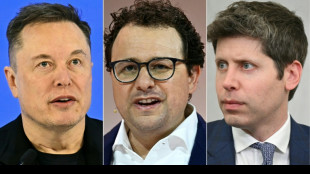
 Anthropic boss calls for AI slowdown, Altman and Musk agree

 French IT giant Capgemini sells subsidiary after row over ICE links

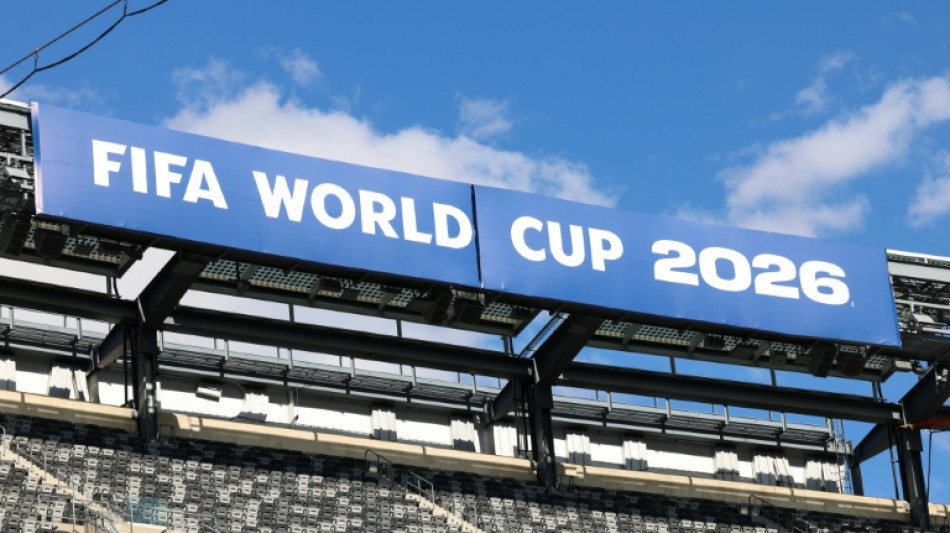
World Cup fans are wielding artificial intelligence to mass-produce viral songs supporting their teams ahead of next month's tournament.
As the fan-made football anthems are raking in millions of plays across YouTube, TikTok and Instagram, experts say that the viral tunes raise questions about song ownership, artist compensation and the valuation of human creativity.
But many users do not appear to mind, with some even showing a preference for the AI-generated songs over an official anthem football's world governing body FIFA commissioned from musicians Jelly Roll and Carin Leon.
A highly-anticipated World Cup track from Shakira was also released last week, but the fad of AI fan songs was still drumming up excitement on social media for the tournament taking place in cities across the United States, Canada and Mexico in June and July.
The trend appears to have started with a song dedicated to the French team, "Imbattables," released in February by artist Crystalo, who is listed on Spotify as France's "premier AI musical creator." The song begins with a call-and-response listing the names of Kylian Mbappe and other star French national players.
A Brazilian anthem followed with a similar name-chanting format and a trending phonk melody that producer Guilherme Maia, who goes by the artist name M4IA, said he created by layering together different elements he had put together with the help of AI.
Tracks for top sides Portugal, Argentina and Germany, as well as many others, soon sprang up across platforms, garnering more praise from fans.
But while the Brazilian version closely resembled the French prototype, the later songs copied Maia's format exactly. Each recycled the phonk beat and listed players' names before calling for respect for the squad's "king" -- a feature reserved for the likes of Cristiano Ronaldo in the Portugal tune or Lionel Messi in Argentina's version.
"What I see happening now is more about people following a trend or trying to recreate a feeling," Maia told AFP, saying that artistic emulation has always existed in music.
While he was enthusiastic about the possibilities AI opened up for production, he acknowledged that the technology raises new questions about authorship and copyright.
"In music, there are clear rules. You can't just copy someone else's work or use samples without permission, even if AI is involved."
- Lack of credit -
Maia stressed that he built the track on his own and used AI as an assistant when creating certain elements, rather than asking a music generation tool like Suno to create a song with one prompt.
But, Jason Palamara, an assistant professor of music technology at Indiana University, said that with the way the models exist, there is a lack of clarity over how artists are credited if their copyrighted work is used to train them.
"It had to come from somewhere," he said.
The inconsistencies that can appear in the AI-generated images can also pop up in music created with the technology.
For example, a fan-made World Cup song for Portugal was sung with a Brazilian accent, while a Colombian version read James Rodriguez's first name with an English rather than Spanish pronunciation.
Music created with AI can also lack complexity, Palamara said.
"It's one compact product, rather than a product where there's multiple tracks that have gone into it, where it has more texture."
Still, Morgan Hayduk, co-CEO of music rights software company Beatdapp, said that listeners enjoying the World Cup fan songs may not be seeking artistic complexity.
"There seems to be a cohort of people who actually don't care," Hayduk observed. "They like the music, and they like the back story that it came from a large language model and not a songwriter or a group."
He said that despite concerns over how the industry will adapt to AI, quick-fix songs that can be chanted by fans or featured in advertisements are a clear use-case for AI-generated music in its current stage.
"Knowing what goes into a generative output, like a World Cup fan song, is the thorny Rubicon that the music industry has to cross now."
M.Davis--CPN