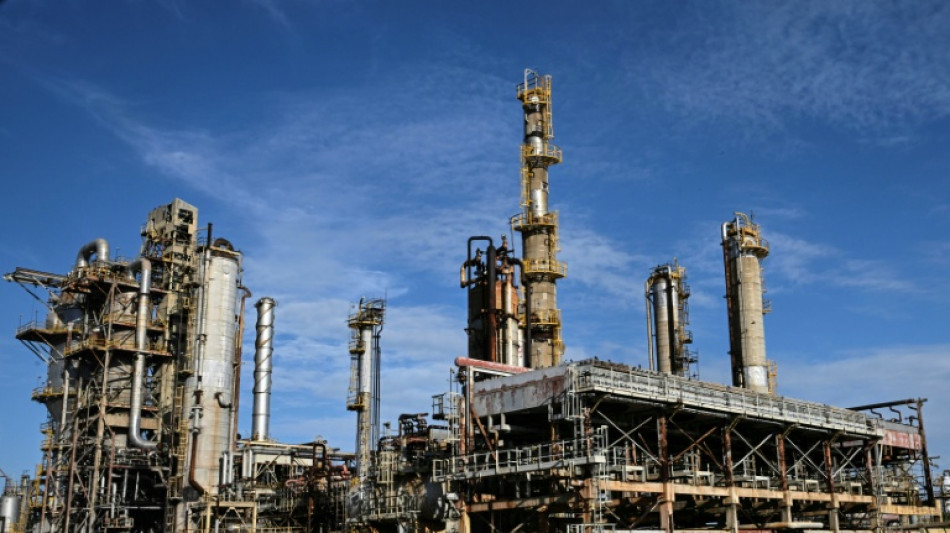
Venezuelans eye economic revival with hoped-for oil resurgence / Photo: Ronaldo SCHEMIDT - AFP/File

 AI 'warning shots' focus Beijing on national security risks
 Philippine tribe in limbo over US-led tech hub
 Saudi-led coalition says Houthis fired ballistic missile at Riyadh
 Cuba works to restore power after another blackout
 Brigitte Bardot widower slams sale of star's belongings

 Indonesia accepts Malaysia's help to tackle wildfires
 Nvidia, OpenAI CEOs to attend Xi dinner at White House

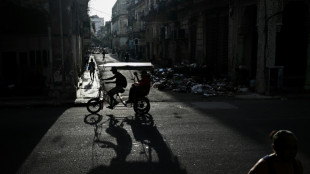 Cuba hit with seventh major blackout of the year
 Nigeria miners struggled to breathe in cell before 37 died: survivors

 Warren Buffett steps down as Berkshire Hathaway chairman

 Isolated Syrian-Druze city blames Damascus for shortages

 Kerry James Marshall: American 'blackness' painter celebrated in Europe

 Infantino 'must go', says German FA vice-president

 Japan's busiest rail station tests robot bins

 Backpackers fret over Australian visa crackdown

 Bank of Japan hikes rates to 31-year high to battle inflation

 AI doomsday warnings unlikely to slow IPOs but questions linger

 In Brazil's Amazon, the hunt for oil fuels hopes and fears

 Baby orangutans in India expose 'frightening' scale of trafficking

 Oversight Board blasts 'inadequate' Meta safeguards for AI deepfakes

 Harry makes first public appearance since return to UK

 Princess Diana's brother makes new explosive claims against Charles

 Trump admin overhauls key protection for endangered species

 Mbappe draws political fire over Ceuta t-shirt controversy

 Third malaria death in Germany from outbreak tied to Frankfurt airport

Ronald Herrera remembered the prosperity that Puerto Cabello enjoyed decades ago as home to the El Palito refinery -- once a symbol of Venezuela's oil boom.
Now, the ex-refinery worker said, he hoped to see his coastal city rise again through a relaunch of the Latin American country's oil industry by the United States, after Washington forcibly removed Nicolas Maduro from power on January 3.
"We're looking at a very promising outlook because, since we live next to the refinery, we believe the flow of work is going to improve," Herrera told AFP.
Delcy Rodriguez replaced Maduro as Venezuela's interim president after US forces seized and took him to the United States during a military raid in Caracas.
She quickly signed oil agreements with US President Donald Trump, who has declared that his administration now controls the sector -- the main engine of the Venezuelan economy.
Nowadays, Herrera sells coffee and cigarettes from a street stall in El Palito -- a district by the refinery in the port city located on Venezuela's Caribbean coast.
Five of his seven children live abroad -- part of a Venezuelan diaspora of around eight million, according to UN estimates.
Herrera favorably views Rodriguez's stance on the oil sector, which has reeled from years of underinvestment, allegations of corruption and US sanctions.
Since taking office, Rodriguez has pushed a reform of a hydrocarbons law to open the country's petroleum industry to foreign firms.
"It's going to give us a big boost because, with jobs available, we have work to do," he said.
The acting president is under pressure from the Trump administration to comply with its demands to overhaul the state-run oil industry and open it up to US companies.
- 'Always full' -
At night, the refinery's lights and its tongues of fire soften the gloom.
This network of pipes and huge storage tanks connects to a port where ships unload crude to be refined into gasoline and diesel for the Venezuelan market.
At the intersection where Herrera works, a dilapidated hotel waits for buyers.
A "for sale" sign is barely legible at the top, its letters faded by sun and salt air.
With four floors and 147 rooms, it's the tallest building in El Palito. Outside in the street, a row of colorful shops offers refreshments to tourists visiting a local surfing beach.
Jonathan Guarire, a 35-year-old employee at the hotel, said he believed the establishment could regain its past glory through a resurgence of the oil industry that would attract buyers.
"It was always full...and I hope it becomes like it was before," he said.
"All of that was always full of keys," he recalled, showing the small wooden cubbies where they used to be kept.
- 'Blackmail' -
The refinery is the area's most prominent landmark.
Its huge white storage tanks serve as canvases for slogans evoking Chavismo, the political ideology that governed Venezuela for the past 27 years and is named after late former leftist leader Hugo Chavez.
One slogan read: "Fatherland, socialism or death."
On a beach near the refinery, fishermen arrived at dawn with their night's catch.
Sergio Espina, a retired sailor in his 60s, was waiting to buy fish, which he would then sell.
The situation "is a little tough," he said. "I'm hoping things will get completely better to see what happens from here on out."
Another local, Gilberto Herrera, 67, works as a public employee and earns a paltry salary of less than one dollar a month. He attributes Venezuela's economic crisis to the sanctions that the United States slapped on country's oil industry in 2019.
The sanctions "did us a lot of harm," he said, questioning the military strike that Trump ordered on Venezuela.
"It's all blackmail, if you ask me. Why are they only now opening things up, as they say, to allow investment?"
X.Cheung--CPN