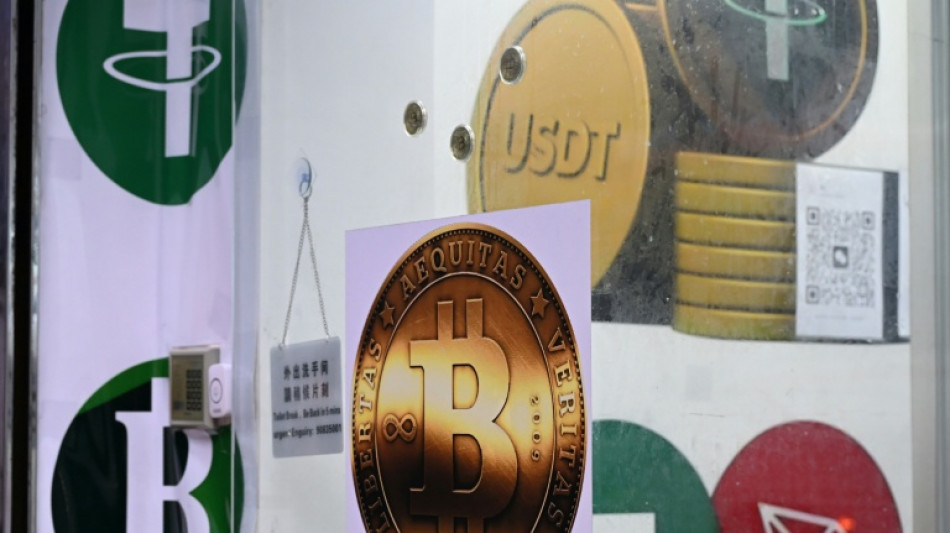
US banks fight crypto's push into Main Street / Photo: Peter PARKS - AFP/File

 AI 'warning shots' focus Beijing on national security risks

 Philippine tribe in limbo over US-led tech hub

 Saudi-led coalition says Houthis fired ballistic missile at Riyadh

 Cuba works to restore power after another blackout

 Brigitte Bardot widower slams sale of star's belongings

 Indonesia accepts Malaysia's help to tackle wildfires

 Nvidia, OpenAI CEOs to attend Xi dinner at White House

 Cuba hit with seventh major blackout of the year

 Nigeria miners struggled to breathe in cell before 37 died: survivors

 Warren Buffett steps down as Berkshire Hathaway chairman

 Isolated Syrian-Druze city blames Damascus for shortages

 Kerry James Marshall: American 'blackness' painter celebrated in Europe

 Infantino 'must go', says German FA vice-president

 Japan's busiest rail station tests robot bins

 Backpackers fret over Australian visa crackdown

 Bank of Japan hikes rates to 31-year high to battle inflation

 AI doomsday warnings unlikely to slow IPOs but questions linger

 In Brazil's Amazon, the hunt for oil fuels hopes and fears

 Baby orangutans in India expose 'frightening' scale of trafficking

 Oversight Board blasts 'inadequate' Meta safeguards for AI deepfakes

 Harry makes first public appearance since return to UK

 Princess Diana's brother makes new explosive claims against Charles

 Trump admin overhauls key protection for endangered species

 Mbappe draws political fire over Ceuta t-shirt controversy

 Third malaria death in Germany from outbreak tied to Frankfurt airport

The banking industry is pushing back against White House-aligned crypto companies seeking to expand their business to Main Street customers in the United States.
At the heart of the battle being waged by some of Washington's most powerful lobbies is control over several trillions of dollars in banking deposits and a debate over whether crypto companies can offer an alternative place to stash cash.
The crypto industry has long had a complicated and adversarial relationship with traditional banks, a distrust dating back to the birth of the crypto movement in the wake of the 2008 financial crisis. Crypto believers fear that banks are trying to derail their rise.
The current battle centers on draft legislation -- the Clarity Act -- that would allow crypto players to offer cash rewards to stablecoin holders, boosting their ability to lure customers away from traditional banks.
According to the American Banking Association, these incentives would endanger the $6.6 trillion in deposits parked in traditional banks, especially lenders smaller than the national giants JPMorgan Chase or Bank of America.
These deposits are the lifeblood of the economy, especially in areas outside major cities, where local banks use them to finance loans to individuals, small businesses and farmers.
"Community banks make 60 percent of all the small business loans in this country," Independent Community Bankers of America CEO Rebeca Romero Rainey told AFP. "They make 80 percent of all agriculture loans. If they don't have those deposits, where are the funds coming from to fund those loans?"
Stablecoins are cryptocurrencies designed to maintain steady value by being pegged to traditional assets like cash or US government bonds -- meaning they can be used reliably for transactions and transfers while bypassing banks.
The crypto industry touts them as proof that crypto businesses can be trusted and aren't necessarily high-risk or vulnerable to scams.
For Bhau Kotecha, CEO and co-founder of platform Paxos Labs, banning stablecoins from offering interest "would narrow the use cases that make stablecoins compelling for mainstream adoption."
The key player in the battle is Coinbase and its CEO Brian Armstrong, who has led efforts to rehabilitate crypto's reputation after years of scandals and a Biden administration notably skeptical of crypto's benefits.
In the runup to the 2024 election, Armstrong and Silicon Valley venture capital firm Andreessen Horowitz helped raise tens of millions of dollars for the Trump campaign and lawmakers on both sides of the aisle to change Washington's stance on crypto.
The gamble paid off with the Republican sweep in November 2024.
Since Donald Trump's victory, crypto companies have seen their power and influence surge. Trump and his wife Melania each have their crypto coins, and his sons are heavily invested in the industry. One bill -- the GENIUS Act -- has already been signed into law, giving stablecoins long-sought legal recognition.
But with the Clarity Act -- a broader proposal setting the rules of the road for digital assets -- the crypto industry is moving onto the banking industry's turf.
- Beware of the midterms -
For banks, the risk of customers diverting deposits to stablecoins and potentially gutting their core business was too grave a threat.
After their concerns were heard, the Senate Banking Committee was poised last month to pass a version of the bill that would ban stablecoins from paying interest.
An irate Armstrong maneuvered to have the bill pulled, and the Clarity Act is now stuck in limbo.
"We'd rather have no bill than a bad bill," Armstrong wrote on X.
The banks counter that if the crypto industry wants to operate as banks, they should apply for banking licenses and be regulated like any other lender.
The White House remains confident the bill can get back on track, and warns of the consequences if the opportunity is missed and the Democratic party wins midterm elections in November.
"You might not love every part of the CLARITY Act, but I can guarantee you'll hate a future Dem version even more," said Patrick Witt, who coordinates crypto policy at the White House.
M.Anderson--CPN