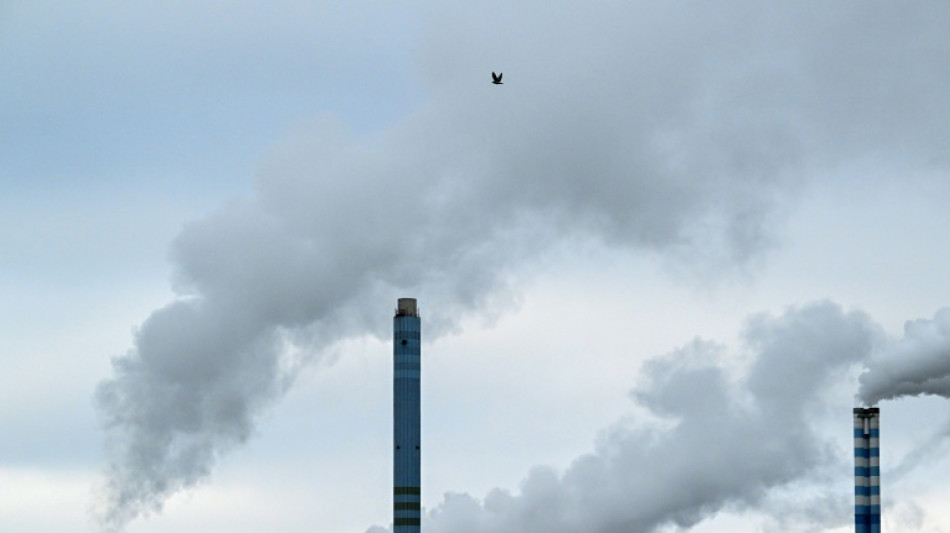
Trump tariff threat 'poison' for Germany's fragile recovery / Photo: Kirill KUDRYAVTSEV - AFP

 AI 'warning shots' focus Beijing on national security risks

 Philippine tribe in limbo over US-led tech hub

 Saudi-led coalition says Houthis fired ballistic missile at Riyadh

 Cuba works to restore power after another blackout
 Brigitte Bardot widower slams sale of star's belongings

 Indonesia accepts Malaysia's help to tackle wildfires

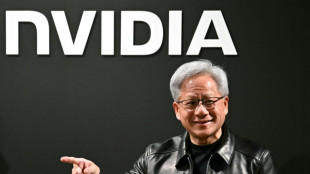 Nvidia, OpenAI CEOs to attend Xi dinner at White House

 Cuba hit with seventh major blackout of the year

 Nigeria miners struggled to breathe in cell before 37 died: survivors

 Warren Buffett steps down as Berkshire Hathaway chairman

 Isolated Syrian-Druze city blames Damascus for shortages

 Kerry James Marshall: American 'blackness' painter celebrated in Europe

 Infantino 'must go', says German FA vice-president

 Japan's busiest rail station tests robot bins

 Backpackers fret over Australian visa crackdown

 Bank of Japan hikes rates to 31-year high to battle inflation

 AI doomsday warnings unlikely to slow IPOs but questions linger

 In Brazil's Amazon, the hunt for oil fuels hopes and fears

 Baby orangutans in India expose 'frightening' scale of trafficking

 Oversight Board blasts 'inadequate' Meta safeguards for AI deepfakes

 Harry makes first public appearance since return to UK

 Princess Diana's brother makes new explosive claims against Charles

 Trump admin overhauls key protection for endangered species

 Mbappe draws political fire over Ceuta t-shirt controversy

 Third malaria death in Germany from outbreak tied to Frankfurt airport

US President Donald Trump's latest tariff threat against Europe over Greenland has hit its top economy Germany just as hopes are growing for a modest recovery after years of stagnation.
Germany's government and its export-reliant businesses were blindsided when Trump again wielded the tariffs axe at the weekend -- this time sparked by his anger over a geopolitical rather than an economic dispute.
"For Germany, these new tariffs would be absolute poison," ING economist Carsten Brzeski told AFP, adding that the heightened uncertainties "clearly jeopardise the fragile recovery underway".
Germany -- long ailing from high energy prices, falling demand in China and stiff competition from the Asian giant, and last year's US tariffs blitz -- achieved just 0.2 percent GDP growth in 2025 after two years of recession.
Huge public spending to rebuild Germany's armed forces and ageing infrastructure have boosted hopes for a stronger rebound this year, and the government has predicted GDP will expand by 1.3 percent in 2026.
That was before Trump -- angered by pushback against his desire to seize Denmark's autonomous territory of Greenland -- threatened additional tariffs of up to 25 percent on products from eight European countries, including Germany.
The news -- which drove down stocks and saw safe-haven assets like gold rise -- rattled German companies and provoked a mix of puzzlement and anger.
"Greenland is taking this madness to extremes," Thorsten Bauer, co-head of laser maker Xiton Photonics, told AFP while on a business trip in the United States, expressing a sentiment shared by many business leaders.
The Federation of German Industries denounced "an inappropriate and damaging escalation for all parties," which it said "is putting enormous pressure on transatlantic relations".
And the German Association of Wholesalers, Exporters and Service Providers slammed Trump's latest threat as "grotesque" and stressed defiantly that "we continue to stand by Denmark: democracy and freedom cannot be wiped out by punitive tariffs".
- 'Out of the blue' -
Trump's latest salvo comes after the EU and the United States last July agreed to cap tariffs on most EU exports at 15 percent, with most goods in the other direction being tariff-free.
Though some criticised the deal as one-sided, many German businesses cautiously welcomed the deal for the certainty it seemed to bring.
"Our members largely kept a cool head during last summer's tariffs debate and waited patiently. But waiting patiently cannot go on forever," the German Association of Small and Medium-sized Businesses told AFP.
"Donald Trump's erratic policies are poison for the global economy and free trade -– and they damage trust that has been built up over years in rules-based systems."
The group said new tariffs would particularly hurt German SMEs but nonetheless insisted that "Europe must not allow itself to be blackmailed. If the US does indeed impose tariffs, Europe needs to respond quickly and decisively".
European diplomats have promised a firm response if Trump makes good on his threat and powerful conservative German Member of the European Parliament, Manfred Weber, said final ratification of the July deal was now "on ice".
Some experts have voiced hope that all sides will step back from an escalation of a dispute that would hurt everyone involved, and threaten US-German trade worth over 250 billion euros ($290 billion), according to the latest data.
If implemented and sustained for a long period, the new tariffs "could cost the eurozone economy something between 0.2 percent and 0.5 percent of GDP, with a bigger hit for Germany," wrote Andrew Kenningham of Capital Economics.
"In practice though, we doubt that they will be implemented as advertised. We also think the EU will be cautious in any retaliation in an effort to avoid further escalation."
The new uncertainty comes at a tough time for Germany's crucial auto sector, which is now bracing for resurgent transatlantic trade tensions it had hoped had been put to bed.
Automotive analyst Pal Skirta of Metzler Bank told AFP that Trump's latest threat is worse news than last year's.
"The Liberation Day tariffs were maybe not very reasonable, but you could justify them," he said. "With Greenland, it comes out of the blue, you can't justify it by macroeconomic logic."
He added: "This is the last and most evident proof point that the tariffs are completely driven by politics, not by economics. Uncertainty has spiked to a much greater level."
Y.Ponomarenko--CPN