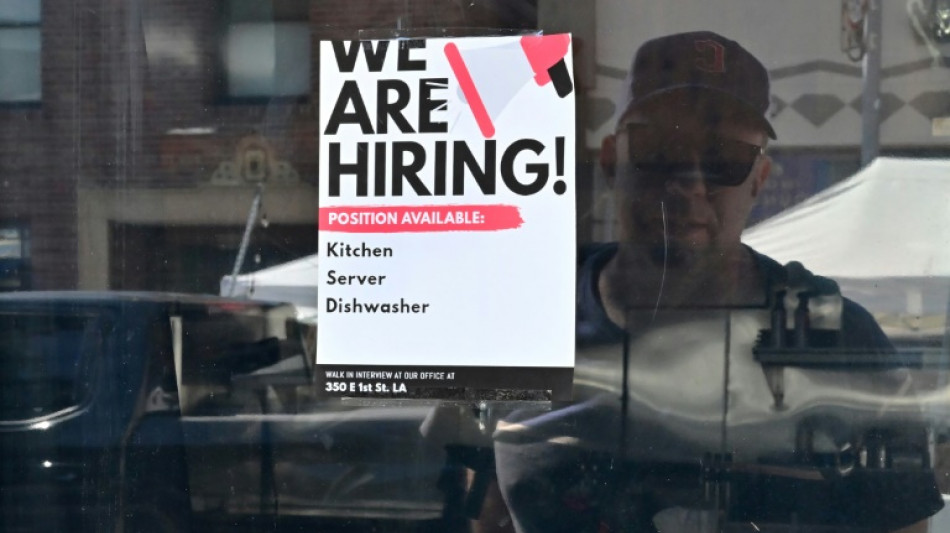
US private sector shed jobs for first time in recent years: ADP / Photo: Frederic J. BROWN - AFP/File

 Jay-Z rape accuser says she made 'false accusations'

 Trump's photo of Xi greeting carries signs of AI

 First US trial against TikTok to open Monday

 French literary prize removes novel from longlist after AI claims
 Trump accuser E. Jean Carroll finally has her damages
 Heavy fighting, internet disruption as Ethiopia conflict rages

 Asian markets mixed after oil gains

 UN approves resolution on dealing with rising sea levels

 Global stocks mostly fall as oil prices and bond yields rise

 Starbucks to close 250 more cafes in North America

 Stocks fall as oil prices rise and bonds back under pressure

 Top ECB official to resign to take up IMF role

 Eviction of pensioner puts Spain housing crisis in spotlight

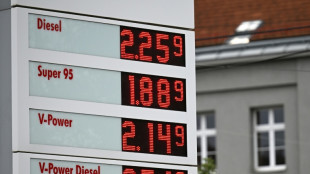 Average EU diesel price hits record 2.23 euros a litre: AFP analysis

 Whitetip Investments Marks 10 Years of Regulation, Transparency & Responsible Trading

 Stocks fall, oil prices rise as global bonds under pressure

 Hungary detects invasive spotted lanternfly for first time in EU

 Forex Expo Dubai 2026 Breaks Guinness World Record Again With 23,816 Attendees

 Asian markets fall on US-China jitters as leaders meet

 As Moscow steps up attacks, Kyiv residents brace for harsh winter

 Markets mixed as China's Xi arrives for US talks

 Archaeological 'breakthrough' could confirm origins of Paris

 Australian PM says OpenAI hacked government health website

 Rio breaks record for rainiest September amid powerful El Nino

 Mandela Digital Extends Early Access Programme to 11 February 2027 Following Strong Response

The US private sector unexpectedly lost jobs in June, according to data from payroll firm ADP on Wednesday, a potential sign of labor market weakness amid uncertainty from President Donald Trump's tariffs.
It was the first such decline in recent years, in data that will be scrutinized ahead of government employment numbers due to be released a day later.
As companies grapple with uncertainty from Trump's shifting tariff policies -- alongside supply chain disruptions and added cost pressures -- analysts are watching for signs that the world's biggest economy may be less solid than expected.
Private sector employment declined by 33,000 last month, ADP said, while job growth in May was revised lower to 29,000.
"Though layoffs continue to be rare, a hesitancy to hire and a reluctance to replace departing workers led to job losses last month," ADP chief economist Nela Richardson said in a statement.
But she maintained that the hiring slowdown "has yet to disrupt pay growth."
The losses came about in areas like professional and business services, alongside education and health services.
But sectors like leisure and hospitality, alongside manufacturing, showed gains, ADP said.
Meanwhile, pay growth held steady, according to the report.
For those who remained in their jobs, annual pay gains were little-changed at 4.4 percent. Increases for those who changed jobs was 6.8 percent in June, slowing slightly.
The last massive contraction in private sector employment came about during the pandemic, while ADP historical data indicates a smaller loss in early 2023.
Analysts have cautioned that the ADP data sometimes differ significantly from official numbers.
But the decline still marked a concerning development, they said.
Since returning to the presidency, Trump has imposed a sweeping 10 percent tariff on almost all US trading partners and higher levels on imports of steel, aluminum and autos.
The president's approach of unveiling, then adjusting or pausing duties, has also sent shocks through supply chains.
- 'Startling' -
"The ADP headline figure is well below market expectations, and the optics of a decline is startling," said Carl Weinberg, chief economist at High Frequency Economics.
"Whether this report is accurate or not, traders and investors will read today's number as a dark result for trading today," he added in a note.
Among different types of companies, the decline in June was riven by smaller and medium-sized businesses, ADP data showed.
"We could be in for a downside surprise in Thursday's official jobs report," warned LPL Financial chief economist Jeffrey Roach.
While he believes ADP's forecasting value is "minimal on a monthly basis," it can be helpful in determining long term trends.
Adam Sarhan from 50 Park Investments said it is the first time in recent months that the US jobs market has disappointed and contracted.
"That is worrisome because up until now unemployment has been low and jobs have been strong and growing," Sarhan said.
Weinberg cautioned that companies are likely to respond to the chances of a tariff-induced hike in costs by "becoming more aggressive about trimming their workforces."
"This may be the tip of an iceberg, but it also could be a false start," he said.
X.Wong--CPN