
UK govt braces for crunch welfare reforms vote amid major rebellion / Photo: Paul Currie - POOL/AFP

 Jay-Z rape accuser says she made 'false accusations'

 Trump's photo of Xi greeting carries signs of AI

 First US trial against TikTok to open Monday

 French literary prize removes novel from longlist after AI claims

 Trump accuser E. Jean Carroll finally has her damages

 Heavy fighting, internet disruption as Ethiopia conflict rages

 Asian markets mixed after oil gains

 UN approves resolution on dealing with rising sea levels

 Global stocks mostly fall as oil prices and bond yields rise

 Starbucks to close 250 more cafes in North America

 Stocks fall as oil prices rise and bonds back under pressure

 Top ECB official to resign to take up IMF role

 Eviction of pensioner puts Spain housing crisis in spotlight

 Average EU diesel price hits record 2.23 euros a litre: AFP analysis

 Whitetip Investments Marks 10 Years of Regulation, Transparency & Responsible Trading

 Stocks fall, oil prices rise as global bonds under pressure
 Hungary detects invasive spotted lanternfly for first time in EU

 Forex Expo Dubai 2026 Breaks Guinness World Record Again With 23,816 Attendees

 Asian markets fall on US-China jitters as leaders meet

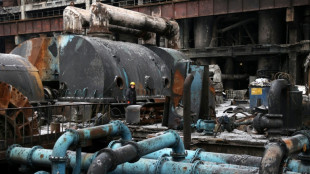 As Moscow steps up attacks, Kyiv residents brace for harsh winter

 Markets mixed as China's Xi arrives for US talks
 Archaeological 'breakthrough' could confirm origins of Paris

 Australian PM says OpenAI hacked government health website

 Rio breaks record for rainiest September amid powerful El Nino

 Mandela Digital Extends Early Access Programme to 11 February 2027 Following Strong Response

UK Prime Minister Keir Starmer faced the most serious internal rebellion of his year-long premiership on Tuesday, as MPs prepared to vote on key welfare reforms that have already forced a damaging climbdown.
His government backed down last week on controversial plans to slash disability and sickness benefits, after they sparked a major revolt from Labour MPs who argued that the proposals went too far.
Despite Starmer agreeing to water down the changes, the ongoing backlash from his MPs still threatens to derail the legislation, which will be voted on later on Tuesday.
Labour enjoys a huge majority in the lower House of Commons, with more than 80 of its MPs needing to defy the government to defeat a bill.
The latest estimates on Tuesday suggested that the rebels will fall short of that number in a vote, but ministers and government whips in charge of discipline were taking no chances.
"We're all trying to find a way to protect the most vulnerable people (and) get people back into work if they need it," Business Secretary Jonathan Reynolds told Times Radio while defending the legislation.
Kemi Badenoch, the leader of the main Conservative opposition, told the Commons that her MPs would not be supporting the changes.
"A fundamental and serious programme to reform our welfare system is required, and this bill is not it," she said. "This bill's a fudge."
- 'Staggered approach' -
Starmer's government -- which later this week marks one year in office -- confirmed last Friday that it would make a series of concessions on its flagship welfare bill.
It had been forced to act after more than 120 Labour MPs indicated that they were willing to rebel to scupper the proposed changes.
The concessions include a so-called "staggered approach" to the reforms.
This means the narrower eligibility criteria proposed for sickness and disability benefits will only apply to new claimants, not those already receiving the payments.
Work and Pensions Minister Liz Kendall unveiled the new-look bill to parliament on Monday, just as newly-released government data estimated an extra 150,000 people would be pushed into poverty by the watered-down reforms.
UK media said that had left some wavering Labour parliamentarians aggravated and reluctant to back the bill.
"It was falling apart in the Commons today because MPs were exposing so many holes in the government's plans," leading rebel MP Rachael Maskell told the Guardian newspaper.
Starmer had hoped the legislation would make savings of £5 billion ($6.9 billion), but that figure has now been reduced to £2.5 billion.
That means finance minister Rachel Reeves, who has struggled to generate growth from a sluggish UK economy, will need to find more money elsewhere.
- U-turns -
The parliamentary wrangling has clouded the first anniversary of Labour's return to power after 14 years in opposition.
It has also renewed questions about Starmer's political acumen and the purpose of his centre-left government.
Starmer has had meagre success in the government's central mission of boosting economic growth, and in recent months made a series of damaging U-turns.
On June 9, the government declared it had reversed a policy to scrap a winter heating benefit for millions of pensioners, following widespread criticism and another rebellion from its own MPs.
A week later, Starmer -- a former chief state prosecutor in England and Wales -- announced a national inquiry focused on a UK child sex exploitation scandal, after previously resisting calls.
The prime minister has a massive majority of 165 MPs, meaning he should be able to force whatever legislation he wants through parliament.
But many of his own MPs complain of a disconnect between Starmer's leadership, which is focused on combatting the rise of the far-right Reform UK party, and Labour's traditional centre-left principles.
A YouGov poll of more than 10,000 Britons released last week found that while Labour is losing voters to Reform, it is also forfeiting supporters to the Liberal Democrats and the Greens on the left.
H.Meyer--CPN