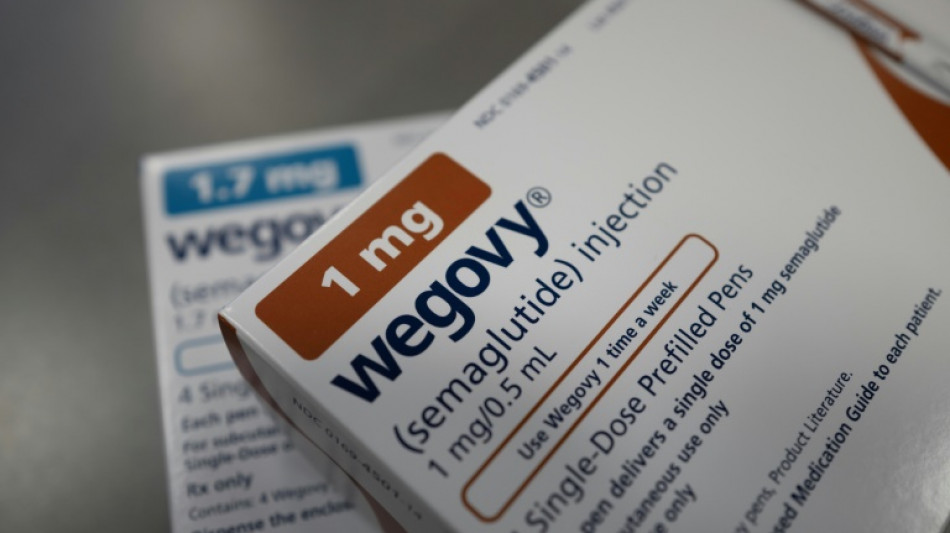
Ozempic-maker Novo Nordisk says CEO to step down / Photo: SCOTT OLSON - GETTY IMAGES NORTH AMERICA/AFP/File

 S.African women runners arm themselves after string of killings
 Indonesia fires threatens critically-endangered orangutan: IUCN

 Iran proposes Hormuz plan, Trump reportedly refuses

 El Nino rewrites the menu in the world's top restaurants
 Jay-Z rape accuser says she made 'false accusations'
 Trump's photo of Xi greeting carries signs of AI

 First US trial against TikTok to open Monday

 French literary prize removes novel from longlist after AI claims
 Trump accuser E. Jean Carroll finally has her damages
 Heavy fighting, internet disruption as Ethiopia conflict rages

 Asian markets mixed after oil gains

 UN approves resolution on dealing with rising sea levels

 Global stocks mostly fall as oil prices and bond yields rise
 Starbucks to close 250 more cafes in North America

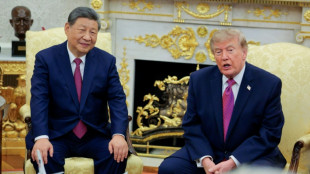 Stocks fall as oil prices rise and bonds back under pressure

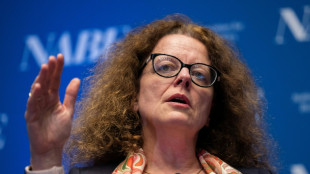 Top ECB official to resign to take up IMF role

 Eviction of pensioner puts Spain housing crisis in spotlight

 Average EU diesel price hits record 2.23 euros a litre: AFP analysis

 Whitetip Investments Marks 10 Years of Regulation, Transparency & Responsible Trading

 Stocks fall, oil prices rise as global bonds under pressure
 Hungary detects invasive spotted lanternfly for first time in EU
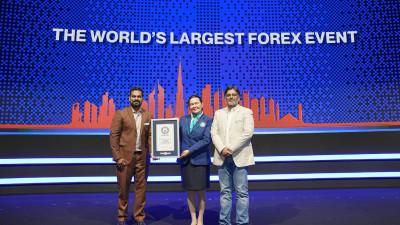 Forex Expo Dubai 2026 Breaks Guinness World Record Again With 23,816 Attendees

 Asian markets fall on US-China jitters as leaders meet

 As Moscow steps up attacks, Kyiv residents brace for harsh winter

 Markets mixed as China's Xi arrives for US talks

Danish drugmaker Novo Nordisk, known for its blockbuster diabetes and weight-loss treatments Ozempic and Wegovy, said Friday its chief executive was stepping down in the wake of "market challenges".
The company said the decision was made by mutual agreement with the board and that it was searching for a successor for Lars Fruergaard Jorgensen.
Jorgensen will continue "for a period to support a smooth transition to new leadership", Novo Nordisk said in a statement.
The change is being made "in light of the recent market challenges Novo Nordisk has been facing and the development of the company's share price since mid-2024", it said.
At the same time, the company stressed the success it had seen under Jorgensen's stewardship.
"During his eight-year tenure as CEO, Novo Nordisk's sales, profits and share price have almost tripled," Novo Nordisk said.
The 58-year-old Danish executive has spent his entire career at Novo Nordisk, which he joined 34 years ago.
Ozempic, which accounts for 41 percent of Novo Nordisk's sales, is an injectable treatment for diabetes that became wildly popular on social networks for its slimming properties.
Novo Nordisk launched the anti-obesity drug Wegovy, which uses the same molecule but has been directly approved as a weight loss treatment, in the United States in 2021.
Following the success of its treatments, Novo Nordisk rose to become Europe's most valuable company by market capitalisation in September 2023, overtaking French luxury fashion house LVMH, making the company a cornerstone of the Danish economy.
The drugmaker has since been dethroned and reclaimed the spot several times, having last been overtaken for the lead by German tech company SAP in March.
- Facing competition -
Since June 2024, Novo Nordisk's share has fallen by more than half and now ranks as Europe's fourth most valuable company.
The share price dropped more than three percent on the Copenhagen stock exchange following Friday's announcement.
The decline has come as its dominant position has faced several challenges.
Earlier this month, the company cut its full-year sales growth forecast due to competition from copycat versions of its popular GLP-1 injections made in US pharmacies -- a practice known as compounding.
The pharmacies had been allowed to make their own version of Wegovy and Ozempic due to a shortage of the drugs.
But US regulators ruled in February that the shortage had ended and ordered pharmacies to discontinue making the compounded versions.
"We are actively focused on preventing unlawful and unsafe compounding and on efforts to expand patient access to our GLP-1 treatments," Jorgensen said in a statement in early May.
The Danish group had cut its sales forecast from the 16-to-24 percent range to 13-to-21 percent.
Novo Nordisk is also facing competition from US rival Eli Lilly, which makes the anti-obesity injection Zepbound.
Novo Nordisk's shares tumbled last month after Eli Lilly announced a successful clinical trial of diabetes and obesity treatment orforglipron.
Around the world, more than 10 percent of the population suffers from diabetes, for which treatments make up the core of the drugmaker's business.
According to the International Diabetes Federation, the number of diabetic adults is expected to increase by 46 percent by 2045.
The World Obesity Federation also predicts that by 2035, over half of the world's population will be overweight or obese and the global economic impact could then exceed $4 trillion a year.
Y.Uduike--CPN