Eurovision stage a dynamic 3D 'playground': producer / Photo: SEBASTIEN BOZON - AFP

 S.African women runners arm themselves after string of killings
 Indonesia fires threatens critically-endangered orangutan: IUCN

 Iran proposes Hormuz plan, Trump reportedly refuses
 El Nino rewrites the menu in the world's top restaurants
 Jay-Z rape accuser says she made 'false accusations'
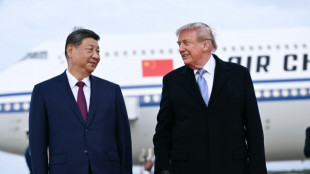
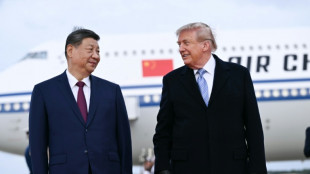
 Trump's photo of Xi greeting carries signs of AI
 First US trial against TikTok to open Monday
 French literary prize removes novel from longlist after AI claims
 Trump accuser E. Jean Carroll finally has her damages
 Heavy fighting, internet disruption as Ethiopia conflict rages

 Asian markets mixed after oil gains

 UN approves resolution on dealing with rising sea levels
 Global stocks mostly fall as oil prices and bond yields rise
 Starbucks to close 250 more cafes in North America
 Stocks fall as oil prices rise and bonds back under pressure
 Top ECB official to resign to take up IMF role
 Eviction of pensioner puts Spain housing crisis in spotlight
 Average EU diesel price hits record 2.23 euros a litre: AFP analysis

 Whitetip Investments Marks 10 Years of Regulation, Transparency & Responsible Trading

 Stocks fall, oil prices rise as global bonds under pressure
 Hungary detects invasive spotted lanternfly for first time in EU
 Forex Expo Dubai 2026 Breaks Guinness World Record Again With 23,816 Attendees

 Asian markets fall on US-China jitters as leaders meet

 As Moscow steps up attacks, Kyiv residents brace for harsh winter
 Markets mixed as China's Xi arrives for US talks
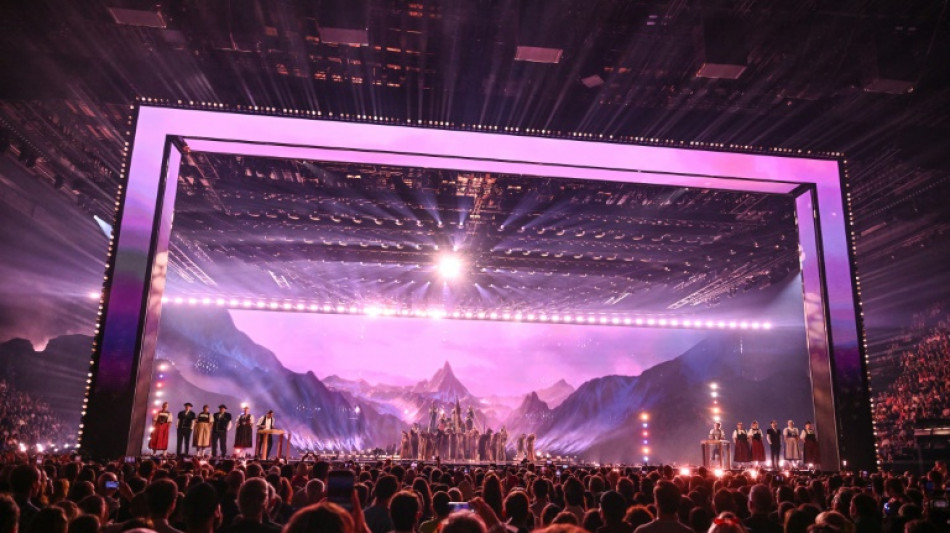
The Eurovision Song Contest's groundbreaking stage, built in a race against time, is a hi-tech playground for artists performing at the world's biggest live music TV event, its producer told AFP.
The stage is a behemoth that works like a Swiss army knife, with multiple possibilities to bring 37 very different three minute performances to life, said Eurovision co-executive producer Moritz Stadler.
The annual television extravaganza's grand final on Saturday, and the semi-finals on Tuesday and Thursday, take place at the St. Jakobshalle arena in the Swiss city of Basel.
The stage juts out into the arena, with the 6,500 audience on three sides, close up to the dazzling show of lasers, lights and state-of-the-art backdrops.
"It's an atypical stage because it's quite iconic: it has never existed in this format," Stadler said as the 69th Eurovision got under way.
"It's a stage that's in the whole arena, in both directions: there's no front, no back on this stage. There's an iconic frame in the middle of the arena.
"We've noticed above all that countries are using the entire stage, and all the features. It means they've really found a playground that suits them."
Stadler said the Swiss Broadcasting Corporation, the host broadcaster, had put together a stage set "like a Swiss army knife".
"There are countless combinations and possibilities on this stage," and competitors "have to get to grips with this".
- Like Swiss clockwork -
Stadler said the staging had pushed the performers to stretch their imaginations.
To win, "everyone has to surpass themselves and make the most of all these possibilities", he said.
The competing countries "have increased their creativity and ideas tenfold, and have even pushed the possibilities of this stage further than our teams had imagined", elevating their performances to "simply astounding" levels.
Some 500 people worked day and night over two and a half weeks to build the stage on time.
"The biggest challenge is time. That is to say, it is a behemoth of Eurovision production. It's incredibly complex," said Stadler.
"But in Switzerland, we know watchmaking and it worked very well."
He said Eurovision had developed into a giant production, with today's over-the-top TV feast a world away from the first radio-focused Eurovision in a Swiss theatre in Lugano in 1956. There were seven competing singers and an orchestra.
Europe's public service broadcasters "co-produce the biggest musical event in the world. If you had this idea today, you wouldn't be able to start it," said Stadler.
An expected 160 million to 200 million viewers will watch the final, while around 1.2 billion interactions on social networks are anticipated.
- 3D frame of light -
Set designer Florian Wieder said the relatively small size of the arena -- in Eurovision terms -- meant the set could not be hung from the ceiling.
Instead, everything is ground-supported by four disguised towers: two behind the video wall and two forming the front-of-stage frame.
"We have a box of technical toys... we always try not to use all the toys at the same time, because that would be a total overload," he told a press conference.
Wieder said everything which works live in the arena will also come across on television: particularly the energy and the audience connection.
Lighting designer Tim Routledge said the set meant he could create a "three-dimensional frame of light using real clever, punchy equipment. So therefore we can make a scene disappear... in a heartbeat," he said.
"We have these really cool... huge epic waves of light, which makes it look like we're bending light -- which is technically impossible."
The set features 22 broadcast cameras, 4,500 lighting fixtures, 100 pyrotechnic positions, and eight kilometres (4.5 miles) of fibre optic cable.
Stage prop changes, performed by a crew of 30 people, take 42 seconds.
The set contains 750 square metres (8,000 square feet) of LED video wall, and 200 square metres of LED floor.
D.Goldberg--CPN