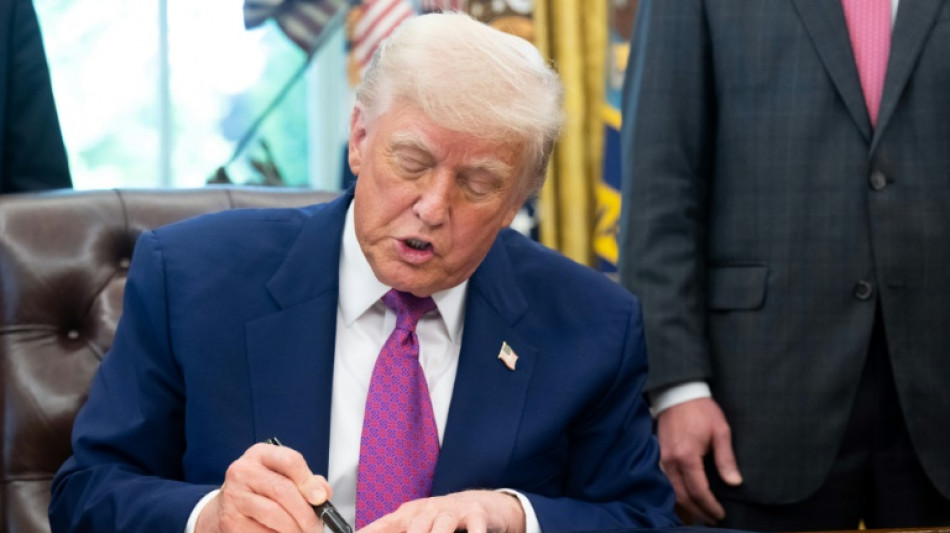
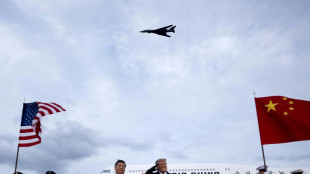
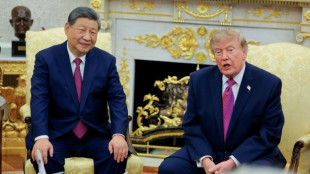
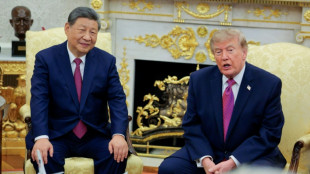
US, China agree to slash tariffs as Trump says to speak with Xi soon / Photo: SAUL LOEB - AFP

 S.African women runners arm themselves after string of killings

 Indonesia fires threatens critically-endangered orangutan: IUCN

 Iran proposes Hormuz plan, Trump reportedly refuses
 El Nino rewrites the menu in the world's top restaurants

 Jay-Z rape accuser says she made 'false accusations'

 Trump's photo of Xi greeting carries signs of AI

 First US trial against TikTok to open Monday

 French literary prize removes novel from longlist after AI claims
 Trump accuser E. Jean Carroll finally has her damages
 Heavy fighting, internet disruption as Ethiopia conflict rages

 Asian markets mixed after oil gains

 UN approves resolution on dealing with rising sea levels

 Global stocks mostly fall as oil prices and bond yields rise

 Starbucks to close 250 more cafes in North America

 Stocks fall as oil prices rise and bonds back under pressure

 Top ECB official to resign to take up IMF role

 Eviction of pensioner puts Spain housing crisis in spotlight
 Average EU diesel price hits record 2.23 euros a litre: AFP analysis

 Whitetip Investments Marks 10 Years of Regulation, Transparency & Responsible Trading

 Stocks fall, oil prices rise as global bonds under pressure
 Hungary detects invasive spotted lanternfly for first time in EU

 Forex Expo Dubai 2026 Breaks Guinness World Record Again With 23,816 Attendees

 Asian markets fall on US-China jitters as leaders meet

 As Moscow steps up attacks, Kyiv residents brace for harsh winter

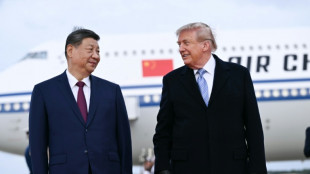 Markets mixed as China's Xi arrives for US talks
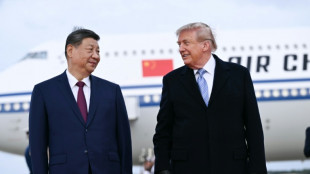
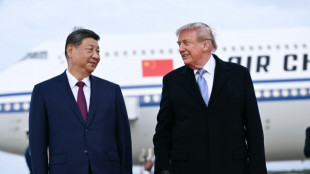
The United States and China announced Monday an agreement to drastically reduce tit-for-tat tariffs for 90 days, an outcome President Donald Trump dubbed a "total reset" as he said a call with counterpart Xi Jinping could soon follow.
After the first talks between Washington and Beijing since Trump launched his trade war, the world's two biggest economies agreed in a joint statement to bring their triple-digit tariffs down to two figures and continue negotiations.
The announcement sent financial markets soaring after weeks of turmoil over tariff fears, with major Wall Street indexes surging.
"Yesterday we achieved a total reset with China after productive talks in Geneva," Trump said. "I'll speak to President Xi, maybe at the end of the week."
US Treasury Secretary Scott Bessent described weekend discussions with Chinese Vice Premier He Lifeng and international trade representative Li Chenggang as "productive" and "robust" with both sides anticipated to meet again soon.
"Both sides showed a great respect," Bessent told reporters.
Trump's fresh duties on many imports from China came up to 145 percent this year, compared to 10 percent for other countries in a global tariff blitz launched last month.
Beijing hit back with duties of 125 percent on US goods.
The United States agreed to lower its tariffs on Chinese goods to 30 percent while China will reduce its own to 10 percent.
Bessent told CNBC Monday that he expects United States and Chinese representatives to meet again in the coming weeks to work out "a more fulsome agreement."
While Washington does not want broad decoupling from China, it seeks "decoupling for strategic necessities" that the country had trouble obtaining during the Covid-19 pandemic, Bessent said.
He added to CNBC that the purpose of the 90-day pause was also to see what the United States could do about non-tariff barriers weighing on US firms.
China hailed the "substantial progress" made at the talks, held at the discreet villa residence of Switzerland's ambassador to the United Nations in Geneva.
This move "is in the interest of the two countries and the common interest of the world," the Chinese commerce ministry said, adding that it hoped Washington would keep working with Beijing "to correct the wrong practice of unilateral tariff rises."
- Fentanyl 'cooperation' -
The US additional tariff rate remains higher than China's because it includes a 20 percent levy over Trump's complaints about Chinese exports of chemicals used to make fentanyl, US Trade Representative Jamieson Greer told reporters.
"Those remain unchanged for now," he said. But "both the Chinese and United States agreed to work constructively together on fentanyl and there is a positive path forward there as well."
In a joint statement, the two sides agreed to "establish a mechanism to continue discussions about economic and trade relations."
"I think we leave with a very good mechanism to avoid the unfortunate escalations," Bessent said, noting that the tariffs had essentially created a trade "embargo" between the two superpowers.
"The nature of what has happened since April 2 could have been avoided if we had had this kind of mechanism in place," he added.
China's commerce ministry said both parties "will conduct rolling consultations on a regular or ad hoc basis in China, the US or agreed third countries."
- 'No guarantee' -
A suspension of higher tariffs marks "substantial de-escalation," said Capital Economics chief Asia economist Mark Williams in a note.
But "there is no guarantee that the 90-day truce will give way to a lasting ceasefire," he warned.
Washington has higher levies on China than on other countries and appears to be seeking to rally others towards introducing restrictions on trade with China, he said.
Zhiwei Zhang, president and chief economist at Pinpoint Asset Management, believes the outcome of the weekend meeting was a "success" for Beijing.
"China took a tough stance on the US threat of high tariffs and eventually managed to get the tariffs down significantly without making concessions," he said.
Trump's tariffs and high rates targeting China have rocked financial markets, raising fears the levies would rekindle inflation and cause a global economic downturn.
The Geneva meeting came days after Trump unveiled a trade agreement with Britain, the first with any country since his new duties on both friend and foe.
burs-nl-bys/des
P.Petrenko--CPN