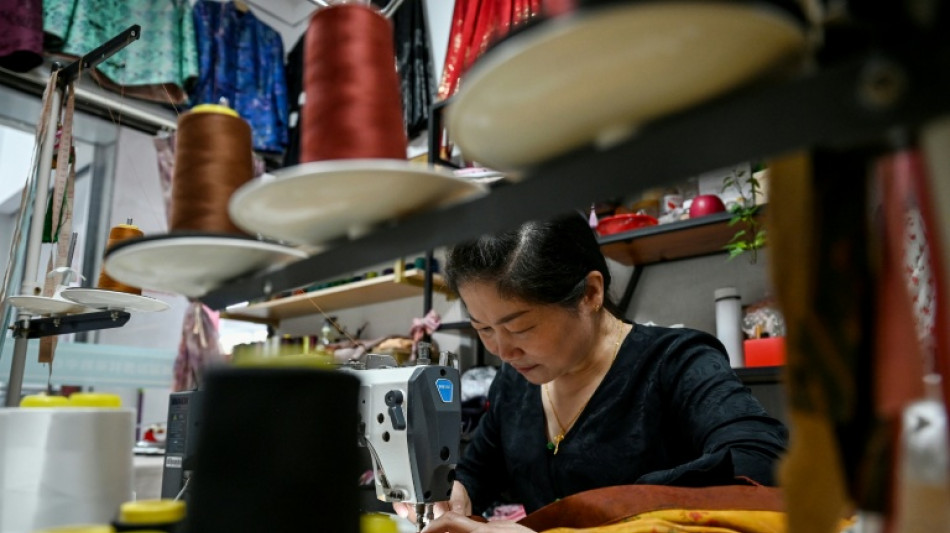
Chinese fabric exporters anxious for US trade patch-up / Photo: Greg Baker - AFP

 Kenya's economy faces climate change risks: World Bank

 Storm-battered Portugal votes in presidential election run-off

 De Beers sale drags in diamond doldrums

 Pakistan's capital picks concrete over trees, angering residents
 Chile's climate summit chief to lead plastic pollution treaty talks

 Opinions of Zuckerberg hang over social media addiction trial jury selection

 Dow surges above 50,000 for first time as US stocks regain mojo

 EU nations back chemical recycling for plastic bottles

 Stocks rebound though tech stocks still suffer

 German exports to US plunge as tariffs exact heavy cost

 'Mona's Eyes': how an obscure French art historian swept the globe

 Russian pensioners turn to soup kitchen as war economy stutters

 Toyota names new CEO, hikes profit forecasts

 Japan to restart world's biggest nuclear plant

 Undercover probe finds Australian pubs short-pouring beer
 Amazon shares plunge as AI costs climb

 Carney scraps Canada EV sales mandate, affirms auto sector's future is electric

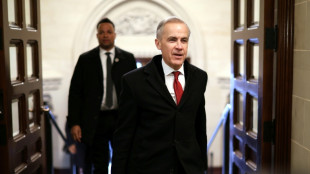 Carney scraps Canada EV sales mandate

 Mining giant Rio Tinto abandons Glencore merger bid
 ECB warns of stronger euro impact, holds rates

 ECB holds interest rates as strong euro causes jitters

 Wind turbine maker Vestas sees record revenue in 2025

 Germany claws back 59 mn euros from Amazon over price controls

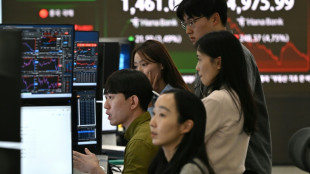 Stock markets drop amid tech concerns before rate calls

 UN human rights agency in 'survival mode': chief

Surrounded by samples of silk and glittering tweed in one of China's largest fabric markets, textiles exporter Cherry said she was anxiously awaiting the result of trade talks with the United States this weekend.
Her company, which relies on US customers for around half its client base, is one of many caught in the crosshairs as the standoff between Washington and Beijing has escalated this year.
Cherry has already had US orders cancelled, and is desperately hoping the negotiations starting Saturday in Geneva will result in the rolling back of the reciprocal tariffs that make doing business almost impossible.
"The situation will be very bad if this continues," she said, sceptical of claims her industry would be able to weather prolonged levies.
"A few months ago I heard people say they'd had many containers (of goods) being cancelled... Some factories have already had to stop production."
Sales to the United States made up 18 percent of China's total textiles and apparel exports in 2024, according to Moody's Ratings.
A significant proportion of that comes from the eastern manufacturing powerhouse province of Zhejiang, where the labyrinth-like Keqiao China Textile City is based in the city of Shaoxing.
With a listed 26,000 shops selling everything from velvet to rayon to fake fur, it is touted as one of the world's busiest fabric hubs.
But customers were few and far between when AFP visited on a day of torrential rain this week, with vendors' spirits largely dampened too.
"Of course I am afraid," said one woman surnamed Li, who added that business was already affected by the global turmoil.
"This is my job -- I rely on it to support my family... I hope for a good outcome (for the talks)."
- 'Lose-lose scenario' -
The Geneva talks are the first official public engagement between the two sides aimed at resolving the stand-off triggered by US President Donald Trump's wide-ranging tariffs.
The subsequent tit-for-tat means many Chinese goods entering the United States now face duties of 145 percent -- with some specific sectors even higher -- while Beijing has hit back with 125 percent levies on most US goods.
One seller in Keqiao market described the situation as a "lose-lose scenario".
Some of her colleagues' US customers have agreed to pay a 30 percent non-refundable deposit to initiate production, on the understanding that the whole order can be cancelled if the final tariff level after negotiations is still too high.
If that happens, everyone will lose money.
"We basically don't dare to take US orders anymore," said 66-year-old Zhou, standing in front of swaths of khaki in various hues.
"The cost price can't even be covered, especially with such high tariffs added on."
For companies like his daughter's, which dealt mainly with US clients, "the impact is huge", he said.
"The best outcome would be for everyone to sit down and talk things through -- it would be good for everyone, right?"
Even the hint of de-escalation has brought some back to the table, with one exporter telling AFP a client who had suspended orders had recently given the go-ahead for production to begin.
But at a ski suit workshop in a cross-border e-commerce centre a few kilometres away, 31-year-old Xiao Huilan said a lot of local companies had lost out completing production for orders that had subsequently been reduced or held off.
"In the short term, we can manage, but in the long run, businesses can't sustain it," she said.
"In a trade war, no one really wins. What we hope for is reconciliation, where everyone can coexist and prosper together."
H.Meyer--CPN