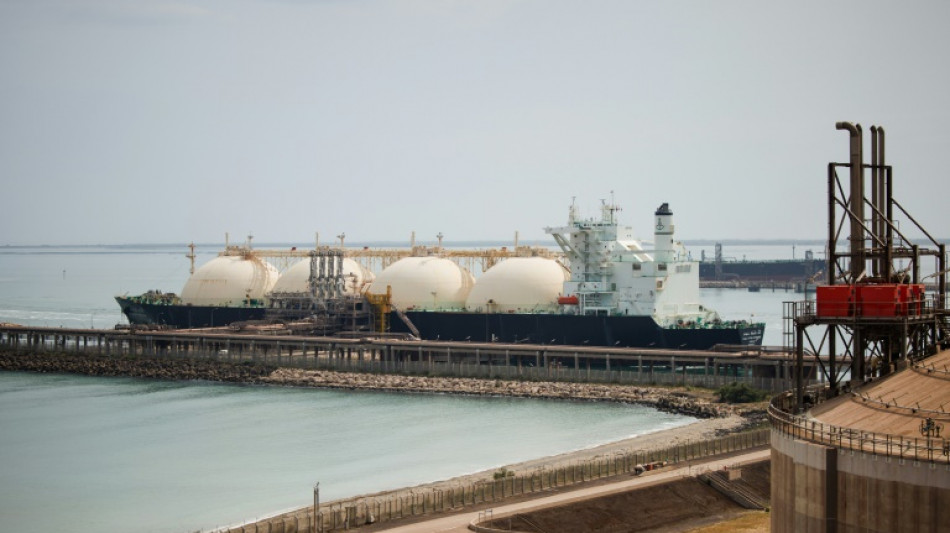
EU proposes ending all Russian gas imports by 2027 / Photo: CLEMENT MAHOUDEAU - AFP/File

 Kenya's economy faces climate change risks: World Bank

 UK foreign office to review pay-off to Epstein-linked US envoy
 French police arrest five over crypto-linked magistrate kidnapping
 What's at stake for Indian agriculture in Trump's trade deal?

 Neglected killer: kala-azar disease surges in Kenya

 Spain, Portugal face fresh storms, torrential rain

 Crypto firm accidentally sends $40 bn in bitcoin to users

 Danone expands recall of infant formula batches in Europe
 Why bitcoin is losing its luster after stratospheric rise

 Digital euro delay could leave Europe vulnerable, ECB warns
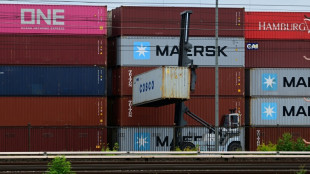
 Stellantis takes massive hit for 'overestimation' of EV shift

 In Dakar fishing village, surfing entices girls back to school

 As Estonia schools phase out Russian, many families struggle
 Bangladesh Islamist leader seeks power in post-uprising vote
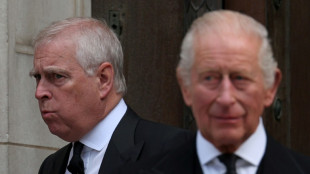 UK royal finances in spotlight after Andrew's downfall
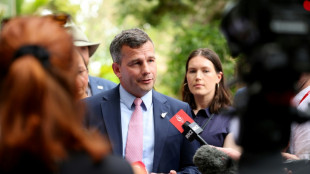 New Zealand deputy PM defends claims colonisation good for Maori

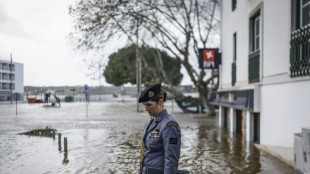 Deadly storm sparks floods in Spain, raises calls to postpone Portugal vote
 Lower pollution during Covid boosted methane: study
 Record January window for transfers despite drop in spending
 Davos forum opens probe into CEO Brende's Epstein links
 Greece aims to cut queues at ancient sites with new portal
 What does Iran want from talks with the US?
 Bitcoin under $70,000 for first time since Trump's election

 Germany claws back 70 mn euros from Amazon over price controls
 BBVA posts record profit after failed Sabadell takeover
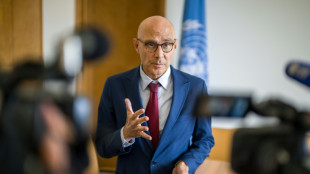
The EU on Tuesday unveiled a long-promised plan to phase out its remaining gas imports from Russia by the end of 2027, a challenge given Europe's continued dependence on Russian fossil fuels.
"Today the European Union sends a very clear message to Russia: no more, no more, will we permit Russia to weaponise energy against us," EU energy chief Dan Jorgensen said as he set out the measures.
The European Commission's two-step plan would put an end to new contracts and existing short-term spot contracts with Russian suppliers by the end of 2025. All remaining imports would be banned by the end of 2027.
"No more will we allow our member states to be blackmailed. No more will we indirectly help fill up the war chest in the Kremlin," Jorgensen told a news conference.
The EU enacted a ban on Russian oil in late 2022 in response to Moscow's invasion of Ukraine, and has since sought to wean itself off Russian gas supplies.
Although imports via pipeline have fallen sharply, several European countries have increased their purchases of Russian liquefied natural gas (LNG), transported by sea, and the bloc now wants to turn the tap off completely.
Russia still supplies 17.5 percent of the bloc's gas, based on EU data, and as much as 19 percent according to the Institute for Energy Economics and Financial Analysis (IEEFA).
To do without Russian energy, "the guiding principle is diversification", European Commission chief spokeswoman Paula Pinho said last week.
Phasing out Russian supplies would pave the way for Europe to buy more LNG from the United States -- something both Brussels and Donald Trump have floated as a way to resolve the standoff sparked after the US president targeted European exports with tariffs.
EU trade chief Maros Sefcovic told the Financial Times that the dispute with Washington could be resolved "very quickly" through LNG and soybean purchases -- as a way to reduce the 27-country bloc's trade surplus with its US partner.
The United States is already the bloc's largest LNG supplier, making up 45.3 percent of the market.
- 'Much more to do' -
EU officials acknowledge that phasing out Russian energy is easier said than done, as some member states are more dependent on Moscow's LNG than others, while others like Hungary have friendly ties with the Kremlin.
France for example would face a heavier impact from any move away from Russian LNG since it has five terminals for its delivery in Europe.
France increased its Russian LNG imports by 81 percent between 2023 and 2024, giving Russia 2.68 billion euros ($3 billion) in income, according to the Institute for Energy Economics and Financial Analysis.
The commission's plan -- which still needs approval from member states -- was delayed as Brussels waited to see whether talks between Russia and the United States yielded a deal to end the Ukraine war.
The EU executive has highlighted its efforts to reduce dependence on Russian fossil fuels since the 2022 invasion.
Over a few years, "we went from 45 percent of our gas imports coming from Russia, down to 18 percent. We went from one-in-five barrels of oil down to one-in-fifty, a tenfold reduction," EU chief Ursula von der Leyen said last month.
But, she admitted, "we all know that there is so much more to do".
Ng.A.Adebayo--CPN