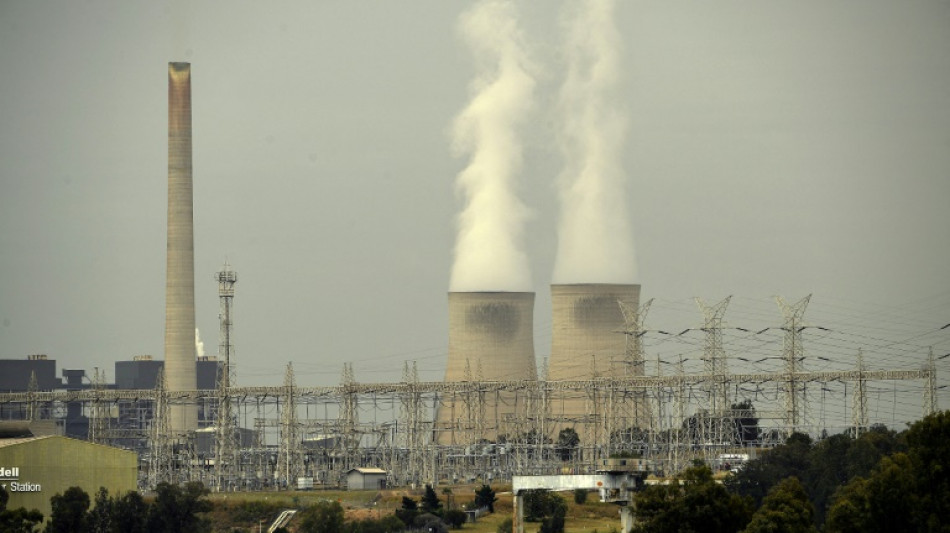
Nuclear power sparks Australian election battle / Photo: Saeed KHAN - AFP/File

 Kenya's economy faces climate change risks: World Bank
 'Send Help' repeats as N.America box office champ
 UK foreign office to review pay-off to Epstein-linked US envoy

 French police arrest five over crypto-linked magistrate kidnapping
 What's at stake for Indian agriculture in Trump's trade deal?
 Neglected killer: kala-azar disease surges in Kenya
 Spain, Portugal face fresh storms, torrential rain

 Crypto firm accidentally sends $40 bn in bitcoin to users

 Danone expands recall of infant formula batches in Europe
 Why bitcoin is losing its luster after stratospheric rise
 Digital euro delay could leave Europe vulnerable, ECB warns
 Stellantis takes massive hit for 'overestimation' of EV shift

 In Dakar fishing village, surfing entices girls back to school

 As Estonia schools phase out Russian, many families struggle
 Bangladesh Islamist leader seeks power in post-uprising vote
 UK royal finances in spotlight after Andrew's downfall
 New Zealand deputy PM defends claims colonisation good for Maori

 Deadly storm sparks floods in Spain, raises calls to postpone Portugal vote
 Lower pollution during Covid boosted methane: study
 Record January window for transfers despite drop in spending
 Davos forum opens probe into CEO Brende's Epstein links
 Greece aims to cut queues at ancient sites with new portal
 What does Iran want from talks with the US?
 Bitcoin under $70,000 for first time since Trump's election

 Germany claws back 70 mn euros from Amazon over price controls

Rich in solar and wind power, and bulging in critical minerals for renewable energy technology, Australia touts itself as a leader in the race to net zero carbon emissions.
But a political battle is being waged ahead of Saturday's elections over whether to change Australia's trajectory and add nuclear reactors to the mix for the first time.
The row is reminiscent of the "climate wars" -- a years-long political face-off over the need to slash carbon emissions -- that Prime Minister Anthony Albanese vowed to end when he took power three years ago.
Australia sits on some of the world's largest uranium reserves but it has legally banned nuclear power generation for a quarter of a century.
In the run-up to Saturday's vote, conservative opposition leader Peter Dutton announced a US$200 billion plan to build seven large-scale nuclear reactors by 2050.
His proposal would ramp up gas production, slow the rollout of solar and wind projects, and ditch the clean energy goals set by Albanese's centre-left government.
Dutton says nuclear power would be cheaper and more reliable than renewable energy.
"I haven't committed to nuclear energy for votes. I committed to it because it's in the best interest of our country," he said in a televised leaders' debate.
Interest in nuclear power is growing internationally as nations struggle to cut their dependence on fossil fuels.
Thirty-one countries including the United States, France and Britain have signed up to a pledge to triple nuclear energy capacity by 2050.
- Slow, costly -
Australia is a fossil fuel powerhouse with vast reserves of coal and gas but it is also drenched in sun, with a broad landscape to accommodate wind turbines and solar panels.
The national science agency CSIRO estimates that the nuclear option would be 50 percent more expensive for Australia than renewable energy and take at least 15 years to become operational.
"The total development lead time needed for nuclear means it cannot play a major role in electricity sector emission abatement," it said.
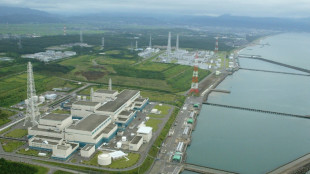
Even countries with decades of experience in nuclear power generation struggle to get plants running on time and on budget.
France started its latest reactor Flamanville 3 in December -- 12 years behind schedule and about 10 billion euros (US$11 billion) beyond its original three-billion-euro budget.
Albanese has embraced the global push towards decarbonisation, pouring public money into the renewable sector.
The share of renewable energy in Australia's electricity generation has increased to record highs in recent years, contributing 35 percent in 2023, government data shows.
- 'Dislocation and rupture' -
The energy industry has largely backed a renewables-first pathway as ageing coal-fired plants are retired.
"We are in a position now where coal-fired power stations are closing -- and they have done a great job for a long time. But they are old and need to be replaced by something," said Clean Energy Council spokesperson Chris O'Keefe.
"The best economic response for Australia right now is to continue on the path we are on. That is, building batteries, solar farms, wind farms," he told AFP.
"What we are seeing is a situation where nuclear energy is being used as an idea to placate the fossil fuel industry and the people they have been traditionally aligned with, but the problem is it will not deliver a single electron for close to two decades," he said.
Dave Sweeney, nuclear power analyst at the Australian Conservation Foundation, said switching the energy strategy now would cause "economic dislocation and rupture".
"Why change horses from renewables when you are halfway there?" Sweeney said. "This is a 1950s piece of policy that is promoting a 1950s sense of technology."
- 'Outdated prohibitions' -
If Dutton's conservative coalition wins the election there would be strong community, local government and stakeholder pushback to nuclear reactors being built, Sweeney predicted.
"It would cause uncertainty, contest, fights and a lack of action around secure and clean energy. We would be back to hostile and conflict-fuelled and unproductive climate and energy wars," Sweeney said.
Still, nuclear supporters say the spotlight on the issue is long overdue.
"Our decades-old nuclear ban no longer reflects the realities of modern reactor technology or the shifting attitudes of Australians," said Kirsty Braybon, a university academic and nuclear law expert at the Nuclear for Australia lobby group.
While other countries were moving ahead with nuclear, Australia was "held back by outdated prohibitions that stifle innovation, jobs and the chance to power a cleaner future", she said.
St.Ch.Baker--CPN