
Renewable energy in the dock in Spain after blackout / Photo: CESAR MANSO - AFP

 Kenya's economy faces climate change risks: World Bank

 Trump says China's Xi to visit US 'toward the end of the year'

 US astronaut to take her 3-year-old's cuddly rabbit into space

 Storm-battered Portugal votes in presidential election run-off
 De Beers sale drags in diamond doldrums

 Pakistan's capital picks concrete over trees, angering residents

 Chile's climate summit chief to lead plastic pollution treaty talks
 Opinions of Zuckerberg hang over social media addiction trial jury selection

 Dow surges above 50,000 for first time as US stocks regain mojo

 EU nations back chemical recycling for plastic bottles

 Stocks rebound though tech stocks still suffer

 German exports to US plunge as tariffs exact heavy cost

 'Mona's Eyes': how an obscure French art historian swept the globe
 Russian pensioners turn to soup kitchen as war economy stutters
 Toyota names new CEO, hikes profit forecasts

 Japan to restart world's biggest nuclear plant
 Undercover probe finds Australian pubs short-pouring beer
 Amazon shares plunge as AI costs climb
 Carney scraps Canada EV sales mandate, affirms auto sector's future is electric
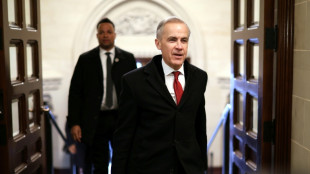 Carney scraps Canada EV sales mandate

 Mining giant Rio Tinto abandons Glencore merger bid

 ECB warns of stronger euro impact, holds rates
 ECB holds interest rates as strong euro causes jitters

 Wind turbine maker Vestas sees record revenue in 2025

 Germany claws back 59 mn euros from Amazon over price controls

Fierce debate raged in Spain on Wednesday over the role its reliance on renewable energy may have had in this week's blackout which disrupted millions of lives, though officials sought to downplay any potential link.
"The lack of nuclear power stations and the 'boom' in renewables have brought the electricity grid to its knees," conservative newspaper ABC headlined on its front page.
Rival daily El Mundo wrote that "warnings about renewables over the last five years" had been "ignored".
Conservative opposition parties have also questioned Socialist Prime Minister Pedro Sanchez's push to make Spain a green energy champion in the wake of Monday's power outage which halted trains, trapped people in elevators and plunged cities into darkness in the country and neighbouring Portugal.
Solar and wind power accounted for almost 40 percent of Spain's electricity last year, twice as much as in 2014, according to electricity operator REE.
By contrast the share of electricity generated by nuclear power fell to 20 percent in 2024, with the government aiming to phase out its atomic power plants by 2035.
Questions about the resilience of this mix began to be raised after it emerged that REE's parent company, Redeia, warned in its 2024 financial report that "the high penetration of renewable generation without the necessary technical capacity to deal adequately with disturbances" could "lead to production cuts".
These blackouts "could become severe, even leading to an imbalance between production and demand, which would significantly affect the electricity supply", it added in the report published in February.
- 'Worked perfectly' -
This message was echoed in a January report by Spain's competition watchdog CNMC which said the voltage on the electricity grid had sometimes "reached maximum values close to the authorised thresholds, and have even exceeded them at certain times".
After the blackout, experts questioned if an imbalance between electricity production and demand -- which is harder to correct without the right technology in a grid with significant wind and solar power generation -- could have led to the collapse of the system.
But Redeia president Beatriz Corredor -- a former Socialist lawmaker -- said renewable energy production "is secure", adding during an interview with news radio Cadena Ser on Wednesday it was "wrong" to link it to the blackout.
Redeia's 380-page annual financial report was merely listing a series of potential risks as required by law, she said.
Asked about the controversy, Ecological Transition Minister Sara Aagesen said Wednesday the cause of the blackout was still unknown and it was "imprudent to speculate".
"The system has worked perfectly well with similar demand and a comparable energy mix. Consequently, pointing the finger at renewables... does not seem appropriate," she added, calling Spain's network "robust".
- 'Ignorance' -
Sanchez on Tuesday defended his government's energy model and stressed that the cause of the outage was not yet known.
"Those who link this incident to the lack of nuclear power are frankly lying or demonstrating their ignorance," he told a news conference.
"Nuclear power plants, far from being a solution, have been a problem" during the blackout because "it was necessary to divert large amounts of energy to them to keep their cores stable", Sanchez said.
Spain's electricity network lost 15 gigawatts of electricity generation -- the equivalent of 60 percent of the country's electricity consumption at the time -- in just five seconds on Monday at around 12:33 pm (1033 GMT).
Spain's top criminal court said Tuesday it is investigating whether the blackout was "an act of computer sabotage" but REE has ruled out a cyberattack.
It has instead identified as a possible cause of the blackout two separate incidents just one and a half seconds apart, one which may have affected solar power production in southwest Spain.
But REE stressed it is "not possible to draw any conclusions" at this stage.
M.P.Jacobs--CPN