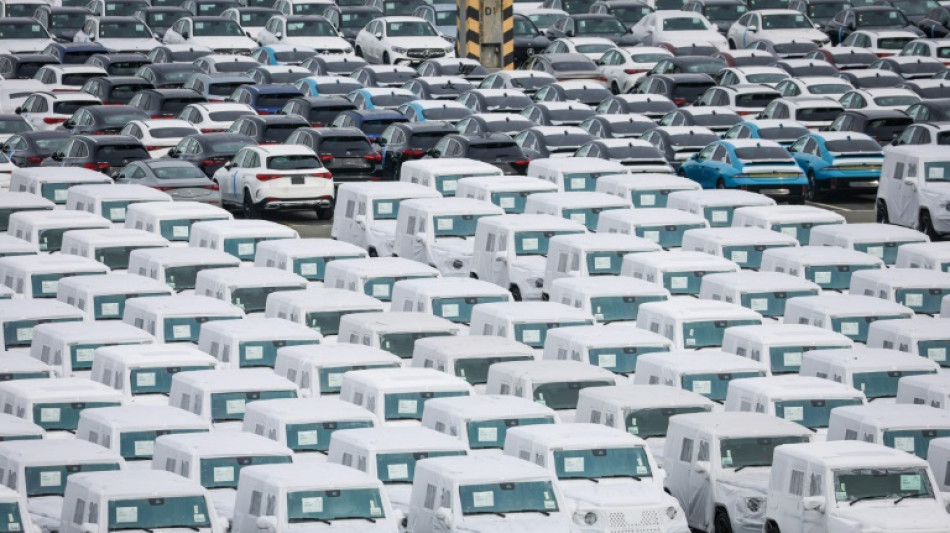
More automakers drop earnings guidance over tariffs / Photo: FOCKE STRANGMANN - AFP/File

 Kenya's economy faces climate change risks: World Bank
 Trump says China's Xi to visit US 'toward the end of the year'

 US astronaut to take her 3-year-old's cuddly rabbit into space

 Storm-battered Portugal votes in presidential election run-off

 De Beers sale drags in diamond doldrums

 Pakistan's capital picks concrete over trees, angering residents
 Chile's climate summit chief to lead plastic pollution treaty talks
 Opinions of Zuckerberg hang over social media addiction trial jury selection
 Dow surges above 50,000 for first time as US stocks regain mojo

 EU nations back chemical recycling for plastic bottles
 Stocks rebound though tech stocks still suffer
 German exports to US plunge as tariffs exact heavy cost

 'Mona's Eyes': how an obscure French art historian swept the globe
 Russian pensioners turn to soup kitchen as war economy stutters

 Toyota names new CEO, hikes profit forecasts

 Japan to restart world's biggest nuclear plant
 Undercover probe finds Australian pubs short-pouring beer
 Amazon shares plunge as AI costs climb

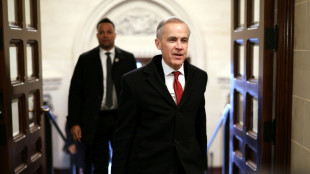 Carney scraps Canada EV sales mandate, affirms auto sector's future is electric
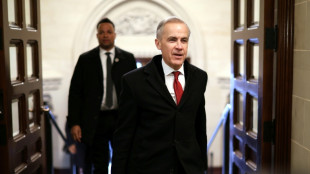 Carney scraps Canada EV sales mandate

 Mining giant Rio Tinto abandons Glencore merger bid
 ECB warns of stronger euro impact, holds rates

 ECB holds interest rates as strong euro causes jitters

 Wind turbine maker Vestas sees record revenue in 2025

 Germany claws back 59 mn euros from Amazon over price controls
Germany's Mercedes-Benz and US-European group Stellantis, whose brands include Jeep, Peugeot and Fiat, joined other automakers Wednesday in suspending their annual financial guidance because of uncertainty over US tariffs.
The announcements came even as US President Donald Trump moved Tuesday to soften the blow from the 25-percent tariffs that he imposed on car imports earlier this month.
"Stellantis appreciates the tariff relief measures decided by President Trump," its board chairman John Elkann said in a statement.
"While we further assess the impact of the tariff policies on our North American operations, we look forward to our continued collaboration with the US administration to strengthen a competitive American auto industry and stimulate exports," he added.
Stellantis, a 14-brand behemoth that includes Ram trucks, Dodge, Maserati and Opel, reported a 14-percent drop in its first-quarter sales to 35.8 billion euros ($40.7 billion).
Mercedes-Benz and Volkswagen, Europe's biggest automakers, reported big drops in their net profits over the same January-March period -- before the US tariffs kicked in.
While Volkswagen maintained its financial outlook, Mercedes and Stellantis suspended theirs, a day after similar moves by US auto giant General Motors and Sweden's Volvo Cars.
Stellantis said it was "suspending its 2025 financial guidance... due to evolving tariff policies, as well as the difficulty predicting possible impacts on market volumes and the competitive landscape".
Mercedes cited "volatility with regard to tariff policies" that meant business development could not be reliably forecast.
Mercedes's net profit plunged almost 43 percent in the first three months of the year to 1.73 billion euros.
Finance chief Harald Wilhelm said Mercedes was nevertheless in a strong position thanks to what he said was a strong position in profitable, top-end vehicles.
"This, combined with a healthy balance sheet provides a solid foundation to navigate our company through a period of geopolitical uncertainties," he said.
- Aston Martin limits US exports -
Before the tariffs, European automakers were already facing slowing sales of electric cars and stiff competition from local rivals in the key Chinese market.
Volkswagen, a 10-brand group that includes Audi, Skoda and Porsche, said its net profit fell 40.6 percent to 2.19 billion euros.
For the rest of the year, the carmaker said that it expected business "towards the lower end" of its guidance, citing challenges including increased competition, more stringent emissions regulations and trade tensions.
Speaking on a call for analysts and investors, Volkswagen's finance chief Arno Antlitz said it was "too early to say" if Volkswagen would step up manufacturing in the United States to circumvent any tariffs.
Volkswagen expects a profit margin of 5.5 to 6.5 percent for the coming year, but its guidance does not take into account changeable American tariffs.
"It's highly difficult to give a projection for the full year," Antlitz said.
In Britain, luxury carmaker Aston Martin Lagonda announced that it was limiting shipments to the United States, but it maintained its annual guidance as it reported a 13-percent drop in first-quarter revenue.
Besides a 25-percent tariff on finished imported cars, the industry has also been affected by Trump's 25-percent tariff on steel and aluminium.
Automakers are also set to face new tariffs on foreign auto parts expected to take effect on May 3.
Trump's new policy means that a company would not face both a 25-percent levy for an imported vehicle and 25-percent on steel or aluminium; the importer would pay the higher of the two levies, but not both, a US Commerce Department official said.
The other change is that companies that import parts for vehicles assembled in the United States would be able to offset 3.75 percent of a vehicle's list price in the first year and 2.5 percent in the second year.
burs-lth/js
A.Levy--CPN