Financial markets may be the last guardrail on Trump / Photo: ANGELA WEISS - AFP/File

 Kenya's economy faces climate change risks: World Bank

 Arguments to begin in key US social media addiction trial
 'Send Help' repeats as N.America box office champ

 UK foreign office to review pay-off to Epstein-linked US envoy
 French police arrest five over crypto-linked magistrate kidnapping

 What's at stake for Indian agriculture in Trump's trade deal?

 Neglected killer: kala-azar disease surges in Kenya

 Spain, Portugal face fresh storms, torrential rain

 Crypto firm accidentally sends $40 bn in bitcoin to users
 Danone expands recall of infant formula batches in Europe

 Why bitcoin is losing its luster after stratospheric rise

 Digital euro delay could leave Europe vulnerable, ECB warns
 Stellantis takes massive hit for 'overestimation' of EV shift

 In Dakar fishing village, surfing entices girls back to school

 As Estonia schools phase out Russian, many families struggle

 Bangladesh Islamist leader seeks power in post-uprising vote

 UK royal finances in spotlight after Andrew's downfall

 New Zealand deputy PM defends claims colonisation good for Maori
 Deadly storm sparks floods in Spain, raises calls to postpone Portugal vote
 Lower pollution during Covid boosted methane: study
 Record January window for transfers despite drop in spending
 Davos forum opens probe into CEO Brende's Epstein links
 Greece aims to cut queues at ancient sites with new portal
 What does Iran want from talks with the US?

 Bitcoin under $70,000 for first time since Trump's election
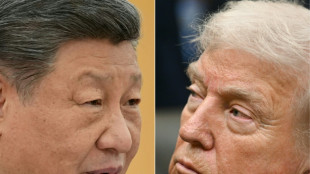
Since returning to the White House, Donald Trump has ushered in sweeping changes to international geopolitics and US government administration with little regard for norms that have constrained predecessors.
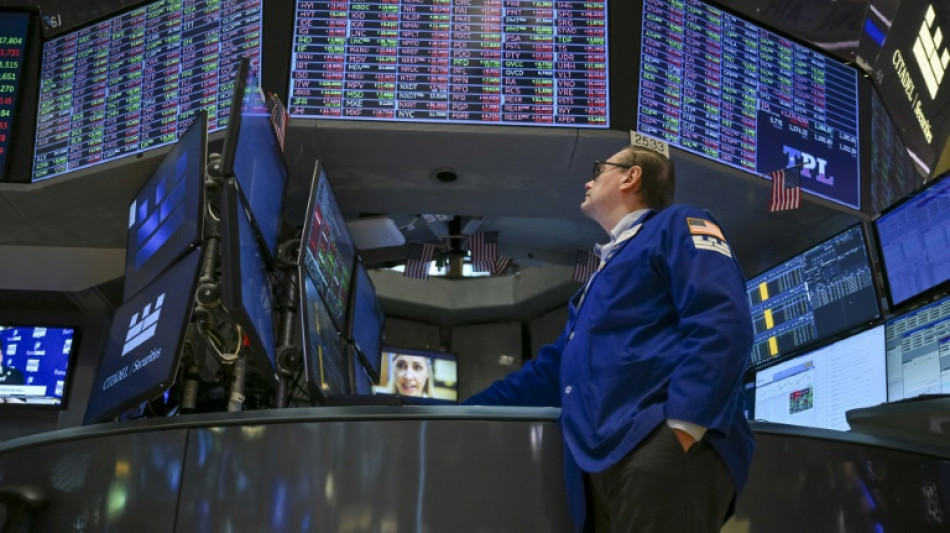
But there has been one source of restraint on a president determined to push the limits of US governance: financial markets.
The stock market's response to Trump's "Liberation Day" tariff announcement was "probably the most influential force to date" in tempering Trump's policies, said Terrence Guay, professor of international business at Pennsylvania State University.
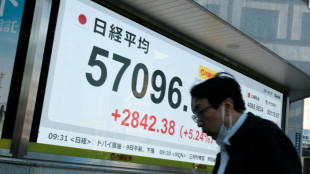
In just two days, Wall Street equities shredded some $6 trillion in value as the S&P 500 suffered its worst session since the darkest days of Covid-19 in 2020.
"The market does tend to be ... kind of like a seismograph. It reacts to the slightest little tremor," said Steven Kyle, professor of applied economics at Cornell University.
A week after Trump's announcement of reciprocal tariffs threw markets into turmoil, the Republican suddenly scaled back his plan's most draconian elements for every country except China. The pivot sent stocks skyrocketing.
Last week, market watchers perceived another significant Trump retreat after another round of scary market action. The gyrations came after the president combined an ever-worsening tit-for-tat trade war with China with threats to oust Federal Reserve Chair Jerome Powell.
The White House quickly shifted its tone on China and Trump reassured the public that he won't fire Powell.
"Markets 'punished' his policies and he must have realized," along with his advisors, "that trade wars are not that easy to win," said Petros Mavroidis, a professor at Columbia Law School and a former member of the World Trade Organization.
"I am sure he doesn't want to be known as the president who led to a stock market crash," Guay added.
- Bond market angst -
But if "Wall Street sent the loudest signal, it wasn't the only signal," said University of Richmond finance professor Art Durnev.
Even more than the stock market, "the bond market is a stronger force and this is the primary driver" of Trump's shift, Durnev said.
Like gold or the Swiss franc, US Treasury bonds have traditionally been seen as a refuge for investors during times of duress in financial markets, or in the real economy.
But demand for US Treasury bonds -- a bedrock during the 2008 financial crisis and other perilous moments -- has been shaken in recent weeks as Trump's aggressive policies have pushed yields higher in a sign of flagging demand for American issues.
Trump himself acknowledged the import of the bond market gyrations, saying investors were getting "a little bit yippy." That word means nervous.
The bond market "also had a big impact," Guay said. "Many investors have pulled their money out of the US."
Besides Trump's ambitious attempts to overhaul international trade, analysts have tied bond market volatility to worries that planned tax cuts could worsen the US deficit.
Then there is Powell, whom Trump also criticized in his first presidential term. The most recent round of Treasury market panic followed Trump's social media post on April 21 branding Powell a "major loser" for not cutting interest rates.
But by the following day, Trump had pulled back, saying he had "no intention of firing" Powell.
The combination of these factors means investors are beginning to realize that "the US may not be, under this administration, the stable environment we've seen for decades," Guay said.
Y.Jeong--CPN