US growth figure expected to make for tough reading for Trump / Photo: Patrick T. Fallon - AFP

 Kenya's economy faces climate change risks: World Bank

 Arguments to begin in key US social media addiction trial
 'Send Help' repeats as N.America box office champ

 UK foreign office to review pay-off to Epstein-linked US envoy

 French police arrest five over crypto-linked magistrate kidnapping

 What's at stake for Indian agriculture in Trump's trade deal?

 Neglected killer: kala-azar disease surges in Kenya

 Spain, Portugal face fresh storms, torrential rain

 Crypto firm accidentally sends $40 bn in bitcoin to users
 Danone expands recall of infant formula batches in Europe

 Why bitcoin is losing its luster after stratospheric rise

 Digital euro delay could leave Europe vulnerable, ECB warns
 Stellantis takes massive hit for 'overestimation' of EV shift

 In Dakar fishing village, surfing entices girls back to school

 As Estonia schools phase out Russian, many families struggle

 Bangladesh Islamist leader seeks power in post-uprising vote
 UK royal finances in spotlight after Andrew's downfall

 New Zealand deputy PM defends claims colonisation good for Maori

 Deadly storm sparks floods in Spain, raises calls to postpone Portugal vote
 Lower pollution during Covid boosted methane: study
 Record January window for transfers despite drop in spending

 Davos forum opens probe into CEO Brende's Epstein links
 Greece aims to cut queues at ancient sites with new portal
 What does Iran want from talks with the US?
 Bitcoin under $70,000 for first time since Trump's election

US GDP figures for the first quarter are expected to show a sharp drop-off in growth -- and possibly even a recession -- reflecting a surge in imports before President Donald Trump's sweeping tariffs came into effect.
"It's going to be a pretty dramatic slowdown from the fourth quarter," Moody's Analytics economist Matt Colyar told AFP.
The gross domestic product data for the quarter will be published on Wednesday, the 101st day since Trump's return to office on January 20.
In that time, he has announced several rounds of tariffs, laying out plans in March to impose sweeping levies on top trading partners from early April in a bid to reset US trade relations.
The introduction of those tariffs sparked a selloff in financial markets, sending volatility surging to levels not seen since the Covid-19 pandemic and spooking investors.
"Usually, government policy doesn't change that much, particularly not in the first 100 days of a presidency," George Washington University economics professor Tara Sinclair told AFP. "But this one's different."
"I think it's pretty clear that there were dramatic policy changes that are directly weakening the economy," she said.
Following April's dramatic market movement, the Trump administration announced a 90-day pause to the higher tariffs for dozens of countries to allow for trade talks, while maintaining a baseline 10 percent rate for most countries, sector-specific measures, and new sweeping tariffs totalling 145 percent on China.
- Rising recession risk -
The US economy grew 2.8 percent last year, according to the Commerce Department. Heading into the new year, analysts had widely expected growth to cool, but to remain at around two percent in 2025.
Since Trump's return to office, and the introduction of new tariffs, many analysts have sharply cut their growth outlook. Some economists -- including those at Wall Street titans Goldman Sachs, JPMorgan and Morgan Stanley -- now predict an economic contraction in the first quarter.
But even if the economy does not contract for the first quarter -- which ended before Trump's sweeping tariffs came into effect -- the scale of the slowdown analysts expect would nevertheless be significant.
"Our expectation is kind of shockingly on the higher side, and we're at 0.5 percent," said Colyar from Moody's Analytics.
The market consensus estimate is for annualized GDP growth of 0.4 percent for the first quarter, according to Briefing.com -- a marked change from the 2.4 percent annualized rate seen in the final quarter of 2024.
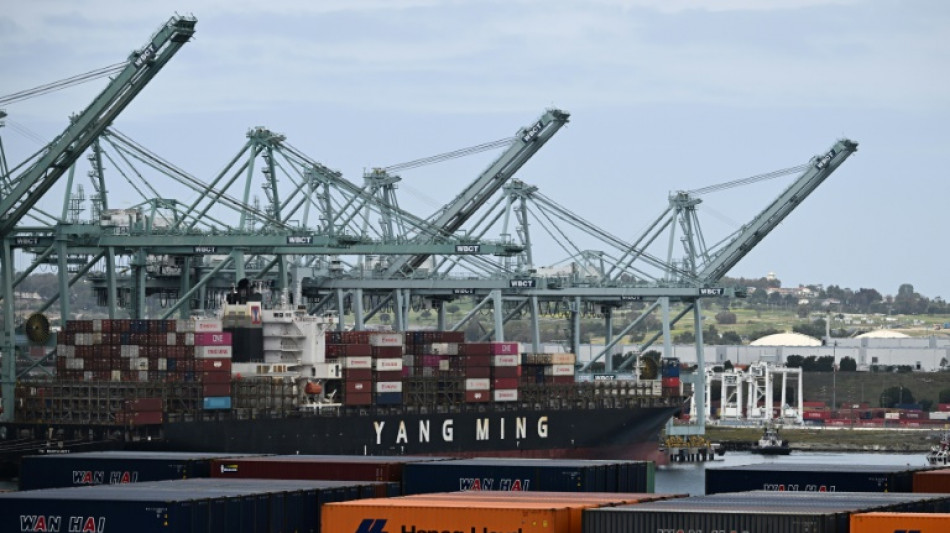
If the economy cools as expected, it will be largely down to a surge in imports, as consumers and businesses scrambled to buy what they needed before the tariffs kicked in, analysts told AFP.
"This spike in imports, that's coming directly from people trying to get ahead of tariffs," said Sinclair from George Washington University. "And that is in direct response to the policies of this president."
Beyond the effects of tariffs, the GDP data is likely to paint a "very complicated story," Belinda Roman, associate professor of economics at St Mary's University in San Antonio, Texas, said in an interview.
Roman pointed to better-than-expected employment figures, which suggest that "clearly there's something else changing that we're not seeing just yet" in the data.
"I think there might be a small contraction," she said.
"That may be offset by the fact that we've seen what I think is a very interesting increase in employment," she said.
"I think we'll start to see in second quarter and third quarter more negative impacts, because it's it takes it a while," she said. "It doesn't happen immediately."
A.Mykhailo--CPN