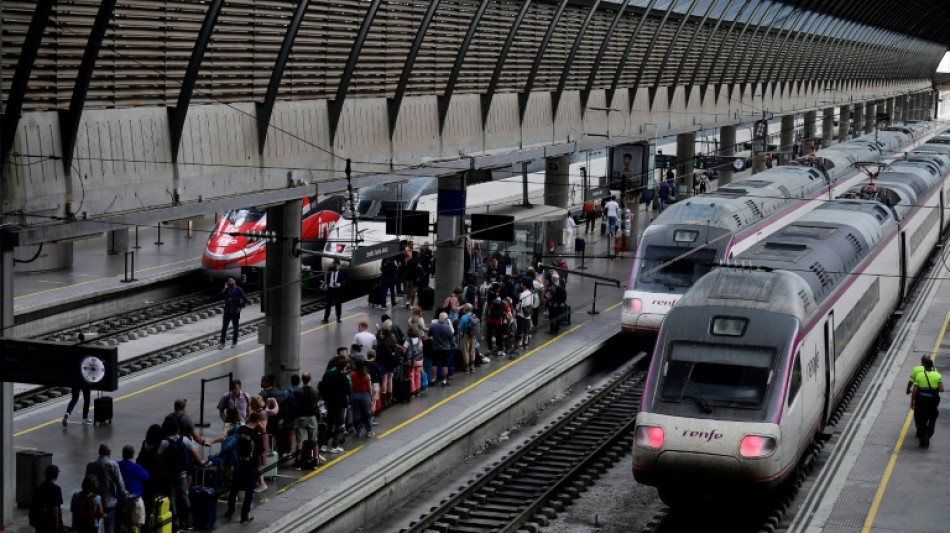
Spain starts probing causes of massive blackout / Photo: CRISTINA QUICLER - AFP

 Kenya's economy faces climate change risks: World Bank
 Arguments to begin in key US social media addiction trial

 'Send Help' repeats as N.America box office champ

 UK foreign office to review pay-off to Epstein-linked US envoy

 French police arrest five over crypto-linked magistrate kidnapping
 What's at stake for Indian agriculture in Trump's trade deal?
 Neglected killer: kala-azar disease surges in Kenya
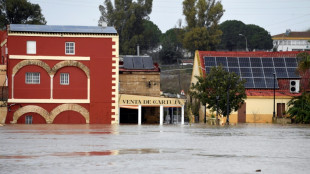 Spain, Portugal face fresh storms, torrential rain

 Crypto firm accidentally sends $40 bn in bitcoin to users

 Danone expands recall of infant formula batches in Europe

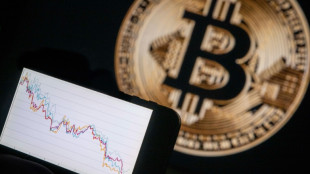 Why bitcoin is losing its luster after stratospheric rise

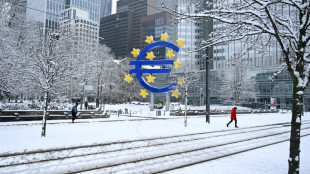 Digital euro delay could leave Europe vulnerable, ECB warns
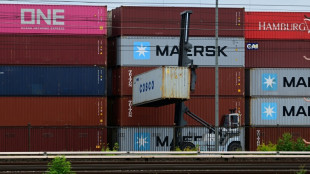
 Stellantis takes massive hit for 'overestimation' of EV shift

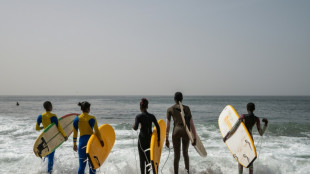 In Dakar fishing village, surfing entices girls back to school
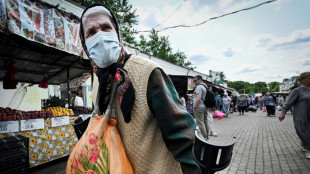
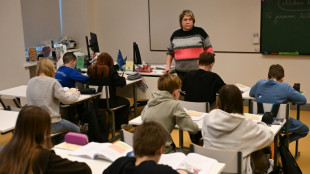 As Estonia schools phase out Russian, many families struggle

 Bangladesh Islamist leader seeks power in post-uprising vote
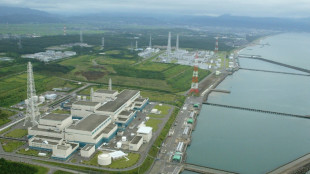
 UK royal finances in spotlight after Andrew's downfall

 New Zealand deputy PM defends claims colonisation good for Maori

 Deadly storm sparks floods in Spain, raises calls to postpone Portugal vote
 Lower pollution during Covid boosted methane: study
 Record January window for transfers despite drop in spending

 Davos forum opens probe into CEO Brende's Epstein links
 Greece aims to cut queues at ancient sites with new portal
 What does Iran want from talks with the US?
 Bitcoin under $70,000 for first time since Trump's election

Spain on Tuesday began to investigate the causes of the crippling blackout that disrupted millions of lives across the Iberian Peninsula, with a court probing potential "sabotage" of critical infrastructure.
Telephone, internet and lights were working again, train services resumed, shops reopened and workers flocked back to offices in Spain and Portugal following Monday's outage that lasted up to 20 hours in some places.
Spanish Prime Minister Pedro Sanchez said the government had set up a commission to investigate what triggered the incident, and refused to rule out any hypothesis.
"All the necessary measures will be taken to ensure that this does not happen again," he told a press conference.
In a separate probe, Spain's top criminal court, the Audiencia Nacional, said it was investigating whether the blackout was "an act of computer sabotage on critical infrastructure" that could be classified as "a terrorism offence".
Although the causes are unknown, "cyberterrorism is among" the potential explanations, while the "critical situation" generated for the population meant an investigation was necessary, the Audiencia Nacional said in a statement.
But the Spanish grid operator Red Electrica (REE) and a Portuguese government spokesman had ruled out a cyberattack earlier in the day.
"There was no type of intrusion in Red Electrica's control systems that may have caused the incident," REE's director of operations, Eduardo Prieto, said at a news conference.
Sanchez also denied that a lack of nuclear energy was behind the outage, saying proponents of that suggestion were "lying or demonstrating their ignorance", in a response to the criticism of far-right party Vox.
Nuclear power, which the leftist government has planned to phase out, "was no more resilient" than other electricity sources and "with a greater dependence on nuclear, the recovery would not have been so quick", Sanchez said.
- 'We are vulnerable' -
Portugal's grid operator REN also denied Tuesday that it was behind a message circulated on social media attributing the blackout to a rare atmospheric event.
The message in Portuguese said there was a "fault" in the Spanish electricity grid linked to "abnormal oscillations (that) were recorded in the very high-voltage lines (400 kV), a phenomenon known as 'induced atmospheric vibration'".
"REN confirms we did not put out this statement," spokesman Bruno Silva told AFP, without giving further details.
People in both countries began to recover a semblance of normalcy on Tuesday after the chaos and confusion.
Maria Jesus Cobos, a 50-year-old lawyer, managed to drive home through Madrid overnight after being left without light and communications until almost 11:00 pm (2100 GMT).
"That showed that we are very vulnerable. There's something that isn't being done well. I had to drive without traffic lights," she told AFP.
But she added that people had been "very civilised".
"It shows us that we can get by," she added, recounting meeting people standing by the road with signs showing their intended destination.
High-speed Spanish train lines, including those connecting Madrid, Barcelona and Seville, were back up and running on Tuesday.
But services were limited or suspended on several regional routes, said national railway company Renfe.
- Cheers for trains -
Madrid's Atocha station was packed with expectant travellers who cheered every time a departure was announced.
Bars had reopened and most schools also welcomed back their pupils, though the resumption of classes varied depending on the region in Spain's decentralised political system.
Monday's disruption saw huge tailbacks on roads, customers rushing to withdraw cash from banks and residents finding themselves trapped in lifts.
Thousands of stranded travellers slept in train stations overnight and streets were plunged into darkness with all lampposts and traffic lights off.
Power cuts also briefly affected areas of southwestern France.
Internet access was disrupted in Morocco but returned on Tuesday, according to a subsidiary of French telecoms giant Orange.
Parts of Denmark's gigantic Arctic territory of Greenland also lost phone and internet connections on Monday evening in an outage possibly linked to the incidents on the Iberian Peninsula, operator Tusass said.
H.Cho--CPN