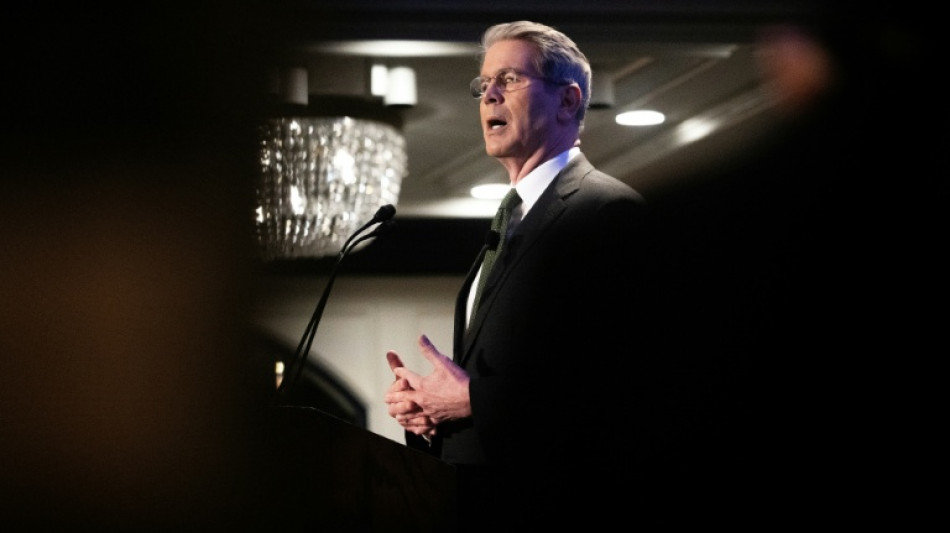
Bessent says 'no currency targets' in Japan tariff talks / Photo: Jim WATSON - AFP

 Kenya's economy faces climate change risks: World Bank

 Japan restarts world's biggest nuclear plant again
 'Want to go home': Indonesian crew abandoned off Africa demand wages

 Trump says China's Xi to visit US 'toward the end of the year'

 US astronaut to take her 3-year-old's cuddly rabbit into space

 Storm-battered Portugal votes in presidential election run-off

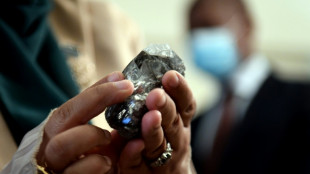 De Beers sale drags in diamond doldrums

 Pakistan's capital picks concrete over trees, angering residents

 Chile's climate summit chief to lead plastic pollution treaty talks
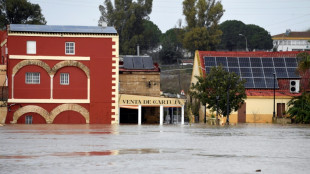
 Opinions of Zuckerberg hang over social media addiction trial jury selection
 Dow surges above 50,000 for first time as US stocks regain mojo

 EU nations back chemical recycling for plastic bottles
 Stocks rebound though tech stocks still suffer
 German exports to US plunge as tariffs exact heavy cost

 'Mona's Eyes': how an obscure French art historian swept the globe

 Russian pensioners turn to soup kitchen as war economy stutters

 Toyota names new CEO, hikes profit forecasts

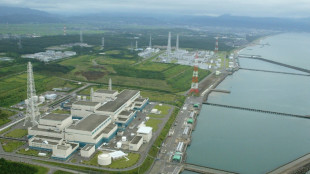 Japan to restart world's biggest nuclear plant
 Undercover probe finds Australian pubs short-pouring beer
 Amazon shares plunge as AI costs climb
 Carney scraps Canada EV sales mandate, affirms auto sector's future is electric

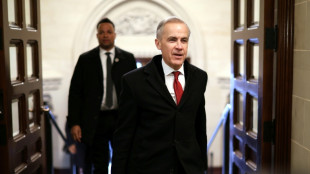 Carney scraps Canada EV sales mandate

 Mining giant Rio Tinto abandons Glencore merger bid
 ECB warns of stronger euro impact, holds rates

 ECB holds interest rates as strong euro causes jitters

US Treasury Secretary Scott Bessent said Wednesday that Washington has "no currency targets" in its talks with Japan on tariffs, after repeated calls from President Donald Trump for a stronger yen.
Japanese media reported meanwhile that a second round of talks in Washington was set for May 1, which will be closely watched as a barometer for efforts by other countries seeking tariff relief.
Bessent said Washington is looking at "tariffs, non-tariff trade barriers, currency manipulation and government subsidy of labor and fixed capital investment" in the negotiations with Japan.
But he added that there were "absolutely no currency targets."
Japanese Finance Minister Katsunobu Kato said he was ready for "close consultations about exchange rates" with Bessent when they meet Thursday on the sidelines of an IMF gathering in Washington, Japanese media reported.
A weak yen makes Japanese exports relatively cheaper, while a strong dollar means that US exports are less competitive.
The yen rose significantly since Trump's tariffs were announced -- it was trading at 158 for a dollar in mid-January.
The close US ally and world's number four economy is subject to the same 10 percent baseline tariffs that have been imposed on most countries, plus steeper levies on cars, steel and aluminum.
Trump also imposed "reciprocal" tariffs on Japan of 24 percent, but those have been paused for 90 days along with those on other countries except China.
Japan's envoy Ryosei Akazawa met Trump and other senior US officials last week, and Japanese media reported Thursday that he will return for another round on May 1.
Japanese broadcaster NHK on Thursday quoted unnamed sources as saying that US negotiators have said Washington cannot make exceptions for Japan.
Other media reports have suggested that Tokyo is eyeing concessions such as increasing imports into Japan of US rice and soybeans as well as easing auto safety rules.
O.Hansen--CPN