
IMF warns of 'intensified' risks to outlook for public finances / Photo: Jim WATSON - AFP

 Kenya's economy faces climate change risks: World Bank

 Japan restarts world's biggest nuclear plant again
 'Want to go home': Indonesian crew abandoned off Africa demand wages
 Trump says China's Xi to visit US 'toward the end of the year'

 US astronaut to take her 3-year-old's cuddly rabbit into space

 Storm-battered Portugal votes in presidential election run-off

 De Beers sale drags in diamond doldrums

 Pakistan's capital picks concrete over trees, angering residents

 Chile's climate summit chief to lead plastic pollution treaty talks
 Opinions of Zuckerberg hang over social media addiction trial jury selection

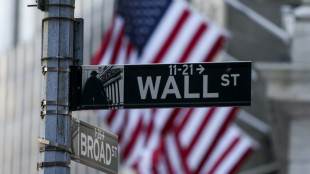 Dow surges above 50,000 for first time as US stocks regain mojo

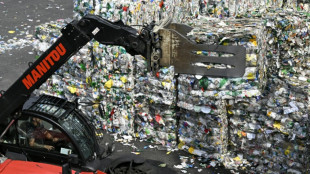 EU nations back chemical recycling for plastic bottles
 Stocks rebound though tech stocks still suffer
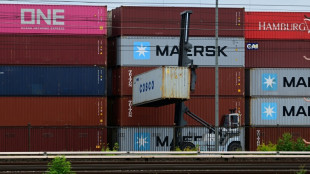 German exports to US plunge as tariffs exact heavy cost

 'Mona's Eyes': how an obscure French art historian swept the globe

 Russian pensioners turn to soup kitchen as war economy stutters

 Toyota names new CEO, hikes profit forecasts

 Japan to restart world's biggest nuclear plant
 Undercover probe finds Australian pubs short-pouring beer
 Amazon shares plunge as AI costs climb
 Carney scraps Canada EV sales mandate, affirms auto sector's future is electric

 Carney scraps Canada EV sales mandate

 Mining giant Rio Tinto abandons Glencore merger bid
 ECB warns of stronger euro impact, holds rates

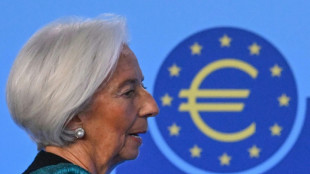 ECB holds interest rates as strong euro causes jitters

Donald Trump's tariff plans have increased the risks to public finances, the International Monetary Fund said Wednesday, warning countries to get their spending plans under control and prepare for "sharper" trade-offs.
The US President's on-again, off-again introduction of levies against top trading partners sent market volatility soaring and unnerved investors, who are attempting to chart a path through the increased uncertainty caused by the manner of the rollout.
"Risks to the fiscal outlook have intensified" over the past six months, the IMF said in its semiannual Fiscal Monitor report published as part of the Fund and the World Bank's Spring Meetings of global financial leaders in Washington.
Under its new projections, which incorporate some -- but not all -- of the recently announced tariffs, the IMF now expects global general government debt to rise to more than 95 percent of economic output this year, and to approach 100 percent of GDP by 2030.
In the forecasts, the IMF expects public debt to rise by about the same amount as the combined increases seen in 2023 and 2024, Vitor Gaspar, the head of the Fund's Fiscal Affairs department, told AFP.
"There is a pronounced trend in public debt around the world," he said in an interview ahead of the report's publication.
- 'Heightened uncertainty' -
The IMF warned in its report that the "heightened uncertainty" about tariffs and economic policy, combined with rising bond yields in major economies, widening spreads in emerging markets, foreign aid cuts, and increased defense spending in Europe had all complicated the global debt outlook.
"Fiscal policy now faces a sharper trade-off between reducing debt, building buffers against uncertainties and accommodating spending pressures, all amidst weaker growth prospects, higher financing costs, and heightened risks," it added.
While public spending levels may pose political challenges, the right policy can also "be a source of confidence and support in potentially very demanding macroeconomic circumstances," Gaspar said.
"Communities may be severely affected by trade dislocations, and targeted and temporary support... could be a way forward," he added.
- Different paths -
The IMF expects that more than a third of the world's economies, who collectively account for 75 percent of global GDP, will see a rise in indebtedness this year.
This includes many of the world's largest economies, including the United States, China, Germany, Britain, and France.
But these countries will face very different realities when it comes to handling that debt, Gaspar said.
"Both China and the United States are continental economies," he said. "They have a space that other economies don't have."
"The United States has an ample set of options, both on the revenue side and on the spending side, that it can deploy to control the deficit, stabilize the level of public debt and decrease the level of public debt, if it chooses to do so," he added.
"How it's going to happen depends on... the choices made in the context of the US political system," he said.
For China, Gaspar noted that the authorities would "eventually" need to tackle its public debt, but should focus their attention at this moment in time on providing targeted support to transform the economy.
"Fiscal support in China is welcome right now," he said. "It is something that helps rebalancing China growth towards the domestic economy."
"By doing so, it helps reducing the external imbalance."
A.Zimmermann--CPN