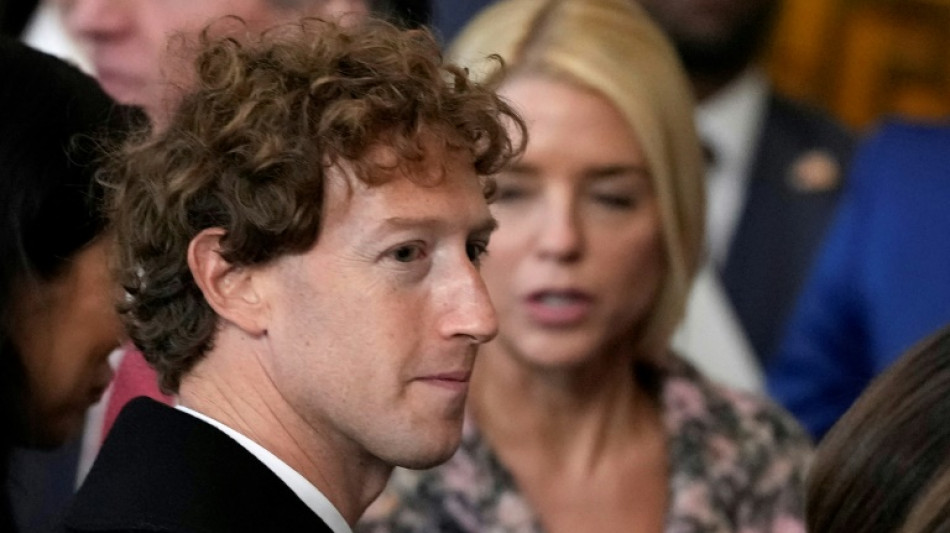
Meta chief Zuckerberg testifies at landmark US antitrust trial / Photo: Julia Demaree Nikhinson - POOL/AFP

 Kenya's economy faces climate change risks: World Bank

 Meta, Google face jury in landmark US addiction trial
 Some striking NY nurses reach deal with employers

 EU chief backs Made-in-Europe push for 'strategic' sectors

 Iran steps up arrests while remaining positive on US talks
 EU warns Meta it must open up WhatsApp to rival AI chatbots

 Japan's Takaichi may struggle to soothe voters and markets

 Arguments to begin in key US social media addiction trial
 'Send Help' repeats as N.America box office champ
 UK foreign office to review pay-off to Epstein-linked US envoy
 French police arrest five over crypto-linked magistrate kidnapping

 What's at stake for Indian agriculture in Trump's trade deal?

 Neglected killer: kala-azar disease surges in Kenya

 Spain, Portugal face fresh storms, torrential rain
 Crypto firm accidentally sends $40 bn in bitcoin to users
 Danone expands recall of infant formula batches in Europe

 Why bitcoin is losing its luster after stratospheric rise

 Digital euro delay could leave Europe vulnerable, ECB warns
 Stellantis takes massive hit for 'overestimation' of EV shift

 In Dakar fishing village, surfing entices girls back to school

 As Estonia schools phase out Russian, many families struggle

 Bangladesh Islamist leader seeks power in post-uprising vote

 UK royal finances in spotlight after Andrew's downfall
 New Zealand deputy PM defends claims colonisation good for Maori

 Deadly storm sparks floods in Spain, raises calls to postpone Portugal vote
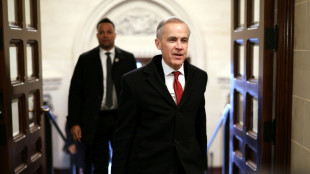
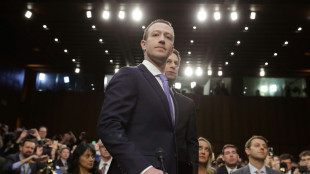
Meta chief and co-founder Mark Zuckerberg took the stand Monday in a landmark US anti-trust trial in which his social media juggernaut stands accused of abusing its market power to acquire Instagram and WhatsApp before they could become competitors.
The start of the trial in a Washington federal court dashed the hopes of Zuckerberg that the return of Donald Trump to the White House would see the government let up on the enforcement of antitrust law against Big Tech.
The Meta case is being made by the Federal Trade Commission (FTC), the powerful US consumer protection agency, and could see the owner of Facebook forced to divest Instagram and WhatsApp, which have grown into global powerhouses since their buyout.
"They decided that competition is too hard and it would be easier to buy out their rivals than to compete with them," FTC attorney Daniel Matheson said in opening remarks at the trial.
Meta attorney Mark Hansen countered in his opening salvo that "acquisitions to improve and grow an acquired firm" are not unlawful in the United States and that is what Meta, then called Facebook, did.
The trial will be run and decided by Judge James Boasberg, who is also presiding over a high-profile case involving White House orders to deport Venezuelans without a hearing, using an obscure wartime law, on grounds they belong to dangerous gangs.
The case against Meta was originally filed in December 2020, during the first Trump administration, and all eyes were on whether he would ask the FTC to stand down.
Zuckerberg, the world's third-richest person, has made repeated visits to the White House as he tries to persuade the US leader to choose settlement instead of fighting the trial, a decision that would be extraordinary at this late stage.
As part of his lobbying efforts, Zuckerberg contributed to Trump's inauguration fund and overhauled content moderation policies. He also purchased a $23 million mansion in Washington in what was seen as a bid to spend more time close to the center of political power.
The Meta lawsuit represents one of five major tech antitrust actions recently initiated by the US government.
Google is facing two cases and was found guilty of search-market dominance abuse last August, while Apple and Amazon are also heading to court.
Zuckerberg, his former lieutenant Sheryl Sandberg, and a long line of executives from rival companies are scheduled to testify at a trial expected to last at least eight weeks.
Central to the case is Facebook's 2012 billion-dollar purchase of Instagram -- then a small but promising photo-sharing app that now boasts two billion active users.
An email from Zuckerberg cited by the FTC showed him depicting Instagram's emergence as "really scary," adding that is "why we might want to consider paying a lot of money for this."
The FTC argues that Meta's $19 billion WhatsApp acquisition in 2014 followed the same pattern, with Zuckerberg fearing the messaging app could either transform into a social network or be purchased by a competitor.
Meta's defense attorneys will argue that its substantial investments transformed these acquisitions into the blockbusters they are today.
They will also highlight that Meta's apps are free for users and face fierce competition.
The FTC argues that Meta's monopoly power is demonstrated by a severely downgraded user experience -- with too many ads and product changes that users have no choice but to tolerate.
- Defining the market -
A key courtroom battleground will be how the FTC defines Meta's market.
The US government argues that Facebook and Instagram are dominant players in apps that provide a way to connect with family and friends, a category that does not include TikTok and YouTube.
But Meta disagrees. "The evidence at trial will show what every 17-year-old in the world knows: Instagram, Facebook and WhatsApp compete with Chinese-owned TikTok, YouTube, X, iMessage and many others," a spokesperson said.
"The bigger that Meta can make the relevant market... the more likely it is to defeat the FTC's case," said lawyer Brendan Benedict on Substack.
St.Ch.Baker--CPN