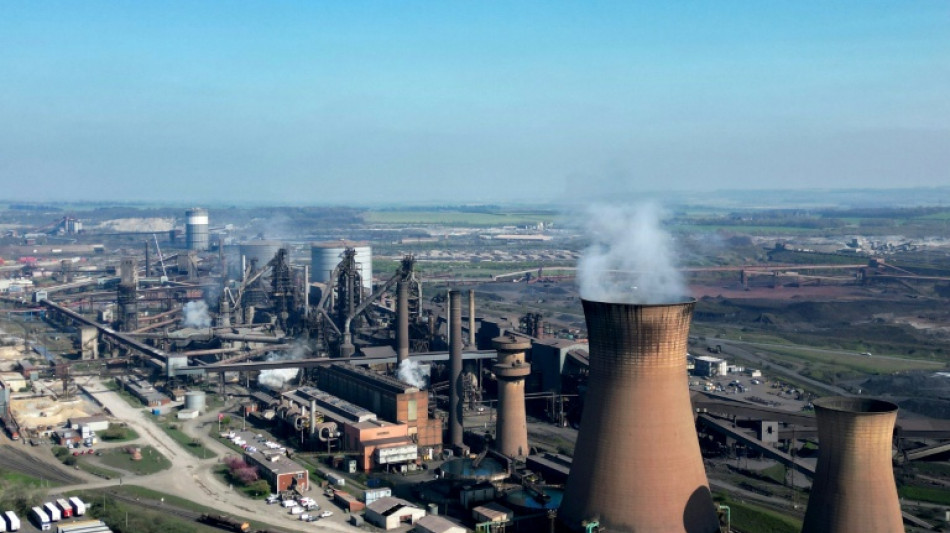
China warns UK against 'politicising' steel furnaces rescue / Photo: Darren Staples - AFP

 Kenya's economy faces climate change risks: World Bank

 Meta, Google face jury in landmark US addiction trial
 Some striking NY nurses reach deal with employers
 EU chief backs Made-in-Europe push for 'strategic' sectors

 Iran steps up arrests while remaining positive on US talks

 EU warns Meta it must open up WhatsApp to rival AI chatbots
 Japan's Takaichi may struggle to soothe voters and markets

 Arguments to begin in key US social media addiction trial
 'Send Help' repeats as N.America box office champ

 UK foreign office to review pay-off to Epstein-linked US envoy
 French police arrest five over crypto-linked magistrate kidnapping
 What's at stake for Indian agriculture in Trump's trade deal?
 Neglected killer: kala-azar disease surges in Kenya

 Spain, Portugal face fresh storms, torrential rain

 Crypto firm accidentally sends $40 bn in bitcoin to users
 Danone expands recall of infant formula batches in Europe
 Why bitcoin is losing its luster after stratospheric rise

 Digital euro delay could leave Europe vulnerable, ECB warns
 Stellantis takes massive hit for 'overestimation' of EV shift

 In Dakar fishing village, surfing entices girls back to school

 As Estonia schools phase out Russian, many families struggle
 Bangladesh Islamist leader seeks power in post-uprising vote
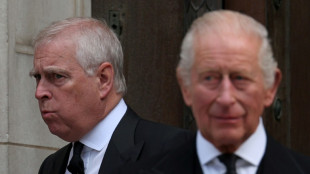 UK royal finances in spotlight after Andrew's downfall
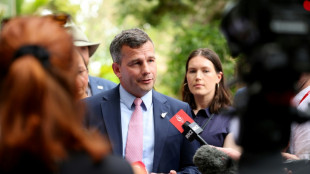 New Zealand deputy PM defends claims colonisation good for Maori

 Deadly storm sparks floods in Spain, raises calls to postpone Portugal vote
Beijing on Monday warned against "politicising" the rescue of Chinese-owned British Steel, as the UK government raced to secure raw materials to keep the country's remaining steelmaking blast furnaces running.
Prime Minister Keir Starmer's government has swooped in to prevent the closure of British Steel's main plant in Scunthorpe, northern England, after its owner, the Chinese group Jingye, halted orders of coking coal and iron ore.
The Labour government, which stopped short of nationalising British Steel over the weekend, is trying to buy the raw materials to keep the plant running and hoping to find a new private investor for the plant.
Jingye bought British Steel in 2020 and says it has invested more than £1.2 billion to maintain operations, but that it has been losing around £700,000 per day.
- China tensions -
"Towns like Scunthorpe need industries," consultant radiographer Nick Barlow, 36, who has lived in the town for six years, told AFP.
"Pretty much everyone in Scunthorpe knows somebody that's affiliated to the steel works. It's how the town was formed. everything sort of revolves around it. It's the heart of the town."
Former steelworker Jim Kirk, 66, worried that any closure of the plant would leave Scunthorpe a "ghost town" accusing Beijing of trying to "run it down, stop it so that they can import their cheap steel over here".
But a Chinese foreign ministry spokesman said Monday the UK should "avoid politicising trade cooperation or linking it to security issues, so as not to impact the confidence of Chinese enterprises in going to the UK".
Some opposition British MPs accused Beijing of interference -- with Christopher Chope of the main opposition Conservative party accusing Jingye of "industrial sabotage".
Starmer's spokesman on Monday said Downing Street is "not aware of any deliberate acts of sabotage" at the Scunthorpe steelworks.
He added the government is "confident in securing the supply of materials needed" to keep running the two blast furnaces at the plant -- the last in the UK which makes steel from scratch.
He said materials would reach the plant in the "coming days", as restarting the furnaces once they go out is extremely difficult.
Other firms, including Tata and Rainham Steel, have offered to help secure supplies, government minister James Murray told Times Radio.
- Jobs threatened -
Failure to secure enough supplies to keep the furnaces running could seriously damage the plant -- and risk making Britain the only Group of Seven country without virgin steelmaking capacity needed for everything from railways to bridges.
"If we hadn't acted, the blast furnaces were gone and in the UK primary steel production would have gone," Business Secretary Jonathan Reynolds said Sunday.
He added Jingye had turned down an offer of some £500 million ($658 million) to buy materials, instead requesting more than twice that amount with few guarantees the furnaces would stay open.
The government saw the possible closure of Scunthorpe as a threat to Britain's long-term economic security, given the decline of the UK's once robust steel industry -- and the threatened loss of some 2,700 jobs.
Reynolds said the UK had been "naive" to allow its steel industry to be bought by the Chinese company, and that he "wouldn't personally bring a Chinese company into our steel sector".
China possesses mostly minority interests in a number of key UK industries, from water to energy and Heathrow airport, giving rise to security concerns and occasional spats.
"The purchase of British Steel by a Chinese company shows how intricately market conditions, strategic corporate decisions, and the quest for investment in a failing sector interact," Patrick Munnelly, a strategist at broker Tickmill, told AFP.
David Henig, an analyst at the European Centre for International Political Economy, said "economic security challenges" affected all of Europe.
"There can also be issues with nationally owned companies, so this is very much about governments having to monitor their economies and respond where necessary."
Despite the fallout over British Steel, Starmer's administration has been at pains to improve relations with Beijing, with several high-ranking ministers holding bilateral talks in hopes of spurring economic growth.
O.Hansen--CPN