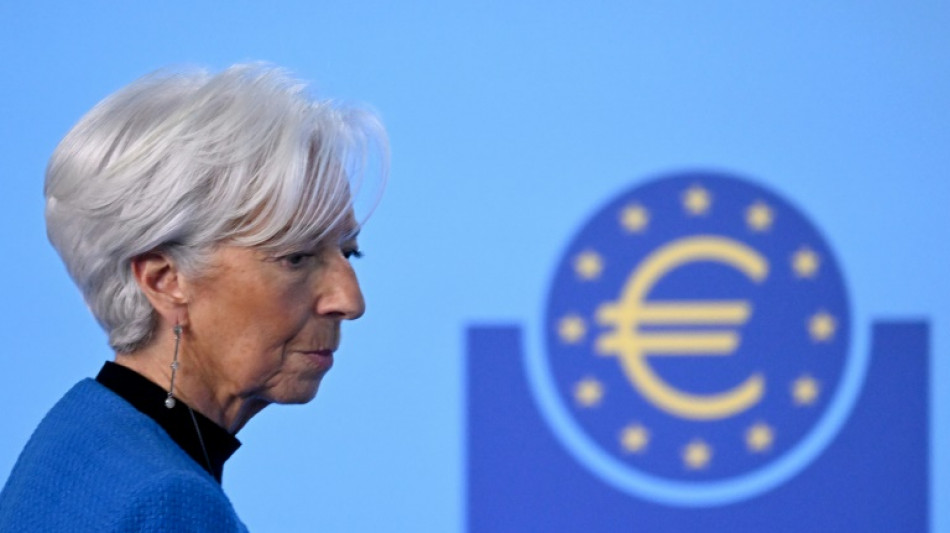
Trump tariff rollercoaster complicates ECB rate call / Photo: Kirill KUDRYAVTSEV - AFP/File

 Kenya's economy faces climate change risks: World Bank

 Meta, Google face jury in landmark US addiction trial
 Some striking NY nurses reach deal with employers

 EU chief backs Made-in-Europe push for 'strategic' sectors

 Iran steps up arrests while remaining positive on US talks
 EU warns Meta it must open up WhatsApp to rival AI chatbots

 Japan's Takaichi may struggle to soothe voters and markets

 Arguments to begin in key US social media addiction trial
 'Send Help' repeats as N.America box office champ

 UK foreign office to review pay-off to Epstein-linked US envoy
 French police arrest five over crypto-linked magistrate kidnapping

 What's at stake for Indian agriculture in Trump's trade deal?

 Neglected killer: kala-azar disease surges in Kenya

 Spain, Portugal face fresh storms, torrential rain

 Crypto firm accidentally sends $40 bn in bitcoin to users
 Danone expands recall of infant formula batches in Europe

 Why bitcoin is losing its luster after stratospheric rise

 Digital euro delay could leave Europe vulnerable, ECB warns
 Stellantis takes massive hit for 'overestimation' of EV shift

 In Dakar fishing village, surfing entices girls back to school

 As Estonia schools phase out Russian, many families struggle

 Bangladesh Islamist leader seeks power in post-uprising vote

 UK royal finances in spotlight after Andrew's downfall

 New Zealand deputy PM defends claims colonisation good for Maori

 Deadly storm sparks floods in Spain, raises calls to postpone Portugal vote
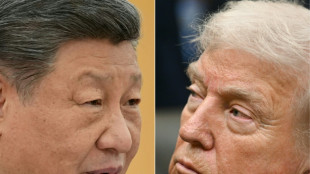
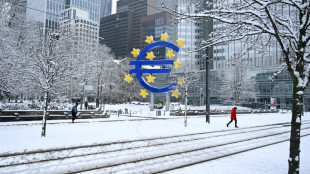
US President Donald Trump's on-and-off tariffs have clouded the picture for European Central Bank policymakers meeting this week to decide whether to lower eurozone interest rates again.
After five straight cuts that brought the central bank's borrowing costs down from historic highs, the ECB looked open to declaring a pause in its monetary policy easing on Thursday.
But Trump's move to impose sweeping tariffs on the European Union and the rest of the world increased the chances of another reduction in interest rates, according to observers.
Even after the US president last week announced a 90-day pause in the implementation of higher duties on many countries -- leaving just a global baseline 10 percent tariff intact -- the probability seemed higher.
"[T]he situation can change in just a few weeks," said Ulrike Kastens, economist at asset manager DWS.
ECB rate-setters gathering in Frankfurt to discuss their next steps were being "caught up in the new trade policy reality", Kastens said.
The impact of possible US tariffs and any retaliation from the European side had increased the "downside risks" for the eurozone economy in 2025, she said.
"The central bank is likely to counter with a further reduction in the deposit rate."
Speaking in Warsaw Friday after talks with EU finance ministers, ECB chief Christine Lagarde said the central bank was "always ready to use the instruments that it has available" should tariffs threaten financial stability.
- 'Big impact' -
Having peaked at four percent as consumer prices soared in the wake of the coronavirus pandemic and the Russian inflation of Ukraine, the ECB has brought its benchmark deposit rate down to 2.5 percent.
Inflation in the eurozone has settled towards the ECB's two-percent target, coming in at 2.2 percent in March.
Whether tariffs that made certain imports more expensive would reignite inflation in the 20-member currency bloc would be a "key question" for policymakers, Kastens said.
But the impact was more likely to be disinflationary, she ventured, as a drop in global activity brought down oil prices and cheaper goods destined for the US were diverted to Europe.
Capital Economics analyst Andrew Kenningham agreed, saying Trump's tariff announcements would have a "big impact on the world economy" despite the pause.
"The shock to confidence, trade and investment has increased downside risks to activity," said Kenningham.
"As a result the ECB seems certain to cuts interest rates by 25 basis points."
The conditions created by Trump would eventually encourage the ECB to lower its deposit rate below two percent, all the way to 1.75 percent, Kenningham predicted.
- 'Worst nightmare' -
The advent of a potential trade war looked like "Europe's worst economic nightmare just came true", ING bank analyst Carsten Brzeski said, before Trump made his U-turn.
The stay of execution from Washington prompted Brussels to delay its own plans for retaliation, opening the door for negotiations between the United States and the EU.
Whether the temporary reprieve would calm policymakers' fears remained to be seen.
Observers will listen closely to Lagarde's comments following Thursday's rates announcement to try and gauge the mood within the central bank.
After the last meeting in March, the ECB president said there were "risks all over and uncertainty all over", a reference not just to tariffs but an increasingly turbulent global context.
The "extreme" lack of clarity would prompt the bank to stick to its data-dependent, meeting-by-meeting approach for the time being, Kastens said.
"Further interest rate cuts cannot be ruled out in the short term," she said, but the scope was limited by a promised major fiscal boost in Germany, the eurozone's biggest member.
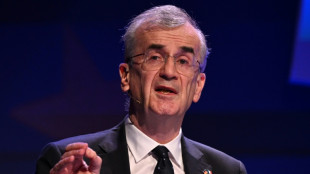
French central bank chief Francois Villeroy de Galhau, who is also an ECB rate-setter, told newspaper Midi Libre earlier this month that the approaching "victory over inflation" would provide a strong anchor of stability.
"This may give us more confidence to lower our interest rates again soon," he said, albeit before the latest twists in the tariff saga.
C.Smith--CPN