Coin Press - AI sparks Wall Street panic

NYSE - LSE
RBGPF -19.57% 69 $
NGG 1.31% 87.99 $
BTI 0.67% 58.28 $
AZN 1.36% 203.49 $
BCE -3.8% 24.45 $
GSK 1.23% 56.69 $
RELX 1.07% 33.59 $
RIO -0.38% 94.45 $
VOD 0.53% 15.21 $
RYCEF 5.63% 15.99 $
BCC -2.57% 73.2 $
CMSD 0.49% 22.26 $
JRI 0.71% 12.61 $
CMSC 0.23% 22.04 $
BP 2.02% 47.12 $

AI sparks Wall Street panic


In early February 2026 the technology industry found itself at the epicentre of a historic stock‑market rout. The catalyst was not disappointing earnings or macroeconomic upheaval but the release of a suite of generative‑AI plug‑ins. Anthropic, a San Francisco‑based start‑up backed by the likes of Amazon and Google, launched new tools for its Claude Cowork agent that automate legal and administrative tasks. In demonstrations the agent drafted contracts, filed regulatory documents and answered complex finance queries. This display of competence was hailed as a triumph for AI but it triggered panic among investors.

By 4 February the sell‑off had wiped nearly $830 billion from the S&P 500 software and services index, the worst draw‑down in the sector since the Federal Reserve’s rate‑driven rout of 2022. A Goldman Sachs basket of U.S. software stocks slumped 6 % in a single session. Thomson Reuters, owner of the Westlaw legal database, fell almost 16 %, and online legal service provider LegalZoom crashed close to 20 %. Assets managed by private‑equity firms such as Ares, KKR and Blue Owl fell between three and eleven per cent. ServiceNow, Salesforce, HubSpot, Atlassian, Docusign, Asana, Workday and Adobe all suffered double‑digit declines.

What spooked investors?
The panic reflected a shift in investor perception of generative AI. For much of 2025 Wall Street treated AI as a productivity enhancer layered on top of existing software, boosting subscription models and valuations. Anthropic’s plug‑ins suggested something more disruptive. They allow a single agent to complete tasks autonomously from raw data, bypassing conventional software workflows. In the words of the Economic Times, the launch led investors to view AI as a potential replacement for entire categories of software and services. This “SaaSpocalypse” narrative posited that moats built on proprietary data or per‑seat licensing could erode rapidly.

Analysts also compared the development to Amazon’s expansion beyond books. Just as the e‑commerce giant used its distribution foothold to disrupt retailers, AI agents might use their knowledge to disrupt legal, financial and marketing service providers. The fear was exacerbated by the timing: on the same day that Anthropic’s plug‑ins appeared, OpenAI previewed updates to its Codex agent. The combined announcements fed a narrative that software is at risk of obsolescence, prompting portfolio managers to sell anything exposed to enterprise applications.

Is the reaction justified?
Not all observers share the doom‑laden view. Jensen Huang, chief executive of Nvidia, called the sell‑off “illogical”, arguing that AI agents will still rely on traditional software for tasks such as database management, accounting and compliance. Mark Murphy of JPMorgan said the idea that a plug‑in could replace every layer of mission‑critical enterprise software is an “illogical leap”. Talley Leger of The Wealth Consulting Group contended that improved AI tools could lower the cost of producing software and widen margins.

The Economic Times emphasised that proprietary datasets remain valuable. Companies like FactSet, S&P Global and Moody’s rely on continuous data collection and licensing; AI models still struggle to replicate these curated databases. The newspaper also pointed out that the sell‑off underscored a shift from per‑seat subscriptions to outcome‑based pricing models. Newer software firms and AI‑native start‑ups already charge for completed tasks rather than for user access, suggesting that incumbents may adapt rather than vanish.

Winners amid the rout
Not every technology company suffered. Semiconductor designers and cloud operators saw renewed interest. Autonomous AI agents require far more computing power than simple text‑generation models; reasoning‑heavy workloads increase demand for high‑performance accelerators. Nvidia’s GPUs, along with Amazon’s and Google’s cloud‑computing divisions, stood to gain as always‑on agents drive higher demand for data‑centre resources. Investors also looked towards physical‑world AI: robotics and autonomous mobility require pairing intelligence with machines. Tesla’s Optimus and Cybercab projects attracted attention as they represent AI beyond the digital realm.

Lessons for software investors
The panic that erased hundreds of billions of dollars from software valuations highlights two realities. First, markets are hyper‑sensitive to the idea that AI could disintermediate middlemen. Anthropic’s plug‑in release occurred just weeks after several software firms reported solid earnings. It took one product demonstration to reverse sentiment, underlining how quickly narratives shift.

Second, the sell‑off illustrates a broader debate about disruption versus augmentation. Generative‑AI agents may indeed commoditise some tasks, especially in legal research and basic data analysis. Yet the same tools could lower costs and enable new services that expand addressable markets. History suggests that productivity‑enhancing technology often enhances total demand rather than destroying it outright. The eventual winners are likely to be those companies that embrace agentic AI, reimagine pricing and focus on proprietary data or infrastructure.

Software stocks may continue to trade with heightened volatility as investors recalibrate expectations. The “SaaSpocalypse” of 2026 will be remembered less for the market value it erased than for the questions it raised about the future of software business models. Whether AI spells obsolescence or opportunity will depend on how quickly companies adapt their tools, pricing strategies and value propositions in an age of autonomous agents.


Featured


Long live Ukraine - Хай живе Україна - Да здравствует Украина

Es lebe die Ukraine - Да здравствует Украина - Long live Ukraine - Хай живе Україна - Nech žije Ukrajina - Länge leve Ukraina - תחי אוקראינה - Lang leve Oekraïne - Да живее Украйна - Elagu Ukraina - Kauan eläköön Ukraina - Vive l'Ukraine - Ζήτω η Ουκρανία - 乌克兰万岁 - Viva Ucrania - Ať žije Ukrajina - Çok yaşa Ukrayna - Viva a Ucrânia - Trăiască Ucraina - ウクライナ万歳 - Tegyvuoja Ukraina - Lai dzīvo Ukraina - Viva l'Ucraina - Hidup Ukraina - تحيا أوكرانيا - Vivat Ucraina - ขอให้ยูเครนจงเจริญ - Ucraina muôn năm - ژوندی دی وی اوکراین - Yashasin Ukraina - Озак яшә Украина - Živjela Ukrajina - 우크라이나 만세 - Mabuhay ang Ukraine - Lenge leve Ukraina - Nyob ntev Ukraine - Да живее Украина - გაუმარჯოს უკრაინას - Hidup Ukraine - Vivu Ukrainio - Længe leve Ukraine - Živjela Ukrajina - Жыве Украіна - Yaşasın Ukrayna - Lengi lifi Úkraína - Lank lewe die Oekraïne

Stargate project, Trump and the AI war...

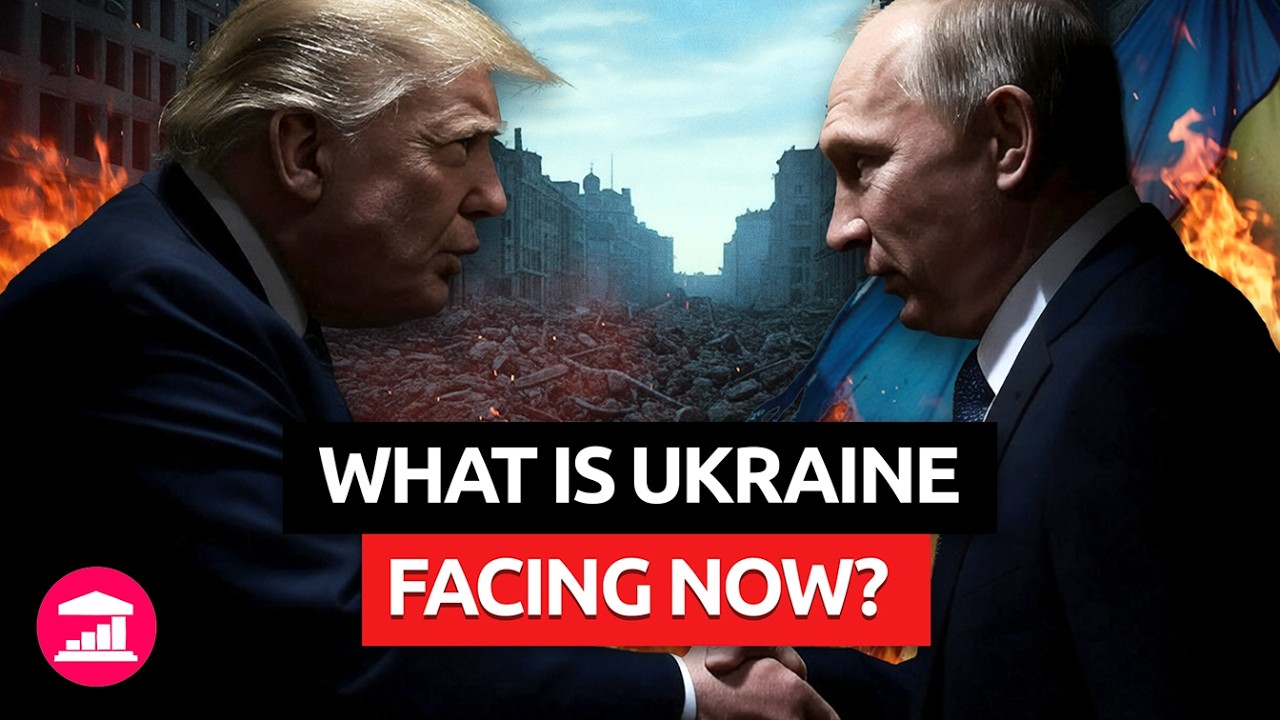
In a dramatic return to the global political stage, former President Donald J. Trump, as the current 47th President of the United States of America, has unveiled his latest initiative, the so-called ‘Stargate Project,’ in a bid to cement the United States’ dominance in artificial intelligence and outpace China’s meteoric rise in the field. The newly announced programme, cloaked in patriotic rhetoric and ambitious targets, is already stirring intense debate over the future of technological competition between the world’s two largest economies.According to preliminary statements from Trump’s team, the Stargate Project will consolidate the efforts of leading American tech conglomerates, defence contractors, and research universities under a centralised framework. The former president, who has long championed American exceptionalism, claims this approach will provide the United States with a decisive advantage, enabling rapid breakthroughs in cutting-edge AI applications ranging from military strategy to commercial innovation.“America must remain the global leader in technology—no ifs, no buts,” Trump declared at a recent press conference. “China has been trying to surpass us in AI, but with this new project, we will make sure the future remains ours.”Details regarding funding and governance remain scarce, but early indications suggest the initiative will rely heavily on public-private partnerships, tax incentives for research and development, and collaboration with high-profile venture capital firms. Skeptics, however, warn that the endeavour could fan the flames of an increasingly militarised AI race, raising ethical concerns about surveillance, automation of warfare, and data privacy. Critics also question whether the initiative can deliver on its lofty promises, especially in the face of existing economic and geopolitical pressures.Yet for its supporters, the Stargate Project serves as a rallying cry for renewed American leadership and an antidote to worries over China’s technological ascendancy. Proponents argue that accelerating AI research is paramount if the United States wishes to preserve not just military supremacy, but also the economic and cultural influence that has typified its global role for decades.Whether this bold project will succeed—or if it will devolve into a symbolic gesture—remains to be seen. What is certain, however, is that the Stargate Project has already reignited debate about how best to safeguard America’s strategic future and maintain the balance of power in the fast-evolving arena of artificial intelligence.

Iran war fuels terror risks

Terrorism fears, energy markets and geopolitical calculations have become deeply intertwined since the United States and Israel launched their assault on Iran. The assassination of Ayatollah Ali Khamenei and the sustained bombing campaign have unleashed ripple effects far beyond the Middle East. Officials across Europe and Asia warn that the conflict could trigger a wave of transnational terrorism and drive a spike in energy prices that would undermine economic stability.Across Europe, security services have been tracking a spate of attacks and foiled plots linked to Iranian networks. Recent analyses note that Iran has expanded its collaboration with criminal groups abroad, using them to intimidate dissidents and target journalists, politicians and Jewish communities in Western countries. Investigators in Germany found that a former motorcycle‑gang member was sponsored by Iran to plan an assault on a synagogue in Bochum, while U.S. prosecutors say members of a Russian organised crime network were paid to plot the killing of an Iranian‑American activist. Authorities warn that hiring criminals gives Tehran plausible deniability and allows it to contract violence without sustaining a permanent terrorist infrastructure. Security analysts caution that dissidents and activists who celebrated the Supreme Leader’s demise may become targets for Iran’s violence‑for‑hire networks, especially in countries that support the U.S. campaign. They also point out that Iranian agents embedded in embassies and other institutions could be activated to sabotage military bases or diplomatic facilities if the regime feels cornered.The immediate threat is not purely hypothetical. Since the war began on 28 February, at least eight incidents across Western and Eastern Europe have been linked to suspected Iranian sleeper cells. A network in Baku was dismantled after plotting to bomb the Israeli embassy, a synagogue and an oil pipeline; British police arrested four suspected operatives in London; improvised explosive devices detonated outside the U.S. embassy in Oslo and Jewish institutions in Liège, Rotterdam and Amsterdam; and a financial building in Amsterdam was bombed. Security services also arrested suspected spies surveilling a British nuclear submarine base. A new militant group calling itself Harakat Ashab al‑Yamin al‑Islamia claimed responsibility for some attacks and threatened more violence. Analysts warn that the group may be a front for Iran’s Revolutionary Guard or a disinformation campaign, but the attacks have already heightened anxiety across the continent. European governments say they have thwarted more than one hundred Iranian‑linked plots since 1979, and the current conflict has revived fears of reactivated sleeper cells.Beyond orchestrated networks, experts worry about individuals seeking revenge. The martyrdom narrative surrounding Khamenei’s death could motivate lone offenders who view violence as a sacred duty. U.S. investigators are treating the 1 March mass shooting at an Austin, Texas bar—where the perpetrator wore a hoodie emblazoned with an Iranian flag—as a terrorist attack potentially linked to the war. Similar shootings in Ontario and an attempted attack on a Michigan synagogue are under investigation for possible Iranian inspiration. National security officials caution that such events may be the tip of the spear and that other radicalised individuals could strike in Europe or North America. European Union intelligence services fear that Iranian militias or allied groups could exploit the chaos to free jihadist prisoners, amplifying the risk of an Islamic State resurgence.The conflict’s shockwaves are also threatening Europe’s energy security. The Strait of Hormuz, through which about one‑fifth of global oil and liquefied natural gas once transited, is effectively closed by Iranian attacks on tankers and infrastructure. European energy officials warn that kerosene shipments from Middle Eastern refineries will cease by early April and that regional stockpiles may be insufficient to prevent spot shortages and soaring prices. Natural‑gas prices in Europe have jumped more than seventy per cent since the war began as traders fear extended disruption. Analysts note that Europe depends on the Middle East for about fifteen per cent of its jet fuel and has not fully refilled depleted gas storage after cutting Russian pipeline supplies. They caution that Asia’s large economies—China, Japan, South Korea and Taiwan—could outbid Europe for scarce liquefied natural gas cargoes, driving prices even higher.Public frustration over Europe’s vulnerability is mounting. Commentary on social media reflects a perception that European leaders undermined their own security by shutting down nuclear reactors, blocking gas projects and relying on imports. Users lament the high cost of electricity and heating, argue that environmental policies left Europe unprepared for a supply shock and demand greater energy self‑sufficiency. Some accuse left‑wing governments of sacrificing economic resilience to ideological goals; others fear that Gulf producers could further restrict shipments and force rationing. These grievances, while anecdotal, illustrate how the war has become a lightning rod for broader discontent about energy policy.Similar tensions are developing in Asia. Southeast Asian governments have adopted a neutral stance toward the conflict, but analysts warn that Iran’s retaliatory measures could activate dormant networks across the region. With the world’s largest Muslim population concentrated in Indonesia and significant minorities across Malaysia, Brunei, Myanmar, the Philippines and Thailand, the region is watching for sectarian spillover. Experts note that Iran’s proxy Hezbollah staged operations in Thailand in the 1990s and caution that if the regime feels cornered it could call on sympathisers to mount attacks. Regional leaders worry that rising oil prices and travel risks will undermine tourism and that hundreds of thousands of migrant workers in the Middle East could be displaced, cutting remittance flows and dampening growth. The same sources emphasise that the war’s economic fallout complicates tariff negotiations with Washington and forces governments to balance diplomatic relations with domestic stability.Diplomats in Hanoi, Kuala Lumpur and Singapore are also recalibrating energy and trade strategies. Some neutral countries with high growth ambitions fear that prolonged instability will push inflation higher and disrupt supply chains. Thailand has formed a “war room” to manage the crisis after a commercial ship flying its flag was attacked by Iranian forces, while Vietnam and Indonesia are reconsidering trade pacts linked to U.S. policy. These debates underscore how the Iran conflict is reshaping economic planning across Asia.The broader geopolitical stakes are immense. Analysts warn that Iran’s collaboration with organised crime, the activation of sleeper cells, potential lone‑wolf attacks and the prospect of state‑led sabotage blur the line between war and terrorism. At the same time, the closure of strategic waterways has sparked fears of a prolonged energy crisis that could slow growth and stoke political unrest. Public dissatisfaction with energy policy and security concerns is intensifying across Europe and Asia. Unless the conflict de‑escalates and governments bolster counter‑terrorism cooperation and diversify energy supplies, the war in Iran could trigger a major crisis on two continents.