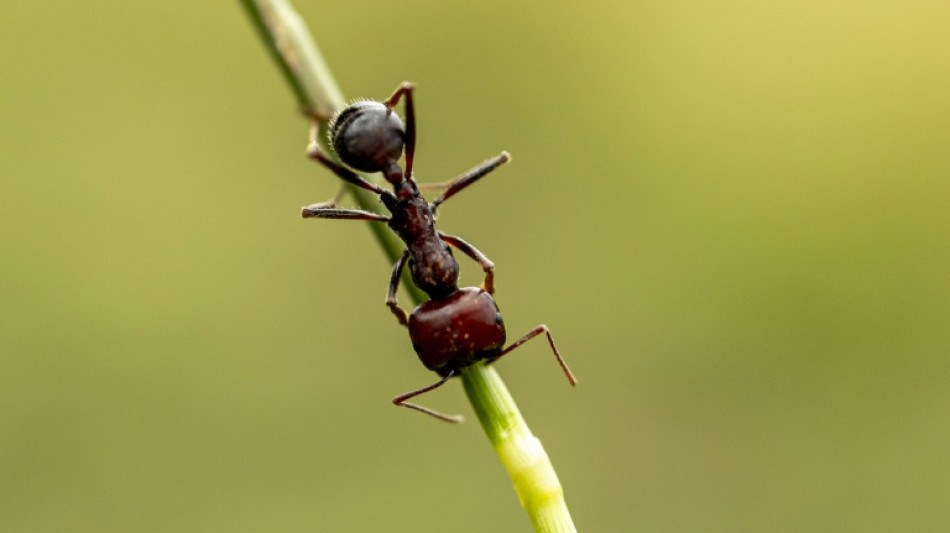
Kenya's new poaching problem: smuggling Giant Harvester Ants / Photo: SIMON MAINA - AFP

 Trump rejects AI slowdown concerns as UN urges coordinated controls

 Higher wages draw migrant workers to Kashmir despite attacks

 Oil supply concerns and AI warnings weigh on global markets

 'I am the hoax buster': Trump rejects AI danger warnings

 Doha Islamic finance forum names AlRayan firms as co-lead partners

 Russian disinformation campaign sets sights on US midterms

 New York seizes 12 celeb deep-fake porn sites

 France, Iraq deepen energy, defence ties during Zaidi visit

 PopDEX Surpasses $61M TVL and $2B Trading Volume in Closed Beta

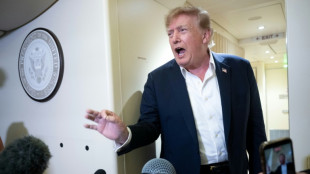 Trump blasts 'sick conspiracy' against AI as warnings mount

 French defence group Thales calls on governments to regulate AI

 Oil gains on Mideast supply fears, AI warnings rattle tech firms

 STARCARES-Renovated Court In Thailand Grows Into a Shared Space for School and Community

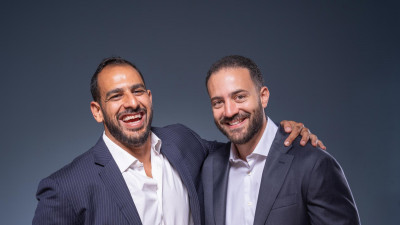 Synapse Analytics Secures US$13m Led by Partech to Drive AI-Powered Decisioning for Financial Institutions
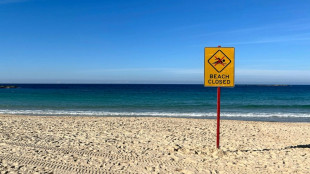 Surfer hospitalised after shark attack in Western Australia

 US hosts G20 'energy abundance' talks amid Iran war shock

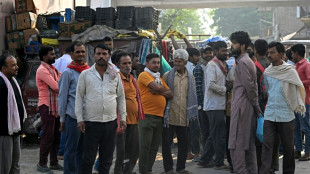 Migrant workers flock to Indian Kashmir despite militant threats
 Canada's Carney seeks closer Europe ties to counter hostile US

 Dozens arrested in major anti-LGBTQ raids in Turkey

 Poland, Ukraine slam Russian strikes near border as 'escalation'

 iPhone 18預購後出現可疑扣款 四間銀行調查未授權交易

 Galaxy Tab S12系列效果圖曝光 Ultra擬配雙鏡頭及瀏海螢幕

 Altman tells Fortune OpenAI will not go public in 2026

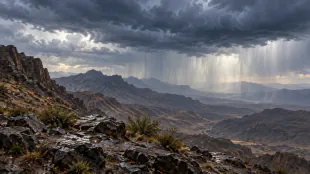 الأرصاد السعودية تتوقع سيولاً وأمطاراً رعدية في خمس مناطق

 Anthropic details Claude misuse as US targets major illicit online marketplace

Kenyan ant expert Dino Martins gushes over the red and black insects that have become the centre of an international smuggling trade.
Martins has been visiting the network of nests of these Giant African Harvester Ants outside Nairobi for 40 years.
"They're big and bold... They're the tigers of the ant world," the entomologist told AFP.
"Each nest here has just one queen and she is the mother who founded this nest 40, 50 or even 60 years ago," he said.
Martins was shocked when he learned that thousands of queens from this Messor cephalotes species were being harvested and shipped abroad in syringes and test tubes to be sold for hundreds of dollars each.
The trade came to light in Kenya last year when two Belgian teenagers were arrested in possession of nearly 5,000 queen ants, and accused of "biopiracy".
Kenyan authorities fear a new form of poaching, focused less on ivory and furs, and more on insects, reptiles and rare plants.
The judge even compared it to the slave trade.
"Imagine being violently removed from your home and packed into a container with many others like you... It almost sounds as if the reference above is to the slave trade," he said in his ruling.
The Belgians were handed a fine of around $8,000, but as more cases have emerged, sentences have hardened: last month a Chinese national was sentenced to one year in prison for attempting to traffic 2,000 ants.
On several European websites, the queens go for around 200 euros ($230).
Though marked as unavailable, they are increasingly easy to buy with the right connections, said Ryan, a 25-year-old from France who gave only his first name.
He finds ants "hypnotising", and wanted the largest harvesters, so he bought a starter kit including a queen and 12 workers from an authorised seller for 450 euros.
That's "very reasonable," he said -- a decade ago, a queen could fetch 1,000 euros.
In the end, however, Ryan found they proved too tricky to raise and he gave them away.
Giant Harvester Ants are common from the Mediterranean to the Cape. They work together almost 24 hours a day, gathering and chopping grasses for their larvae.
They have captivated people for centuries. In the Old Testament, King Solomon famously exhorted the lazy to "Go to the ant... Consider its ways and become wise".
"He was observing the same ant in Jerusalem that we are now," said Martins.
- 'Ants have feelings' -
Colonies can take 20-30 years to produce new queens. They provide all manner of services to the ecosystem: dispersing grass seeds, aerating the soil, and providing food for animals like pangolins.
Martins also considers the smuggling trade unethical simply because "ants have feelings".
The trade "exploded" with the arrival of the internet, said Jerome Gippet, a researcher at the Swiss University of Fribourg.
Formerly the interest of a few passionate individuals, it eventually gave way to sophisticated networks of collectors, intermediaries and smugglers.
A study Gippet published in 2017 found more than 500 ant species -- a third of the total -- were sold online. More than 10 percent were potentially invasive with uncertain impacts on foreign ecosystems.
He says regulated trade -- as exists in Australia, for example -- can work well.
"I'm not advocating for a ban on the ant trade. It's very useful in educational terms, in terms of reconnecting with nature, or simply providing enjoyment... But it has to be done responsibly," he said.
C.Smith--CPN