Coin Press - India defies U.S. tariffs

NYSE - LSE
RBGPF -19.57% 69 $
AZN 1.36% 203.49 $
NGG 1.31% 87.99 $
GSK 1.23% 56.69 $
BTI 0.67% 58.28 $
CMSD 0.49% 22.26 $
CMSC 0.23% 22.04 $
BCE -3.8% 24.45 $
RYCEF 5.63% 15.99 $
BCC -2.57% 73.2 $
RELX 1.07% 33.59 $
VOD 0.53% 15.21 $
RIO -0.38% 94.45 $
JRI 0.71% 12.61 $
BP 2.02% 47.12 $

India defies U.S. tariffs


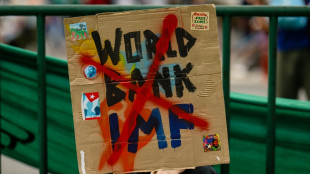
When Washington decided to double tariffs on Indian goods in mid‑2025, many analysts predicted a serious blow to New Delhi’s export‑led ambitions. The new duties – raising effective rates to 50 % and applying to a broad range of merchandise – were justified by the United States as a response to India’s purchases of discounted Russian crude and long‑standing trade imbalances.

Yet the effect so far has been counter‑intuitive. India has retained its position as one of the world’s fastest‑growing major economies. Provisional figures show gross domestic product expanding at an annualised 7.8 % in the April–June 2025 quarter, the fastest in five quarters and well above market forecasts. Gross value added, regarded as a better measure of underlying activity, grew 7.6 %, while private consumption – which accounts for nearly 60 % of output – rose 7 %. These gains have encouraged officials to predict full‑year growth close to 7 %, and the statistics office now projects 7.4 % for the 2025/26 fiscal year.

Trade tensions and political rhetoric
The tariff escalation marks the sharpest turn in U.S.–India commerce since the Trump administration’s early complaints about India’s high import barriers. What began as a push to narrow America’s trade deficit quickly widened into a broader confrontation: Washington demanded easier market access, higher visa fees and curbs on H‑1B immigration, while New Delhi defended its right to buy Russian oil and declined to join Western sanctions. When U.S. officials linked Moscow’s invasion of Ukraine with bilateral trade talks, they imposed an extra 25‑percentage‑point surcharge over the existing 25 % tariff. President Donald Trump used social media to label India a “dead economy,” arguing that the United States did little business with a nation he said was overly protected. Such rhetoric belied the depth of bilateral ties: India remains a key defence partner for Washington, and the two countries signed a ten‑year defence cooperation framework last year.

Why India’s growth holds up
Several factors explain why punitive tariffs have not derailed growth. First, India’s economy is driven far more by domestic demand than by exports. Private consumption has been buoyed by rural spending, demand for durable goods and tax relief measures. Government spending rose 7.4 % in the June quarter after contracting in the previous period. The manufacturing sector expanded 7.7 %, a sharp improvement on the previous quarter, and services – spanning trade, hotels, transport and finance – posted a robust 9.3 % increase. Agriculture also contributed, growing 3.7 % after a strong sowing season. Collectively, these drivers more than offset the early effects of higher U.S. duties.

Second, Prime Minister Narendra Modi’s government has pursued reforms that underpin domestic resilience. Officials cut personal income taxes and announced forthcoming consumption‑tax reductions to stimulate spending. Labour and consumer‑tax overhauls came into force in 2025, improving compliance and investment conditions. Authorities are also front‑loading capital expenditure on infrastructure and offering targeted support to sectors most exposed to foreign tariffs, such as textiles and leather. These measures, along with monetary policy that keeps real interest rates supportive, have helped sustain household and corporate confidence.

Third, India has diversified its trade relationships. While U.S. tariffs threaten around 55 % of the country’s $87 billion of goods exports to America, exporters have been quick to court alternative markets. New Delhi is negotiating free‑trade agreements with the United Kingdom and the European Union and has concluded pacts with Australia and the United Arab Emirates. Bilateral deals in South‑East Asia and Latin America have opened new routes for manufacturers of automobiles, pharmaceuticals and electronics. Even where tariffs bite, such as in Mexico – which recently raised import duties on non‑FTA partners to up to 50 % – Indian negotiators are pursuing country‑specific exemptions. The government has also stepped up outreach to African and Middle‑Eastern economies, leveraging its successful Group‑of‑Twenty presidency to deepen investment ties.

The risks ahead
Economists still warn that the full impact of the U.S. tariffs has yet to be felt. Exporter groups estimate that 50 % duties could shave 0.6 to 0.8 percentage points off India’s growth over a year. With nominal GDP growth already slowing to 8.8 % in the June quarter – its lowest in several years – corporate profits and tax revenues may come under pressure. Currency markets have reflected these concerns: the rupee touched a record low against the dollar following the tariff hikes, while equity indices sagged. There are also structural challenges. The European Union’s Carbon Border Adjustment Mechanism, set for full implementation in 2026, will impose new reporting obligations and costs on steel, aluminium and cement exporters, potentially eroding their competitiveness. Meanwhile, Mexico’s broad tariff increases threaten to disrupt a fast‑growing destination for Indian automobiles and components.

Another concern is private investment. Capital expenditure rose 7.8 % in the June quarter, but analysts say many firms are deferring large projects pending clarity on global trade rules. Although official forecasts point to 7 % annual growth, the Reserve Bank of India expects a moderation as the tariffs take full effect and global demand slows. To sustain momentum, India will need to accelerate structural reforms, improve labour‑market flexibility and expand production incentives under its “Make in India” programme.

A contest of narratives
The commercial clash between Washington and New Delhi is as much about narrative as economics. U.S. officials portray the tariffs as leverage to obtain market access and influence India’s foreign policy. Indian leaders characterise them as an unfair attempt to “crush” a rising power, and they point to the country’s 1.4 billion‑strong market and digital‑economy boom as evidence of enduring strength. In truth, the clash underscores a shifting global order. As China’s growth slows, investors and governments are reassessing supply‑chain dependence and seeking alternatives. India’s ability to deliver near‑8 % growth despite trade headwinds highlights its potential as a manufacturing and services hub. Yet the dispute also exposes vulnerabilities: a heavy reliance on imported oil, a still‑nascent export base and an under‑developed logistics system.

For now, India’s economy is soaring even as one of its most important partners raises barriers. Whether this resilience can be sustained will depend on how quickly tariffs bite, how successfully New Delhi diversifies its trading partners and whether domestic reforms continue apace. The coming year will reveal whether the world’s fastest‑growing major economy can stay on course amid rougher commercial seas.


Featured


Long live Ukraine - Хай живе Україна - Да здравствует Украина

Es lebe die Ukraine - Да здравствует Украина - Long live Ukraine - Хай живе Україна - Nech žije Ukrajina - Länge leve Ukraina - תחי אוקראינה - Lang leve Oekraïne - Да живее Украйна - Elagu Ukraina - Kauan eläköön Ukraina - Vive l'Ukraine - Ζήτω η Ουκρανία - 乌克兰万岁 - Viva Ucrania - Ať žije Ukrajina - Çok yaşa Ukrayna - Viva a Ucrânia - Trăiască Ucraina - ウクライナ万歳 - Tegyvuoja Ukraina - Lai dzīvo Ukraina - Viva l'Ucraina - Hidup Ukraina - تحيا أوكرانيا - Vivat Ucraina - ขอให้ยูเครนจงเจริญ - Ucraina muôn năm - ژوندی دی وی اوکراین - Yashasin Ukraina - Озак яшә Украина - Živjela Ukrajina - 우크라이나 만세 - Mabuhay ang Ukraine - Lenge leve Ukraina - Nyob ntev Ukraine - Да живее Украина - გაუმარჯოს უკრაინას - Hidup Ukraine - Vivu Ukrainio - Længe leve Ukraine - Živjela Ukrajina - Жыве Украіна - Yaşasın Ukrayna - Lengi lifi Úkraína - Lank lewe die Oekraïne

Stargate project, Trump and the AI war...

In a dramatic return to the global political stage, former President Donald J. Trump, as the current 47th President of the United States of America, has unveiled his latest initiative, the so-called ‘Stargate Project,’ in a bid to cement the United States’ dominance in artificial intelligence and outpace China’s meteoric rise in the field. The newly announced programme, cloaked in patriotic rhetoric and ambitious targets, is already stirring intense debate over the future of technological competition between the world’s two largest economies.According to preliminary statements from Trump’s team, the Stargate Project will consolidate the efforts of leading American tech conglomerates, defence contractors, and research universities under a centralised framework. The former president, who has long championed American exceptionalism, claims this approach will provide the United States with a decisive advantage, enabling rapid breakthroughs in cutting-edge AI applications ranging from military strategy to commercial innovation.“America must remain the global leader in technology—no ifs, no buts,” Trump declared at a recent press conference. “China has been trying to surpass us in AI, but with this new project, we will make sure the future remains ours.”Details regarding funding and governance remain scarce, but early indications suggest the initiative will rely heavily on public-private partnerships, tax incentives for research and development, and collaboration with high-profile venture capital firms. Skeptics, however, warn that the endeavour could fan the flames of an increasingly militarised AI race, raising ethical concerns about surveillance, automation of warfare, and data privacy. Critics also question whether the initiative can deliver on its lofty promises, especially in the face of existing economic and geopolitical pressures.Yet for its supporters, the Stargate Project serves as a rallying cry for renewed American leadership and an antidote to worries over China’s technological ascendancy. Proponents argue that accelerating AI research is paramount if the United States wishes to preserve not just military supremacy, but also the economic and cultural influence that has typified its global role for decades.Whether this bold project will succeed—or if it will devolve into a symbolic gesture—remains to be seen. What is certain, however, is that the Stargate Project has already reignited debate about how best to safeguard America’s strategic future and maintain the balance of power in the fast-evolving arena of artificial intelligence.

Iran war fuels terror risks

Terrorism fears, energy markets and geopolitical calculations have become deeply intertwined since the United States and Israel launched their assault on Iran. The assassination of Ayatollah Ali Khamenei and the sustained bombing campaign have unleashed ripple effects far beyond the Middle East. Officials across Europe and Asia warn that the conflict could trigger a wave of transnational terrorism and drive a spike in energy prices that would undermine economic stability.Across Europe, security services have been tracking a spate of attacks and foiled plots linked to Iranian networks. Recent analyses note that Iran has expanded its collaboration with criminal groups abroad, using them to intimidate dissidents and target journalists, politicians and Jewish communities in Western countries. Investigators in Germany found that a former motorcycle‑gang member was sponsored by Iran to plan an assault on a synagogue in Bochum, while U.S. prosecutors say members of a Russian organised crime network were paid to plot the killing of an Iranian‑American activist. Authorities warn that hiring criminals gives Tehran plausible deniability and allows it to contract violence without sustaining a permanent terrorist infrastructure. Security analysts caution that dissidents and activists who celebrated the Supreme Leader’s demise may become targets for Iran’s violence‑for‑hire networks, especially in countries that support the U.S. campaign. They also point out that Iranian agents embedded in embassies and other institutions could be activated to sabotage military bases or diplomatic facilities if the regime feels cornered.The immediate threat is not purely hypothetical. Since the war began on 28 February, at least eight incidents across Western and Eastern Europe have been linked to suspected Iranian sleeper cells. A network in Baku was dismantled after plotting to bomb the Israeli embassy, a synagogue and an oil pipeline; British police arrested four suspected operatives in London; improvised explosive devices detonated outside the U.S. embassy in Oslo and Jewish institutions in Liège, Rotterdam and Amsterdam; and a financial building in Amsterdam was bombed. Security services also arrested suspected spies surveilling a British nuclear submarine base. A new militant group calling itself Harakat Ashab al‑Yamin al‑Islamia claimed responsibility for some attacks and threatened more violence. Analysts warn that the group may be a front for Iran’s Revolutionary Guard or a disinformation campaign, but the attacks have already heightened anxiety across the continent. European governments say they have thwarted more than one hundred Iranian‑linked plots since 1979, and the current conflict has revived fears of reactivated sleeper cells.Beyond orchestrated networks, experts worry about individuals seeking revenge. The martyrdom narrative surrounding Khamenei’s death could motivate lone offenders who view violence as a sacred duty. U.S. investigators are treating the 1 March mass shooting at an Austin, Texas bar—where the perpetrator wore a hoodie emblazoned with an Iranian flag—as a terrorist attack potentially linked to the war. Similar shootings in Ontario and an attempted attack on a Michigan synagogue are under investigation for possible Iranian inspiration. National security officials caution that such events may be the tip of the spear and that other radicalised individuals could strike in Europe or North America. European Union intelligence services fear that Iranian militias or allied groups could exploit the chaos to free jihadist prisoners, amplifying the risk of an Islamic State resurgence.The conflict’s shockwaves are also threatening Europe’s energy security. The Strait of Hormuz, through which about one‑fifth of global oil and liquefied natural gas once transited, is effectively closed by Iranian attacks on tankers and infrastructure. European energy officials warn that kerosene shipments from Middle Eastern refineries will cease by early April and that regional stockpiles may be insufficient to prevent spot shortages and soaring prices. Natural‑gas prices in Europe have jumped more than seventy per cent since the war began as traders fear extended disruption. Analysts note that Europe depends on the Middle East for about fifteen per cent of its jet fuel and has not fully refilled depleted gas storage after cutting Russian pipeline supplies. They caution that Asia’s large economies—China, Japan, South Korea and Taiwan—could outbid Europe for scarce liquefied natural gas cargoes, driving prices even higher.Public frustration over Europe’s vulnerability is mounting. Commentary on social media reflects a perception that European leaders undermined their own security by shutting down nuclear reactors, blocking gas projects and relying on imports. Users lament the high cost of electricity and heating, argue that environmental policies left Europe unprepared for a supply shock and demand greater energy self‑sufficiency. Some accuse left‑wing governments of sacrificing economic resilience to ideological goals; others fear that Gulf producers could further restrict shipments and force rationing. These grievances, while anecdotal, illustrate how the war has become a lightning rod for broader discontent about energy policy.Similar tensions are developing in Asia. Southeast Asian governments have adopted a neutral stance toward the conflict, but analysts warn that Iran’s retaliatory measures could activate dormant networks across the region. With the world’s largest Muslim population concentrated in Indonesia and significant minorities across Malaysia, Brunei, Myanmar, the Philippines and Thailand, the region is watching for sectarian spillover. Experts note that Iran’s proxy Hezbollah staged operations in Thailand in the 1990s and caution that if the regime feels cornered it could call on sympathisers to mount attacks. Regional leaders worry that rising oil prices and travel risks will undermine tourism and that hundreds of thousands of migrant workers in the Middle East could be displaced, cutting remittance flows and dampening growth. The same sources emphasise that the war’s economic fallout complicates tariff negotiations with Washington and forces governments to balance diplomatic relations with domestic stability.Diplomats in Hanoi, Kuala Lumpur and Singapore are also recalibrating energy and trade strategies. Some neutral countries with high growth ambitions fear that prolonged instability will push inflation higher and disrupt supply chains. Thailand has formed a “war room” to manage the crisis after a commercial ship flying its flag was attacked by Iranian forces, while Vietnam and Indonesia are reconsidering trade pacts linked to U.S. policy. These debates underscore how the Iran conflict is reshaping economic planning across Asia.The broader geopolitical stakes are immense. Analysts warn that Iran’s collaboration with organised crime, the activation of sleeper cells, potential lone‑wolf attacks and the prospect of state‑led sabotage blur the line between war and terrorism. At the same time, the closure of strategic waterways has sparked fears of a prolonged energy crisis that could slow growth and stoke political unrest. Public dissatisfaction with energy policy and security concerns is intensifying across Europe and Asia. Unless the conflict de‑escalates and governments bolster counter‑terrorism cooperation and diversify energy supplies, the war in Iran could trigger a major crisis on two continents.