-
 Germany urges EU action against China to defend carmakers
-
Nepal floods among 'most challenging' disasters: WFP

-
 Japan eyes changing prostitution law to punish sex buyers
-
Kids and social media: what would change under new EU law

-
 Modi pitches India as global chipmaking hub
-
King Charles to call on tech giants for 'reassurances' over AI

-
 Ukraine plans record defence spending in 2027
-
STARPRIME Responds to Diverging Gold Market Demand with AM/PM Fixing and XAU24/7

-
 NASA scan discovers new, 'once in a century' Moon crater
-
Where the US-China tariff row stands ahead of White House summit

-
 Most stocks rise as Fed hikes and indicates drive to curb inflation
-
Indonesia cash-for-photos scheme turns animal hunters into protectors

-
 UK-Sudanese author pens book to give children 'African history of Africa'
-
Argentine judge orders suspension of Falklands oil project

-
 US Congress passes sweeping Russia sanctions bill
-
US Fed raises rates to tackle 'too high' inflation, irking Trump

-
 US stocks fall, dollar gains after Fed lifts interest rates
-
Turkey releases 106 protesters, jails more LGBTQ activists

-
 US Fed raises rates to tackle 'too high' inflation in move sure to rile Trump
-
Candidate for UN chief calls for AI regulation akin to nuclear weapons

-
 US Fed raises rates to battle inflation in move likely to rile Trump
-
'We're losing control,' AI pioneer Yoshua Bengio tells AFP

-
 US House faces test on sweeping Russia sanctions bill
-
IR-MED and Dice Technologies Announce collaboration to Evaluate and Advance Pressure-Injury Prevention Platform in Japan

-
 British PM says to make 'difficult decisions' as inflation rises
-
Watts, Pitt, Cruz to light up Spain's top film festival

-
 Global fuel price demos: a round-up
-
Toogood Gold's Table Mountain Sits in the Shadow of a Nevada Gold Rush

-
 Leverate Launches MCP for Traders to Connect AI Assistants With Trading Platforms
-
MEXC July–August Security Report: 38.66M USDT in Risk Funds Intercepted, Futures Insurance Fund Hits 792M USDT

-
 MEXC Launches $1M "Discover Your Wall Street DNA" Campaign to Help Traders Find Their Market Fit
-
Emporio Armani names Dario Vitale new creative director

-
 Stocks edge higher ahead of US Fed rate call
-
EU to ban social media for under 13s, curb access until 15

-
 BASIS.pro Expands On-Chain Infrastructure with XDC Network Partnership and Zypher DAO as Auto Earn Goes Live
-
Wildfires push endangered Sumatran elephants to brink: Indonesian NGO

-
 Pickle-flavoured tart? AI inspires Japan's convenience stores
-
Bank of Japan set to raise rates under pressure from inflation, US

-
 EU chief hosts Canada's Carney in push to 'deepen' alliance
-
EU chief to unveil social media, gaming curbs for under-15s

-
 Meta chief pushes back on AI slowdown calls
-
'Resident Evil' film brings video game's ethos to the big screen

-
 US Fed to deliver rate decision with markets betting on hike
-
GA-ASI Mojave First UAS To Complete Battlefield Short Field Ops

-
 i-payout Expands U.S. Money Transmitter Licensing Footprint and Advances European EMI Strategy
-
Sanders, Bannon warn of AI dangers in rare US left-right alignment

-
 US Senate crypto bill collapses amid partisan deadlock
-
Empty benches as schools reopen in Venezuela's quake-hit Guaira

-
 OpenAI, Anthropic and Google are working to create an AI standards body
-
Tiny English village holds 'independence' vote over asylum seeker housing

Trump's attack on the Dollar
An unprecedented conflict between the US President and the Federal Reserve is causing unrest on the financial markets. In mid-January 2026, it was announced that the US Department of Justice had issued grand jury subpoenas to the Federal Reserve System. Officially, the investigation concerns allegedly overpriced renovation work on historic administrative buildings, but the chairman of the Federal Reserve, Jerome Powell, stated in a video message that these investigations were being used as a pretext. The threat of punishment was aimed solely at subjugating the Federal Reserve's independent interest rate policy. Powell emphasised that the Federal Reserve fully complies with Congress's statutory oversight rights and called the investigation an unprecedented political interference. He fears that the issue at stake is whether monetary policy is based on data or controlled by political pressure.
Since his return to the White House in January 2025, the US President has repeatedly insulted Powell in a completely questionable manner and urged him to resign. Because the Federal Reserve only lowered interest rates gradually in 2025 and attributed the high inflation largely to the US government's protectionist course, the President increased the pressure. He called the central bank chief a ‘moron’ and a “bonehead” and threatened to sue him for ‘incompetence’. Behind the investigation is the prosecutor he appointed in Washington, who used the renovation costs as a reason to initiate criminal proceedings. According to reports, neither the Attorney General nor her deputy were informed in advance.
Reactions from politicians and experts
The legal offensive sparked sharp criticism across party lines. Several Republican senators made it clear that they would not confirm any nominations to the Federal Reserve Board while the investigation was ongoing. Democratic lawmakers described the move as an attack on the rule of law and a step towards autocracy. They warned that the President wanted to ‘lock up’ the Fed chairman simply because he did not align his interest rate policy with the White House's ideas. Former Fed chairmen and leading economists also warn that this is reminiscent of countries with weak institutions where the government controls the central bank – often with fatal consequences for price stability and the economy. Even market liberals warned that the misuse of criminal prosecution could drive away investors and undermine confidence in the United States.
Internationally, numerous central bankers expressed solidarity with Powell. They pointed out that an independent monetary policy is essential to ensure long-term price stability and a functioning economy. Some observers compared the current developments with authoritarian practices in Turkey or Venezuela, where populist governments attempted to control monetary policy, triggering hyperinflation.
Impact on the financial market
The markets reacted sensitively to the escalation. After the threat of sanctions became known, the US dollar fell significantly against major currencies. The dollar index, which measures the strength of the US currency against a basket of other major currencies, slipped by almost half a percent. The euro rose above 1.16 US dollars, the Swiss franc reached a ten-year high against the US currency, and investors fled to safe havens such as gold and silver. Analysts explained that the threat of losing central bank independence and the prospect of even higher US debt in the future are deterring investors. Gold rose to over $4,600 per troy ounce, and silver prices also reached record highs.
Uncertainty about future interest rate policy caused yields on long-term US government bonds to rise as investors demanded higher risk premiums. At the same time, the stock market initially recorded losses, but technology stocks later supported prices. Some analysts warn that sustained political pressure on the Federal Reserve could lead to higher inflation, capital flight and a depreciation of the dollar. Nomura currency strategists also pointed out that, in addition to geopolitical risks, it is above all the loss of confidence in US monetary policy that is weighing on the dollar.
Possible consequences for the dollar
The president's attacks on the Federal Reserve are not a new phenomenon. Back in 2025, the US currency had already lost significant value following repeated public insults directed at the head of the central bank. Analysts noted that the dollar index posted double-digit losses over the course of the year and that the extreme volatility on the currency markets was linked in particular to attempts to exert political influence on monetary policy. Then, as now, protectionist tariff policies and efforts to force interest rate cuts are driving up inflation. Investors fear that a politically compliant central bank will cut interest rates too sharply, triggering a spiral of inflation.
In addition to domestic political tensions, international factors are also weighing on the US dollar's status as the world's reserve currency. The global community is watching closely to see whether the US will continue to pursue a predictable monetary policy or whether political interests will weaken the reserve currency. If investors withdraw from the dollar on a large scale, alternative reserve currencies such as the euro or the Chinese yuan could gain in importance. Digital central bank currencies could also benefit from this.
Looking ahead ‘for the time being’
Jerome Powell is expected to remain Chairman of the Federal Reserve until the end of his term in May 2026, even though the White House is already sounding out potential successors. If the President appoints a loyal candidate, the Senate could delay the appointment due to ongoing investigations. Some observers believe that Powell – whose term as governor does not end until 2028 – could remain on the board despite the threat of sanctions in order to defend the independence of the central bank.
The coming months will show whether the United States can maintain its traditionally strong central bank independence. The conflict between the president and the Federal Reserve chief is already having a noticeable economic impact and is calling into question confidence in the US dollar as a global reserve currency. Economists warn that an independent monetary policy is a cornerstone of economic stability and must not be sacrificed to day-to-day politics.
Russia and the terrorism against Ukraine

Wealth that Brazil is not utilizing!

Germany doesn't want any more migrants?
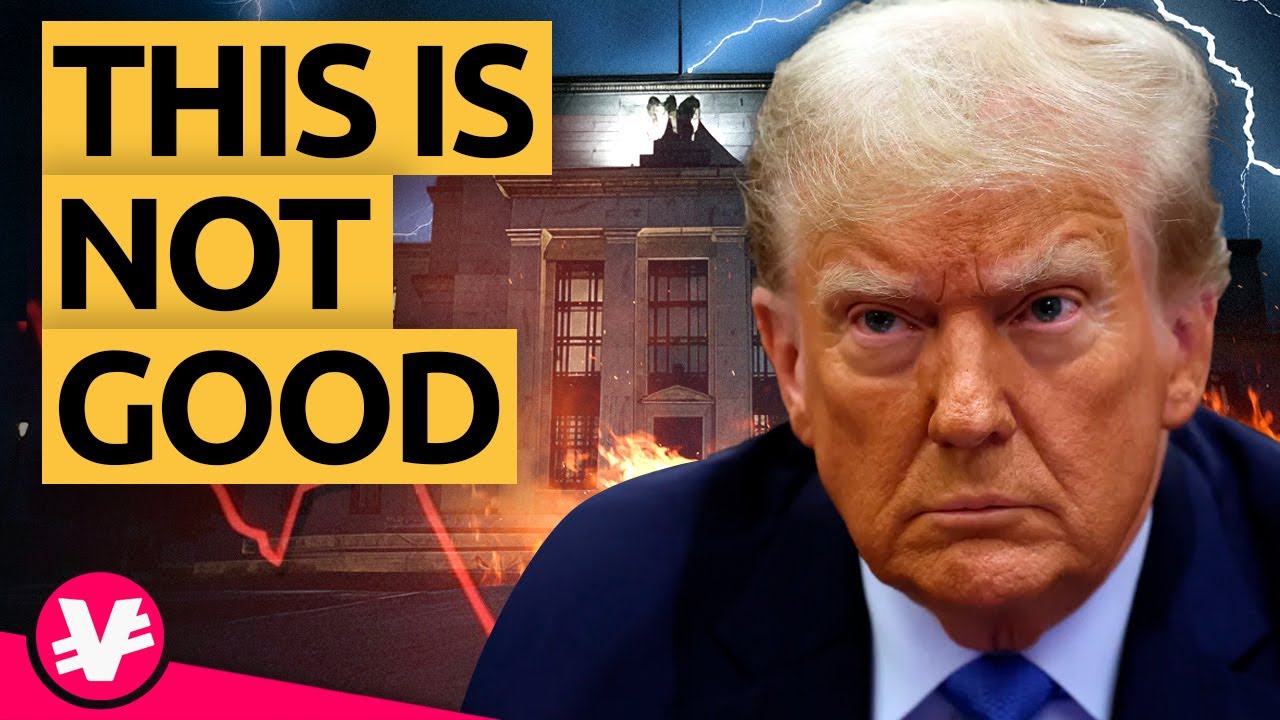
US Federal Reserve with “announcement”

EU: Greenpeace warns of dying farms

Terrorist state Iran: ‘We are ready to attack Israel again’

EU: Austrian elections shake Establishment

Ukraine: Recruiters searched Kyiv venues
Polish PM and the danger of asylum seekers

Germany: The fight against economic migrants
Putin's War Will Go Bankrupt if the Oil Prices Drop