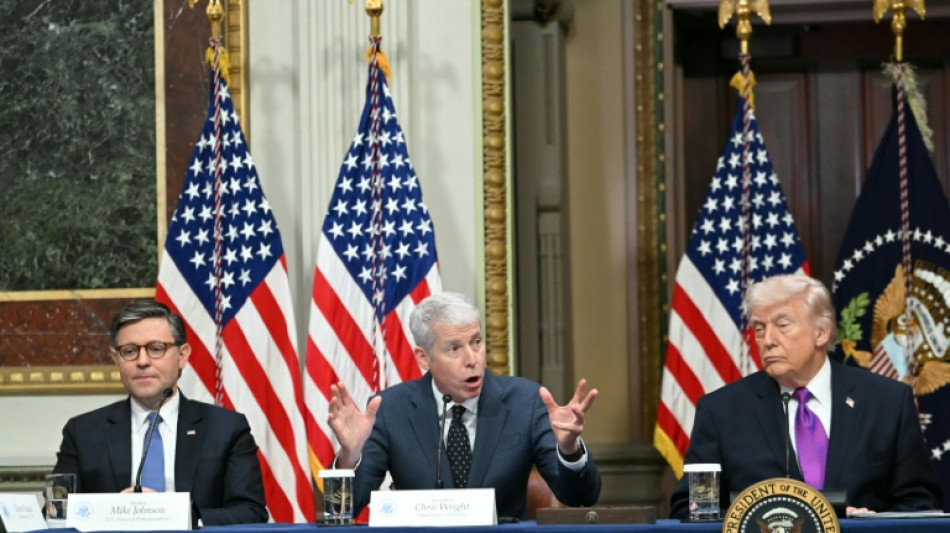
US military 'not ready' to escort tankers through Hormuz Strait: energy secretary / Photo: ANDREW CABALLERO-REYNOLDS - AFP

 Bank of Japan hikes rates to 31-year high to battle inflation

 AI doomsday warnings unlikely to slow IPOs but questions linger

 In Brazil's Amazon, the hunt for oil fuels hopes and fears

 Baby orangutans in India expose 'frightening' scale of trafficking

 Oversight Board blasts 'inadequate' Meta safeguards for AI deepfakes
 Harry makes first public appearance since return to UK
 Princess Diana's brother makes new explosive claims against Charles
 Trump admin overhauls key protection for endangered species
 Mbappe draws political fire over Ceuta t-shirt controversy

 Third malaria death in Germany from outbreak tied to Frankfurt airport
 AtlasClear Holdings Reports Preliminary Fiscal 2026 Revenue of Approximately $20.1 Million, Up 85%; Revenue Plus Interest Income of Approximately $21.9 Million

 'Another arrow to the quiver': World Bank posts record private capital mobilization
 Ireland to boycott Eurovision 2027 over Gaza

 India's Tata Sons reappoints N. Chandrasekaran as chairman
 Germany urges EU action against China to defend carmakers

 Japan eyes changing prostitution law to punish sex buyers

 Modi pitches India as global chipmaking hub

 Ukraine plans record defence spending in 2027

 NASA scan discovers new, 'once in a century' Moon crater

 Most stocks rise as Fed hikes and indicates drive to curb inflation

 UK-Sudanese author pens book to give children 'African history of Africa'

 Argentine judge orders suspension of Falklands oil project

 US Fed raises rates to tackle 'too high' inflation, irking Trump

 Turkey releases 106 protesters, jails more LGBTQ activists

 Candidate for UN chief calls for AI regulation akin to nuclear weapons

The US military is currently "not ready" to escort tankers through the critical Strait of Hormuz because all its assets are focused on striking Iran, Energy Secretary Chris Wright said Thursday.
Wright's comments came as an attack on two oil tankers off Iraq killed at least one person, and oil prices briefly soared past $100.
Since launching the war on Iran, US President Donald Trump has sought to calm the markets by offering US Navy escorts for oil tankers and reinsurance facilities for shipping companies -- but no escorts have so far taken place.
"It'll happen relatively soon, but it can't happen now. We're simply not ready," Wright told CNBC. "All of our military assets right now are focused on destroying Iran's offensive capabilities and the manufacturing industry that supplies their offensive capabilities."
He added that it was "quite likely" such escorts would be taking place by the end of the month.
As Iran launches a new wave of attacks against Gulf energy targets, the International Energy Agency said the war "is creating the largest supply disruption in the history of the global oil market".
US and Israeli strikes on Iranian targets -- including energy infrastructure -- have also disrupted supplies.
IEA member countries on Wednesday agreed to unlock 400 million barrels of oil from their reserves -- their largest release ever.
The United States will be releasing 172 million barrels, Wright said, under a swap arrangement that would see 200 million barrels flow back to its Strategic Petroleum Reserve (SPR) "within a year."
The move was unable, however, to overcome fears about the choking of energy supplies, with the Strait of Hormuz -- through which a fifth of global crude passes -- effectively shut down.
Wright said he had meetings at the Pentagon on Thursday to discuss possible US Navy escorts for tankers.
The US energy secretary told CNN on Thursday that he believed markets were "very well supplied with oil right now" and that short-term pricing was "based on psychology more than flows of oil."
The United States has also moved to ease sanctions on some Russian at-sea oil, notably allowing India a temporary waiver to buy that oil in order to address supply issues caused by the war.
Wright told CNN that waiver did not amount to "sanctions relief" for Russia, arguing the oil was already bound for China.
"Russia is not getting sanctions relief. All of that oil is oil on the water that's waiting in line to unload into China," he said, terming the waiver a "pragmatic solution" in the current crisis.
Wright's comment came one day after an envoy for Russian President Vladimir Putin met with US negotiators in Florida, in the first talks between Moscow and Washington since the start of the Iran war.
Kirill Dmitriev called the meeting "productive" and said Washington was "beginning to better understand" the importance of Russian oil.
P.Schmidt--CPN