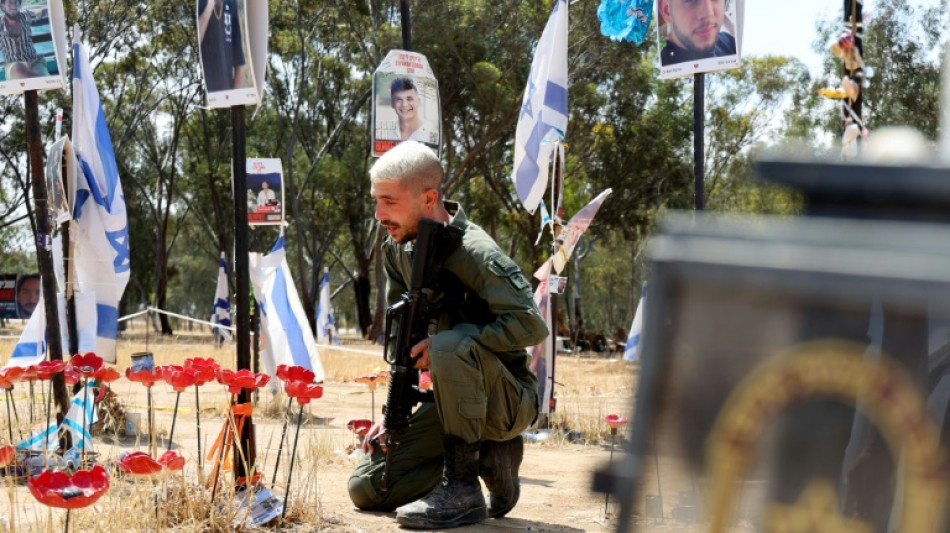
Hostages' plight casts pall over Israel's Independence Day / Photo: JACK GUEZ - AFP/File

 Kenya's economy faces climate change risks: World Bank

 Chipmaker Kioxia reports AI-driven 45-fold surge in quarterly net profit

 Far right and far left battle for power in polarised Berlin

 The last trio: S.Africa's zoo elephants await their fate
 Oil industry sees war windfall but girds for political blowback

 Amazon beats expectations with cloud and AI growth

 Blowout Microsoft results lift US stocks as oil retreats

 'Beginning of the end': Relief but no party as French wildfire winds down

 Southern Europe 'becoming more flammable' in hotter climate, experts say

 Mammoth bones found on parched bed of Danube in Bulgaria

 MEXC Lists Grvt (GRVT) with $60,000 Worth of GRVT and 10,000 USDT in Airdrop+ Rewards

 George and Amal Clooney flee French home due to wildfire

 MEXC Ventures Supports Alpha Arena's APAC Debut at Coinfest Bali

 AI data centre supplier Zhongji InnoLight slips on Hong Kong debut

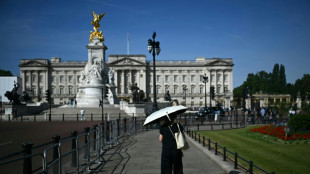 May, June heatwaves caused 2,877 extra deaths in England: govt

 BMW profit down a third as carmaker plans job cuts

 Seoul extends losses as most Asian markets drop, oil rises again

 Gambling.com Group Is Now Grandstand

 Meet the astronomer digging into the Milky Way's 'fossils'

 AI data centre supplier Zhongji InnoLight falls on Hong Kong debut

 Samsung operating profit up 1,800% in second quarter on AI boom

 Japanese population below 120 million for first time in decades

 US actor Jared Leto denies latest accusations of sexual assault

 Danube drops to 'historic lows' as fresh heatwave hits

 BTS pulls out of Grammys after Asian pop category introduction
On Israel's 76th Independence Day, victory feels far away for many agonising over the fate of dozens of hostages still held in the war-ravaged Gaza Strip.
"On one side we're still here, my daughters are still here, my family's still here, and Israel is still here," said Lishay Lavi Miran, from the Nir Oz kibbutz community, less than a kilometre (0.62 miles) from the Gaza border.
"But it's not really independence because... Omri is over there," added the 39-year-old, referring to her husband who was kidnapped and taken to the Palestinian territory on October 7 alongside about 250 other hostages.
He is among 128 captives who remain in Gaza, 36 of whom the army says are dead.
On May 14 every year, Israelis celebrate the anniversary of their state's creation.
But the more than seven-month war in Gaza and the absence of the remaining hostages have cast a long shadow over the normally joyous day.
"Like in Pesach (Jewish Passover), I didn't feel it's really a holiday of liberation. I don't feel now that there is really something to be happy about," Lavi Miran added.
Batia Holin, from the neighbouring kibbutz community of Kfar Aza, expressed similar feelings, saying "there is no independence here".
Several Kfar Aza residents are still captive in Gaza.
Holin and other residents of the southern Israeli communities surrounding the border with Gaza have been evacuated since the October 7 Hamas attack.
"Even though I am in my country, I cannot be in my home and I will not be able to return for at least three years," Holin, 71, said. "What kind of independence is this?"
And in northern Israel, where there have been a regular exchange of fire between Israeli forces and Lebanon's Hezbollah, tens of thousands have been displaced.
"They can't go home and have become refugees," lamented Holin.
The unprecedented October attack saw militants surge through Gaza's militarised border and resulted in the deaths of more than 1,170 people, mostly civilians, according to an AFP tally of official Israeli figures.
Israel responded with a relentless military campaign in the Hamas-run territory that has so far killed more than 35,100 people, according to the Gaza health ministry.
- 'Jewish national home' -
Israel is "a sovereign country where its citizens are refugees... It's terrible," Holin continued, recalling a brief return home to the community where more than 60 people were killed. She shut the door and left.
"That's it. I don't have a home anymore."
Israel was founded in 1948 on the vow of a "Jewish national home" with the promise of safety to Jews, six million of whom were murdered during the Holocaust.
Based on this promise, many migrated to the newly formed state, including Lavi Miran's grandparents who arrived from Libya and Azerbaijan.
For Palestinians, that period is known as the "Nakba", or catastrophe, marked on May 15 every year to commemorate the mass displacement of around 760,000 Palestinians during the war that accompanied Israel's creation.
During the Hamas attack, fighters ransacked Lavi Miran's home "and took a lot of things. Even after seven months, I can't touch stuff over there", she said.
"They trashed all the house. They threw all of our clothes."
But to her, the priority remains the return of the hostages. She has joined the regular protests by thousands calling on the Israeli government to reach a deal that would bring them back.
On Sunday, during a ceremony marking Memorial Day to commemorate fallen soldiers and civilian victims of attacks on Israel, army chief Herzi Halevi acknowledged he was "fully responsible" for the events of October 7.
"Hamas won the war, because they're not here," said Lavi Miran, referring to the hostages.
"Home, it's just when he comes back," she continued, referring to her husband Omri, a 47-year-old massage therapist.
"It's like a nightmare. They're in hell."
A.Zimmermann--CPN