Dangerous stray dogs pose culling dilemma in N.Africa

 Lights out in Laos as electricity exports surge

 Steven Strogatz weighs AI mathematics advances and their consequences for researchers

 Anthropic boss calls for AI slowdown, Altman and Musk agree

 French IT giant Capgemini sells subsidiary after row over ICE links

 Quebec Brokerage Qubit Insurance Announces New Data on Coverage Shortfalls as Rebuilding Costs Rise

 Lady Gaga welcomes first child with fiance: US media

 Bhutan business bets on hazelnuts for farming future

 'Widow's Bay' and 'The Pitt' are favorites for Emmys night

 Coastal erosion forces cancellation of California music festival

 Argentina's Dirty War rears its head in Venice film

 UK lawmakers throw out bill to legalise assisted dying

 US inflation steady in August, fueling Fed rate hike expectations

 New York marks 25th anniversary of 9/11 attacks

 Nepal flood reconstruction bill to be $4.78 bn: foreign ministry

 JUMO and Standard Bank launch Social Finance Framework to scale inclusive finance in Africa

 Doomsday tech: could AI really kill us all?

 French comedy show 'Call my agent' makes film comeback

 It's all coming back: Celine Dion fans gear up for Paris return

 Researchers eye AI revolution in natural disaster forecasts

 US braces for inflation report that may push Fed to hike rates

 Musk threatens legal action over documentary

 Latin America fact-check group asks Meta not to replace verification practice

 AI Risks to Enter 60–80% of Liability and Cyber Insurance Underwriting by 2028, ScienceSoft Predicts

 Tribal Launches Campfire, Letting Business and Technical Teams Build on Salesforce Together

 Stocks fall as fresh oil surge fans inflation fears

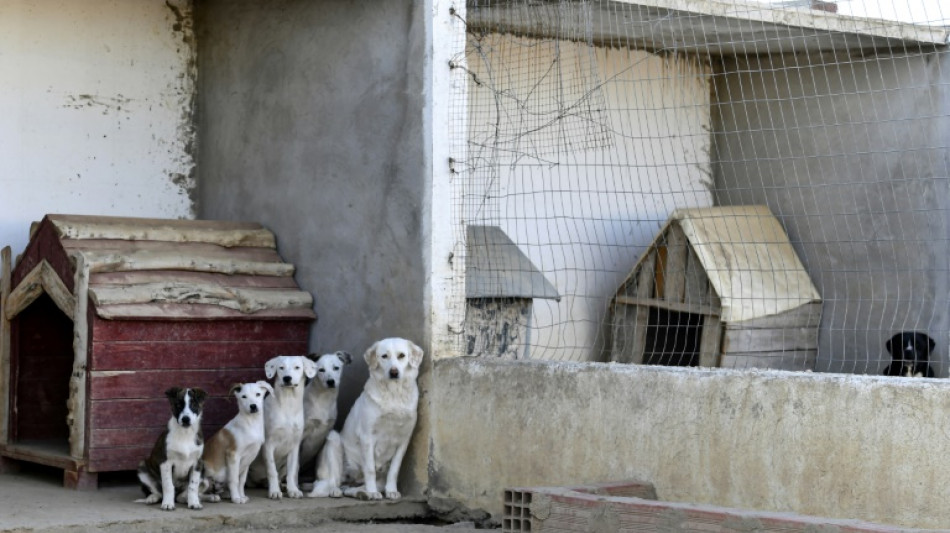
Packs of stray dogs, a common sight in North African cities, are in the crosshairs after the deaths of two schoolchildren, but animal rights groups urge more humane solutions than mass culling.
Tunisian authorities opened an inquest Friday into the death of a 16-year-old girl after she was mauled as she walked to school in the coastal city of Gabes.
Residents have complained of a rise in the stray dog population and attacks on livestock in the southwestern province, where many depend on farming for a living.
A similar tragedy struck in neighbouring Algeria last month, when a 12-year-old was killed and half-eaten by dogs in the Blida area.
Many stray dogs in the Maghreb region pose an additional threat: rabies, a virus that attacks the central nervous system and leads to a painful death.
The saliva-transmitted disease killed five dog-bite victims in Tunisia last year alone, according to the agriculture ministry, which estimates some 55 percent of strays carry the disease.
But despite vaccination campaigns, culling drives have also continued, sparking public anger and demands for more humane ways to tackle the problem.
"After being shot, dogs can end up in agony for hours," said Nowel Lakech of animal rights group PAT.
"(Municipalities) shoot them then leave them without bothering to find out whether they're dead or just injured."
Veterinarian Abdelmoumen Boumaza said Algerian municipalities only use one method to deal with the problem: "capture and slaughter", sometimes by electrocution.
- Vaccination or slaughter -
Tunisia's population of strays surged after the turmoil of the popular revolution of 2011 that kicked off the region's Arab Spring uprisings, Lakech said.
The uncertainty of the period, with mass protests and violent crackdowns, prompted some people, fearing for their safety, to get guard dogs for their homes.
But when the hounds produced puppies, many were dumped in the street, to join roaming packs of dogs sometimes numbering a dozen or more.
Today, local authorities "are continuing to slaughter dogs, even though they have vaccination and sterilisation centres," Lakech said.
One culling campaign, on the popular tourist island of Djerba, sparked a wave of public anger, as videos of wounded, suffering dogs went viral on social media.
Lakech remembers finding a dog that had bullet wounds in each of her paws but survived.
The ministry has said it wants to vaccinate up to 80 percent of strays in the capital, and has distributed anti-rabies jabs to municipalities for free.
PAT says each of Tunisia's 350 municipalities should have a centre for dealing with strays -- but for the moment, the entire country has just six.
Meanwhile, the PAT group is "doing the work of the state", Lakech said.
- 'Streets overrun by strays' -
At the Bouhanach rescue centre in Tunis, PAT volunteers look after dozens of dogs found in the streets.
The 2,600-square-metre (0.65 acre) centre was built five years ago with private donations, on a donated piece of land in the suburb of Ariana.
It has since received 500 strays and built a network of host families -- but the group says it struggles to find people willing to adopt dogs permanently.
Sometimes it even sends them overseas.
Two days a week, a team from the centre goes out looking for strays.
Chief vet Mahmoud Latiri says he has vaccinated over 2,500 animals, mostly dogs, over the past two years.
But despite the centre's spaying and neutering efforts, he warns that "without mass sterilisations, the streets will be overrun by strays".
In Morocco, local authorities organise culls of street dogs, but sometimes keep them in pounds in "horrible conditions", said Zainab Taqane of the animal rights group Irham ("have pity").
A 2019 deal between authorities and associations "to sterilise, vaccinate and identify stray dogs" has prompted hopes for better ways to tackle the issue.
Meanwhile to the east of Tunisia, in Libya, strays are dealt with in short order.
A decade of revolution and war have swamped the country with weapons and militiamen usually don't hesitate to take pot shots at feral dogs.
St.Ch.Baker--CPN