Abandoned animals join Ukraine's war exodus

 Lights out in Laos as electricity exports surge

 Steven Strogatz weighs AI mathematics advances and their consequences for researchers

 Anthropic boss calls for AI slowdown, Altman and Musk agree
 French IT giant Capgemini sells subsidiary after row over ICE links

 Quebec Brokerage Qubit Insurance Announces New Data on Coverage Shortfalls as Rebuilding Costs Rise

 Lady Gaga welcomes first child with fiance: US media

 Bhutan business bets on hazelnuts for farming future

 'Widow's Bay' and 'The Pitt' are favorites for Emmys night

 Coastal erosion forces cancellation of California music festival

 Argentina's Dirty War rears its head in Venice film

 UK lawmakers throw out bill to legalise assisted dying

 US inflation steady in August, fueling Fed rate hike expectations

 New York marks 25th anniversary of 9/11 attacks

 Nepal flood reconstruction bill to be $4.78 bn: foreign ministry

 JUMO and Standard Bank launch Social Finance Framework to scale inclusive finance in Africa

 Doomsday tech: could AI really kill us all?

 French comedy show 'Call my agent' makes film comeback

 It's all coming back: Celine Dion fans gear up for Paris return

 Researchers eye AI revolution in natural disaster forecasts

 US braces for inflation report that may push Fed to hike rates

 Musk threatens legal action over documentary

 Latin America fact-check group asks Meta not to replace verification practice

 AI Risks to Enter 60–80% of Liability and Cyber Insurance Underwriting by 2028, ScienceSoft Predicts

 Tribal Launches Campfire, Letting Business and Technical Teams Build on Salesforce Together

 Stocks fall as fresh oil surge fans inflation fears

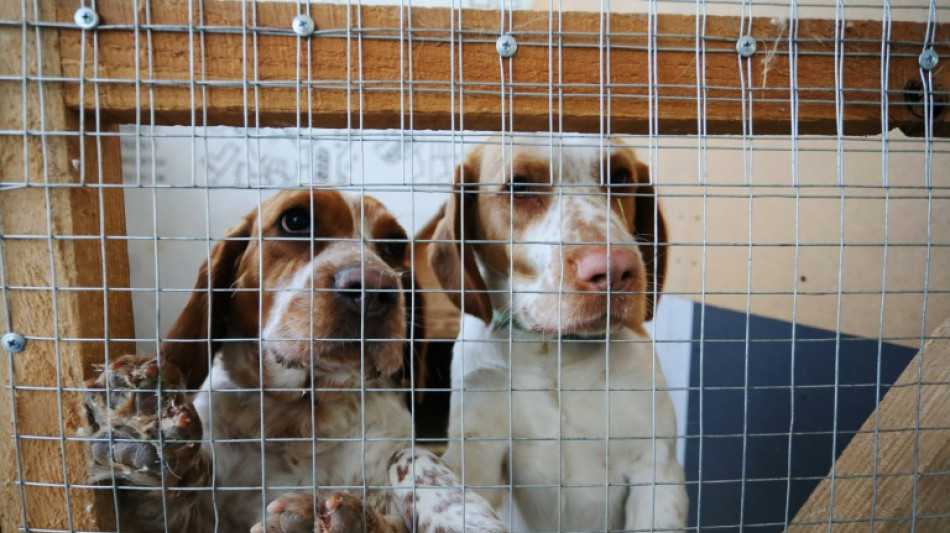
At the "Home for Rescued Animals" in the city of Lviv, exotic creatures are now sheltered alongside everyday pets -- those left behind in the rush of refugees fleeing Russia's invasion of Ukraine.
A milky-eyed wolf prowls in its enclosure. Boris the goat bathes his bedraggled face in the spring sunshine. A parliament of owls peers out from the perches of their shaded roost.
In a side building around a dozen cats from Kyiv are lodged. Dogs yowl from an industrial barn, courting volunteers arriving to walk them round nearby parkland.
"Migrants who come from Kharkiv, Kyiv, Mykolaiv and go abroad via Lviv leave animals en masse," said 24-year-old shelter manager Orest Zalypskyy.
His hilltop sanctuary in the 13th century city of Lviv was once a "haven" reserved for exotic animals, he says.
"This war has made us more engaged."
- Left behind -
The UN estimates more than 3.7 million Ukrainians have fled the country since the war began a month ago.
More than two million of those crossed the border to Poland, where AFP has witnessed droves of animal lovers ferrying dogs, cats, parrots and turtles to safety.
Lviv -- just 70 kilometres (45 miles) from the border -- has been the final stopover on Ukrainian soil for many making the journey out of the war zone.
Some soon-to-be refugees felt unable to take their pets further.
Zalypskyy estimates his shelter has taken in 1,500 animals since the war began, from migrants and shelters in "hot spots" to the east.
Between 10 and 20 were collected from Lviv's train station -- the locus of chaos in the first days of the war, where carriages and platforms heaved with desperate passengers.
"There's been no system," says Zalypskyy. "We just have many volunteers who head out and fetch them."
One dog from a war-torn region in the east did not leave its pen for two weeks. A cat abandoned by its owner of seven years is distraught.
"We are all bitten and scratched," said Zalypskyy of his volunteer teams. "The animals are very stressed."
- Onward travel -
However the animals left here do not languish. Around 200 have been adopted by the locals of Lviv, while most of the rest are taken onwards by volunteers to Germany, Latvia and Lithuania.
There are currently no cats available for adoption -- they are all bound for Poland.
By noon Zalypskyy has already signed his third set of dog adoption paperwork for the day.
Meanwhile the shelter is inundated with couples, friends and families arriving to borrow dogs for a weekend stroll.
"Ukrainians really adore animals," says 36-year-old Kateryna Chernikova. "It's just in the DNA."
With her husband Ihor, 36, and four-year-old daughter Solomiia, Chernikova fled Kyiv a week before war broke out.
The young family plus their two guinea pigs Apelsynka and Lymonadka (Orange and Lemonade) -- now live in the relative safety of Lviv, which has been largely untouched by violence.
On Saturday morning they leashed a pair of boisterous hunting dogs and set out through the shelter gates, under a fluttering Ukrainian flag.
"We're not in the war conditions itself, but it's psychologically very hard," said Chernikova.
"When you have a walk with a dog, it just feels as if you're living a normal life."
M.García--CPN