Burkina's 'Opera Village' by its groundbreaking architect

 Lights out in Laos as electricity exports surge

 Steven Strogatz weighs AI mathematics advances and their consequences for researchers
 Anthropic boss calls for AI slowdown, Altman and Musk agree

 French IT giant Capgemini sells subsidiary after row over ICE links

 Quebec Brokerage Qubit Insurance Announces New Data on Coverage Shortfalls as Rebuilding Costs Rise
 Lady Gaga welcomes first child with fiance: US media

 Bhutan business bets on hazelnuts for farming future

 'Widow's Bay' and 'The Pitt' are favorites for Emmys night

 Coastal erosion forces cancellation of California music festival

 Argentina's Dirty War rears its head in Venice film

 UK lawmakers throw out bill to legalise assisted dying

 US inflation steady in August, fueling Fed rate hike expectations

 New York marks 25th anniversary of 9/11 attacks

 Nepal flood reconstruction bill to be $4.78 bn: foreign ministry

 JUMO and Standard Bank launch Social Finance Framework to scale inclusive finance in Africa

 Doomsday tech: could AI really kill us all?

 French comedy show 'Call my agent' makes film comeback

 It's all coming back: Celine Dion fans gear up for Paris return

 Researchers eye AI revolution in natural disaster forecasts

 US braces for inflation report that may push Fed to hike rates

 Musk threatens legal action over documentary

 Latin America fact-check group asks Meta not to replace verification practice

 AI Risks to Enter 60–80% of Liability and Cyber Insurance Underwriting by 2028, ScienceSoft Predicts

 Tribal Launches Campfire, Letting Business and Technical Teams Build on Salesforce Together

 Stocks fall as fresh oil surge fans inflation fears

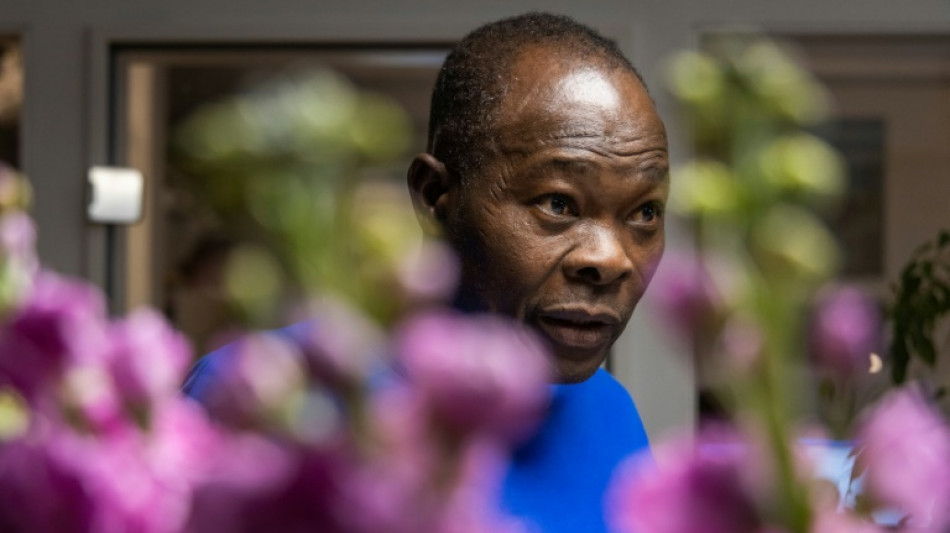
With its imposing, angular proportions made out of clay, laterite and other local building materials, the Opera Village cultural and educational project, designed by Burkina Faso-born architect Francis Kere, blends into the landscape.
It overlooks Laongo, a rural community not far from Burkina Faso's capital, Ouagadougou, and is the sort of groundbreaking design that helped Kere scoop architecture's most prestigious award, the Pritzker Prize, this week.
In so doing, the 56 year-old, who holds dual Burkina and German nationality, became the first African to win the honour in its more than 40-year history.
Built on 20 hectares (almost 50 acres) of a granite plateau, the Opera Village is shaped like a spiral, with 26 buildings housing workshops, a health centre, guest houses and a school.
Eventually, at its centre will be a performance venue and covered exhibition area with 700 seats.
Built in the early 2010s with the aim of combining art, education and ecology, the project was the brainchild of late German theatre director and filmmaker Christoph Schlingensief.
- 'The simplest material' -
Kere was hailed by the Pritzker's sponsors on Tuesday for designs that are "sustainable to the earth and its inhabitants -- in lands of extreme scarcity".
His Opera Village used local construction materials, such as clay, laterite, granite and wood to allow it to withstand the extreme heat of the region, the site's administrator Motandi Ouoba said.
"These are local materials that the architect found on site: blocks of compressed earth, bricks taken from the site, paving stones made from granite," he said.
Kere "starts with the simplest material, which we commonly share... which our parents used, and he makes something noble out of it," he added.
"It's the earth, it's all that's around us, when he brings them together, he brings to life something that is magnificent."
It also blends well with local vegetation, contributing to a sense of harmony.
- 'Bioclimatic buildings' -
The immense roofs overhang the walls and ventilation keeps the temperature in the rooms down, even when it's more than 40 degrees Celsius (104 degrees Fahrenheit) outside.
Kere ensured that "our buildings are bioclimatic, with a double ceiling and openings to dissipate hot air," Ouoba said.
The health centre's consultation and treatment rooms have dozens of long windows that slide upwards.
"With so many openings, patients feel less isolated by hospitalisation. They have a view of the landscape," doctor Issa Ouedraogo said.
The stylish classrooms filled with daylight are a far cry from the makeshift decor of many of the schools in Burkina Faso, a country battling a jihadist insurgency since 2015 that swept in from neighbouring Mali.
"The architecture of the buildings changes everything. We are in perfect classrooms because it is very hot here and not everyone can afford fans or air conditioning," said headmaster Abdoulaye Ouedraogo, who is also an actor and playwright.
Six classrooms can accommodate 181 pupils -- and there's a separate space for music, dance, theatre, plastic arts, photography and audiovisual lessons.
- 'Durable and functional' -
Opera Village also serves as a creative residency site for artists, according to Ouoba.
"It reminds us that we can get something beautiful, durable and functional from local materials," he said.
With its unique architecture, the centre attracts around 2,500 visitors every year.
Ouoba hopes that international recognition of Francis Kere will help maintain the curiosity of visitors.
"We are happy for Mr Kere but also for us who are among the first beneficiaries of his work," he said, in congratulating the architect.
Y.Jeong--CPN