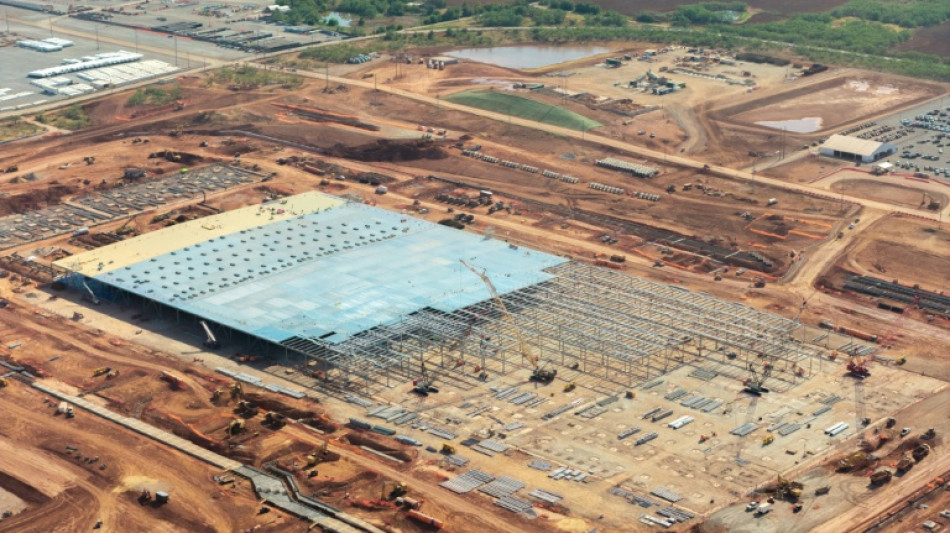
AI borrowing binge rattles US markets / Photo: Brandon Bell - GETTY IMAGES NORTH AMERICA/AFP

 American Nobel laureate in medicine hopes to illuminate the brain
 Grappling with 'homework scams,' US universities shun AI detectors

 High-flying Blazy turns to birdlife at Chanel

 'Reckless' AI firms can't control models, says whistleblower

 Norway eyes partial ban of smart glasses

 Two dead after ship catches fire, sinks in Black Sea

 US-German trio wins medicine Nobel for work on optogenetics

 Hundreds of French high schools shut as protests persist
 Sunken Silk Road city reveals Central Asia's lost history

 Research into weight-loss drugs tipped for Nobel as award week opens

 US Supreme Court hears bid to shut the door on climate suits

 Spy chief Clayton, the Trump loyalist tech bosses trust on AI

 Pro-Europe Latvian PM wins poll dominated by Russia, social worries

 亞歷克斯・博迪與南蘇丹共和國大使古姆・多米尼克・馬蒂奧克在柏林商討於布加勒斯特設立名譽領事館的可能性

 Pre-COP host Tuvalu at frontline of climate change

 Cornell president vows review in wake of alleged student gang rape

 Without lawyers, migrant children face deportation from the US

 AI needs safety layers like nuclear plants: ex-OpenAI engineer

 #IAmJaneDoe: online support campaign in US university rape case

 US regulator finds Boeing 737 MAX software bug 'not a safety concern'

 Cornell rape case exposes sexual violence at US colleges
 Argentina unveils passports-for-investment scheme
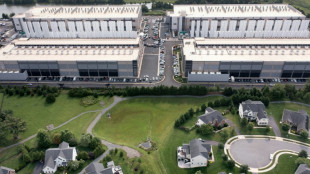 Amazon vows $1 bn for data center towns, decries 'myths'
 NY governor vows to close loophole after alleged Cornell gang rape

 NY attorney general tasked with investigating alleged Cornell gang rape

The world's richest companies can no longer rely on their massive cash piles alone to stay in the artificial intelligence race and have suddenly started borrowing massively in a shift that is sending repercussions across the world.
Rising US interest rates, including on the Treasury bonds that anchor the global economy, are sending tremors through the financial world, and some analysts point to the AI borrowing bonanza as one of the culprits.
From next to nothing in 2024, tech sector borrowing has reached around $500 billion in the nine months since January, as Google, Meta, Amazon, Microsoft and others raise debt hand over fist to finance the chips, servers and data centers that power AI.
Goldman Sachs expects a further ramp-up in 2027, to $1.2 trillion.
"This is not something that we've seen before," said Chris Della Fave, senior vice president at fundraising advisory firm Post Oak Group, who estimates that AI now accounts for 25 percent of all corporate bond issuance, up from 4 percent two years ago.
In inflation-adjusted terms, the AI sector is expected to borrow more this year than US cable operators did to build out the entire internet, or than railroad companies did during the 19th-century US rail boom.
So far, investors have eagerly snapped up the chance to lend to the tech giants, but they have demanded returns that would have been unthinkable for such blue-chip companies not long ago.
Even Meta has had to offer more than 7 percent a year, while riskier cloud data center specialists have gone above 9 percent.
The impact reaches well beyond the companies building AI -- their debt is even starting to crowd out demand for the US government bonds that anchor the financial system.
An investor who might otherwise buy a US Treasury bond "might decide to buy Microsoft" instead, said Mark Malek, chief investment officer at Siebert Financial, referring to the tech giant's bonds.
That shift pushes up the rates Washington pays to borrow, he explained.
This adds to the other force driving up US borrowing costs: inflation, fueled by the war against Iran and high energy prices.
The interest rate on 10-year US government bonds -- Wall Street's benchmark and widely seen as the most important number in global finance, setting the tone for everything from mortgages to car loans -- is now above 5.30 percent, its highest level since 2002.
- 'Sharper correction' -
Adding to the volatility, hedge funds had piled into US government bonds like never before, holding 7 percent of all those in circulation at the end of 2025, though that share has since fallen.
Hedge funds, which place big bets on markets, move their money far faster than more cautious investors such as insurers and pension funds.
Even if the war and the oil situation stabilized, Della Fave said, "I wouldn't expect the yields to dramatically reduce, to be honest, because of this influence of the AI debt situation."
Beyond the rising cost of borrowing, some are questioning the risks of betting on an AI boom that could hit a wall, as the dot-com bubble did in 2000.
Even a moderate slowdown in the frenzied pace of construction, delays on certain projects or weaker-than-expected revenue growth could trigger a shock in financial markets, Malek warned.
In late September, the Bank of England's Financial Policy Committee warned that "the risk of a sharper correction persists," particularly if concerns about the pace of AI development or adoption hit earnings expectations.
In July, amid some second-guessing about the AI boom, the tech-heavy Nasdaq index fell nearly 7 percent.
Against this backdrop, cloud specialist Oracle is sometimes seen as a bellwether.
With massive debt ($125 billion), cash reserves that shrink every quarter and a possible delay on a huge data center project in New Mexico, several warning lights are flashing for Larry Ellison's group.
"Let's say Oracle has a problem... They can't pay for something," Malek said. Trouble with its debt "could trigger contagion" across AI finance as a whole, he added.
Y.Ponomarenko--CPN