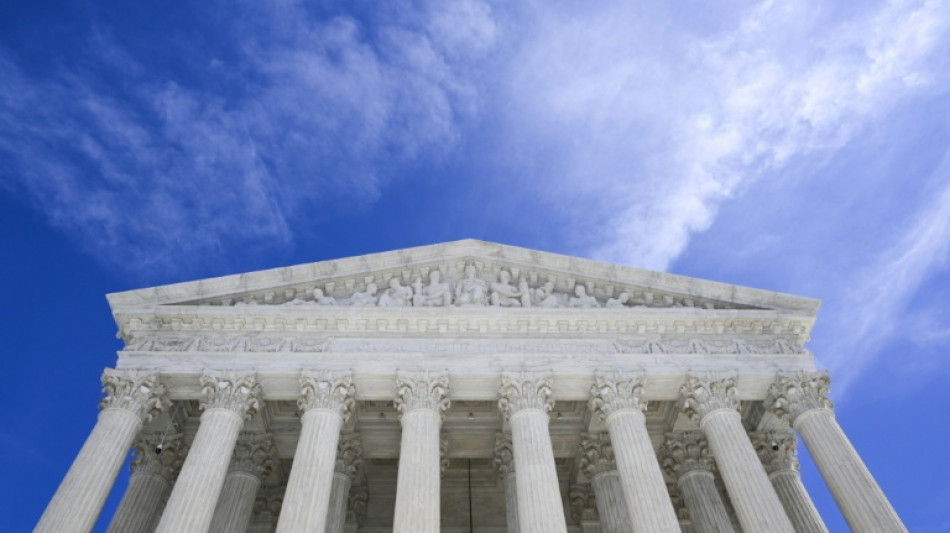
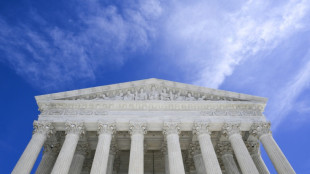
US Supreme Court hears bid to shut the door on climate suits / Photo: ROBERTO SCHMIDT - AFP/File

 Leaders to visit Pacific atoll at frontline of climate change
 Switching on brain cells: the Nobel-winning science of optogenetics

 US-German trio wins medicine Nobel for illuminating the brain
 STARCARES Equips Seven Foster Homes for Children and Young People in Tanzania

 US-German trio win medicine Nobel for work on optogenetics

 Zuckerberg skewered again on screen in 'The Social Reckoning'
 EU, China to hold Beijing talks to avert trade war

 Rubio visits Iceland as US boosts Arctic presence
 Titan FX Launches Second “Dream Beyond Borders 2.0” Brand Commercial Featuring Keisuke Honda
 Trump confirms national intelligence chief as new AI czar

 Future of French far-right star in balance after antisemitism claims

 'Act before it's too late': Tokyo residents fight for more trees

 Hungary's dwindling paprika producers battle to save signature spice

 What is fuelling French school protests?

 Trump tariffs a mixed bag for US auto industry

 Storms, flooding cause chaos on Greek holiday island of Crete

 Fresh protests to hit Spain after housing measures defeated
 Widgets & Web Offers All-Inclusive Investor Relations Websites for Public Companies, IPOs and SPACs

 Trump expected to name intel chief Clayton as AI czar: reports

 King Charles to evoke colonial 'darkest days' on Caribbean tour
 Oil prices drop on G7 fuel release, US jobs data boosts stocks

 Russia 'tearing Kyiv apart', mayor says, as strikes paralyse traffic

 US posts weak job growth data in September
 Germany's crisis-hit rail operator looks to AI future

 Hundreds of French high schools shut as new violence erupts
Dozens of climate lawsuits could live or die by a Supreme Court case to be heard Monday seeking damages from oil companies for their role in global warming and for concealing the dangers of fossil fuels.
Known as Suncor v Boulder, the dispute began in 2018 when the city and county of Boulder, Colorado, sued ExxonMobil and Suncor Energy, claiming they "knowingly caused and contributed to the alteration of the climate" while "concealing and/or misrepresenting the dangers" of their products.
Suncor operates a refinery in Colorado, while ExxonMobil has deep ties to the Rocky Mountain State. The plaintiffs say they have suffered hundreds of millions of dollars in losses from wildfires, flooding and other weather extremes stemming from climate change linked to the burning of fossil fuels.
It is one of around 40 similar suits brought by cities, states, tribes and other local jurisdictions, modeled on successful litigation against tobacco and opioid producers.
The companies contend such suits aim to impose an enormous "carbon tax" that could bankrupt the energy industry -- that they are an illegitimate attempt to regulate greenhouse gas emissions, and are essentially asking the court to make them all go away.
After failing to move the case to federal court, the companies lost bids to have it dismissed in state court and at Colorado's Supreme Court.
President Donald Trump's administration filed a brief urging the US Supreme Court to take up the case, and the justices agreed.
The court will consider whether federal law -- specifically the Clean Air Act -- preempts Boulder's claims, whether the Constitution itself bars such suits, and whether it can review the case before a trial has taken place.
If the justices focus on the last question, "that essentially just kicks the can down the road" since the wider questions would likely be raised later, Katrina Kuh, a professor of environmental law at Pace University, told AFP.
A ruling on the federal law questions, however, would matter for many pending suits.
"It could extinguish them entirely," said Kuh. Or the justices could narrow them -- allowing Colorado, for example, to apply its state law only to emissions within the state.
The questions also bear on so-called "climate superfunds" -- laws in New York and Vermont that would make polluters pay for climate resilience projects.
New York's was struck down by a federal judge last month, and an adverse Supreme Court ruling could shut the door to it being revived on appeal.
Conservative legal scholar Jonathan Adler, a William & Mary law professor who filed a brief supporting Boulder, told AFP he disagreed with the oil companies' legal theories and believed such cases are "viable" -- without offering a view on the underlying merits.
He added that Justices Amy Coney Barrett, Neil Gorsuch and Clarence Thomas bear the most watching because "all three of them have shown some skepticism towards broad preemption arguments," though he said they are also likely to be skeptical of suits of this nature.
Ahead of the hearing, ultraconservative Justice Samuel Alito recused himself after critics called on him to step aside over his oil and gas stock holdings.
Conservatives still hold a 5-3 majority without Alito, but a 4-4 split is now possible -- which would leave the Colorado ruling in place and let the case proceed to trial.
P.Kolisnyk--CPN