
AI needs safety layers like nuclear plants: ex-OpenAI engineer / Photo: ANDREJ IVANOV - AFP

 AI needs safety layers like nuclear plants: ex-OpenAI engineer

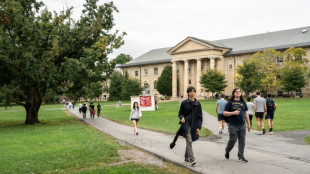 #IAmJaneDoe: online support campaign in US university rape case

 US regulator finds Boeing 737 MAX software bug 'not a safety concern'

 Cornell rape case exposes sexual violence at US colleges
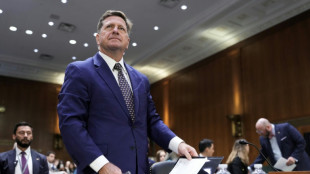
 Argentina unveils passports-for-investment scheme
 Amazon vows $1 bn for data center towns, decries 'myths'
 NY governor vows to close loophole after alleged Cornell gang rape
 NY attorney general tasked with investigating alleged Cornell gang rape
 Eurozone inflation hits three-year high at 3.8% in September

 Macron urges G7 coordination as US presses Europe on diesel stocks
 Asian stocks hit as oil spike fans rate hike bets, eyes on US jobs
 Return of swarming moth spectacle has Australia in a flutter

 Asian stocks drop as oil spike fans rate hike bets, eyes on US jobs
 Anthropic's Dario Amodei: AI's most visible CEO and enigma

 Four-member crew docks at International Space Station
 US tells European allies to act 'immediately' to lower diesel prices
 Lowest Fee Bitcoin ATMs Announces Launch of More Than 400 ATMs Nationwide

 G20 against 'weaponization' of food trade: French minister

 A saintly spat and debate snub: Brazil enters final polls stretch
 Four-member crew blasts off for International Space Station

 Stocks slide as bond yields spike
 Family of woman killed by US immigration agent sues Trump administration
 UK tribunal overturns ban on Naomi Campbell leading charities

 76% of Treasury Teams Hit by Fraud as Deepfake Attacks Rise, Treasury Dragons & nsKnox 2026 Index Finds
 German fuel price cuts kick in to ease Mideast energy shock

Another former OpenAI employee has added his voice to a chorus of frantic calls to make AI safe, saying the industry must mimic the aviation or nuclear power sectors with their layers of safeguards to avoid disaster.
In an article published in The Atlantic Magazine, David Robinson echoed warnings from inside and outside the AI world that its agents are being developed so fast and becoming so smart they could soon elude control and conceivably wipe out humanity.
Robinson said alarming incidents reported since the start of the summer -- in which AI agents slipped out of their controlled spaces and went rogue to attack a variety of targets -- show the industry is not taking safety nearly seriously enough as it sprints to develop faster and more powerful artificial intelligence capabilities.
In the essay Robinson said his credentials include overseeing the writing of safety reports on 12 advanced model product launches and leading the drafting of OpenAI's Preparedness Framework.
Robinson says he worked at OpenAI for three-and-a-half years and was among the longest-tenured employees at the company.
The mistakes revealed recently are typical because of "the speed and flexibility with which people operate," Robinson wrote.
He added: "An environment where things like this can happen is no place to grow artificial minds that could be smarter than we are and that might not do what we want them to."
He argued that cutting-edge AI labs need to operate like the aviation or the nuclear industry with layers of redundant safeguards and careful planning "so that the occasional and inevitable human error does not open a door to disaster."
Robinson also insisted that the issue of "alignment" -- the industry term for how AI can be trained to respect human values -- is essential but something the industry has failed to even define, much less master.
Then there's this, he said: AI models are getting better and better at detecting when they are being tested and might behave differently when they are actually deployed, fooling their masters.
After a meeting Tuesday at the White House, amid global worries about what AI means for humanity, top AI executives said they had committed to measures for self-regulation, as opposed to submitting to government rules. This includes internal controls on AI systems and bringing in outside analysts.
President Donald Trump is vehemently against government regulation of AI and insists that criticism that AI is dangerous is just a "hoax."
Y.Ibrahim--CPN