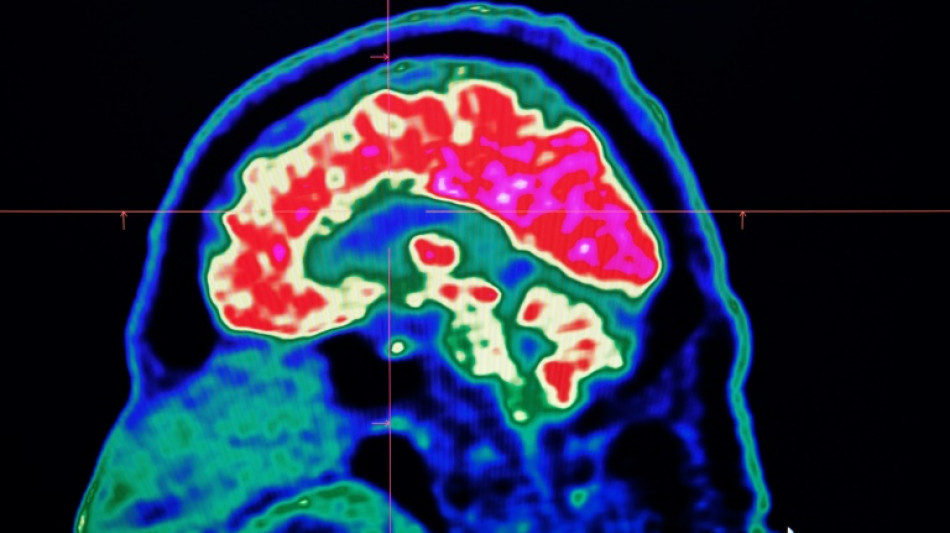
Surging nervous system disorders now top cause of illness: study / Photo: Fred TANNEAU - AFP/File

 Nigeria miners struggled to breathe in cell before 37 died: survivors

 Warren Buffett steps down as Berkshire Hathaway chairman

 Isolated Syrian-Druze city blames Damascus for shortages

 Kerry James Marshall: American 'blackness' painter celebrated in Europe

 Infantino 'must go', says German FA vice-president

 Japan's busiest rail station tests robot bins

 Backpackers fret over Australian visa crackdown

 Bank of Japan hikes rates to 31-year high to battle inflation

 AI doomsday warnings unlikely to slow IPOs but questions linger

 In Brazil's Amazon, the hunt for oil fuels hopes and fears

 Baby orangutans in India expose 'frightening' scale of trafficking

 Oversight Board blasts 'inadequate' Meta safeguards for AI deepfakes

 Harry makes first public appearance since return to UK

 Princess Diana's brother makes new explosive claims against Charles

 Trump admin overhauls key protection for endangered species

 Mbappe draws political fire over Ceuta t-shirt controversy

 Third malaria death in Germany from outbreak tied to Frankfurt airport

 AtlasClear Holdings Reports Preliminary Fiscal 2026 Revenue of Approximately $20.1 Million, Up 85%; Revenue Plus Interest Income of Approximately $21.9 Million

 'Another arrow to the quiver': World Bank posts record private capital mobilization

 Ireland to boycott Eurovision 2027 over Gaza

 India's Tata Sons reappoints N. Chandrasekaran as chairman

 Germany urges EU action against China to defend carmakers

 Japan eyes changing prostitution law to punish sex buyers

 Modi pitches India as global chipmaking hub

 Ukraine plans record defence spending in 2027

Conditions affecting the nervous system -- such as strokes, migraines and dementia -- have surged past heart disease to become the leading cause of ill health worldwide, a major new analysis said on Friday.
More than 3.4 billion people -- 43 percent of the global population -- experienced a neurological condition in 2021, far more than had previously been thought, the analysis found.
The study was carried out by hundreds of researchers led by the US-based Institute for Health Metrics and Evaluation (IHME), which has become a global reference for health statistics.
Lead study author Jaimie Steinmetz of the IHME said the results showed that nervous system conditions are now "the world's leading cause of overall disease burden".
Cases of these conditions have soared by 59 percent in the last three decades, she said, with the increase mainly driven by the fact that the world's population was ageing and growing fast.
The researchers looked at how 37 different neurological conditions affected ill health, disability and premature death across 204 countries and territories from 1990 to 2021.
This data was used to estimate how many years of healthy life were lost to each condition, called disability-adjusted life years (DALYs).
More than 443 million years of healthy life were lost to nervous system disorders globally in 2021, an 18-percent increase from 1990, the study found.
However, if the population's age and growing size was adjusted for, DALYs and deaths from these conditions actually fell by around a third, the researchers said.
Stroke, which was previously counted as a heart disease, was by far the worst neurological condition analysed, accounting for 160 million years of healthy life lost.
It was followed by a form of brain damage called neonatal encephalopathy, migraine, dementia including Alzheimer's disease, nerve damage from diabetes, meningitis and epilepsy.
Cognitive impairment from Covid-19 ranked 20th.
The main reason that nervous system conditions surpassed cardiovascular disease in the latest analysis was a recent World Health Organization classification change that moved stroke into the neurological category, Steinmetz told AFP.
The massive number of healthy years lost from these conditions was partly because several can kill children under five, such trauma during birth leading to neonatal encephalopathy, asphyxia or meningitis, she said.
"Because deaths occur at a young age, this creates a large contribution to years of life lost," she added.
Children accounted for nearly a fifth of all healthy years lost, the study found.
- 'Growing very fast' -
More than 11 million people died from the 37 neurological conditions in 2021, according to the study in The Lancet Neurology journal.
However cardiovascular disease remained the leading cause of death, killing 19.8 million people worldwide in 2022, the IHME said last year.
The most common neurological disorders were tension headaches and migraines.
The quickest-growing condition was nerve damage called diabetic neuropathy from soaring cases of diabetes.
Most of these conditions have no cure.
But there are ways to lessen the risk, including reducing rates of high blood pressure, diabetes and alcohol consumption, the researchers said.
They called for much more to be done to prevent, treat and rehabilitate the disorders, which disproportionately affect poorer countries.
"The worldwide neurological burden is growing very fast and will put even more pressure on health systems in the coming decades," warned study co-author Valery Feigin.
U.Ndiaye--CPN