Breeding ban for bulldogs and cavaliers in Norway

 Wildfires push endangered Sumatran elephants to brink: Indonesian NGO

 Bank of Japan set to raise rates under pressure from inflation, US

 EU chief to unveil social media, gaming curbs for under-15s

 'Resident Evil' film brings video game's ethos to the big screen

 i-payout Expands U.S. Money Transmitter Licensing Footprint and Advances European EMI Strategy

 US Senate crypto bill collapses amid partisan deadlock

 OpenAI, Anthropic and Google are working to create an AI standards body

 Protesting shepherds, farmers clash with Romanian police

 Foundation Lets Ledger Users Switch to Open Source Without Starting Over

 EU to propose curbing social media, online games for under 15s

 FX Junction Reaches 40,600 Members and 26 Million Trades

 'We unleashed the beast': the world's fears and hopes about AI

 Hospitality leaders ask Burnham to halve VAT amid rising costs

 Worcestershire invited to nominate groups for 2027 King’s volunteer award

 Berlin's run-down public spaces at heart of election campaign

 'Widow's Bay' and 'The Pitt' win big at Emmy Awards

 Most markets drop as oil extends gains ahead of expected US rate hike

 Sri Lanka's famed beach shack battles demolition

 Vserv targets ₹1,000 crore revenue by 2030 through AI expansion
 India prohibits bank fees on UPI payments up to ₹2,000

 Brazil's Amazon defender Raoni has cancer

 Trump rejects AI slowdown concerns as UN urges coordinated controls

 Higher wages draw migrant workers to Kashmir despite attacks

 Oil supply concerns and AI warnings weigh on global markets

 'I am the hoax buster': Trump rejects AI danger warnings

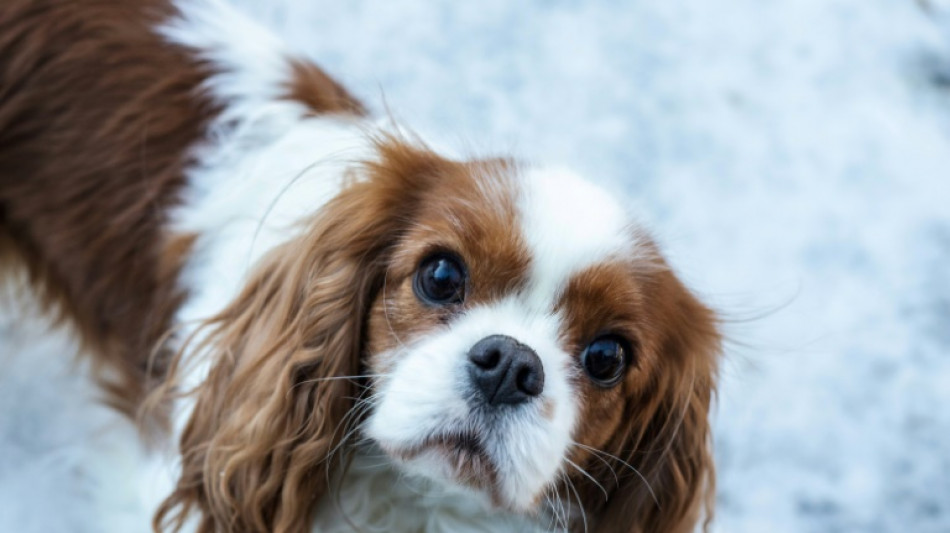
Cavalier King Charles Spaniels are known for their tiny heads, English bulldogs for their smushed wrinkled muzzles -- traits their owners love.
But in an unprecedented move, Norway has banned the breeding of these dogs because being cute is causing them suffering.
In a recent ruling, the Oslo district court banned the breeding of the two purebreds on the grounds that it inflicts harm on them, in violation of Norwegian animal protection laws.
Hailed by animal rights activists and criticised by breeders, the verdict comes amid a growing debate: is the quest for cute pets going to extremes at the expense of the animals' well-being?
"A lot of our breeds are highly inbred and have a massive burden of disease," Ashild Roaldset, the head of the Norwegian Animal Welfare Society, told AFP.
Her organisation brought the legal case against dogbreeding companies and individuals.
"We need to change the way we breed dogs," she said. "The way we breed dogs was maybe acceptable 50 years ago but is not acceptable anymore."
Inbreeding has caused the two breeds to develop a "disease guarantee", a long list of hereditary illnesses that affect most individuals, if not all.
Fierce-looking but gentle -- and since World War II a symbol of British tenacity -- the English bulldog has developed respiratory difficulties due to its flattened muzzle, as well as dermatological, reproductive and orthopaedic problems.
More than half of all bulldogs born in Norway over the past 10 years had to be delivered by Caesarian section.
"The race's genetic inability to give birth naturally is reason alone for bulldogs not to be used for breeding," the district court judges wrote in their ruling.
As for cavaliers -- which have won the hearts of many over the years, from Queen Victoria to Ronald Reagan and Sylvester Stallone -- they often suffer headaches because their skull is too small. They also have heart and eye problems.
Roaldset said these diseases cannot be bred away with other purebreds from abroad due to an overall lack of genetic diversity.
The two breeds will eventually be led to extinction, she said.
"And it's going to be painful for them because they're just going to get more and more diseases," she said.
- 'Puppy factories' -
The January 31 court ruling has been appealed and has therefore not come into force yet.
But it delivered a shock to professional breeders.
"In the judgement it was said that the dogs are born with headaches, I cannot understand that," says Lise Gran-Henriksen, who has been a breeder for 25 years, as she watches five of her Cavalier King Charles Spaniels frolic on the ice outside her Oslo home.
"If so, they would not be so happy. They are happy dogs that run around and look very healthy, and that's what I think they are," she insists.
Professional breeders readily admit that the two breeds do pose "challenges", but say these can be overcome by selective breeding of individuals that meet certain requirements.
In addition, they note that the court ruling does not ban the ownership, sale or import of bulldogs or cavaliers -- only their breeding.
Walking her English bulldog Oscar in an Oslo park, Anne Grethe Holen fears a rise in "undocumented dogs" from "puppy factories" abroad.
"Demand will not decline. And the dogs that are sold will be more sick," she says.
"They won't be subjected to any veterinary requirements and you won't know anything about their pedigree," she adds.
Meanwhile, the Animal Welfare Society says the future of the two breeds lies in crossbreeding them with other types of dogs to get rid of their genetic flaws.
"If the cavalier gets a slightly larger skull to fit their brain, it's still... going to be the cutest dog in the world," says Roaldset.
"And if the bulldog gets a little bit less wrinkly, a little bit longer snout and a better skeleton, it's not going to be a horrible dog.
"It's going to look a little bit different, but you can still call it a bulldog."
A.Samuel--CPN