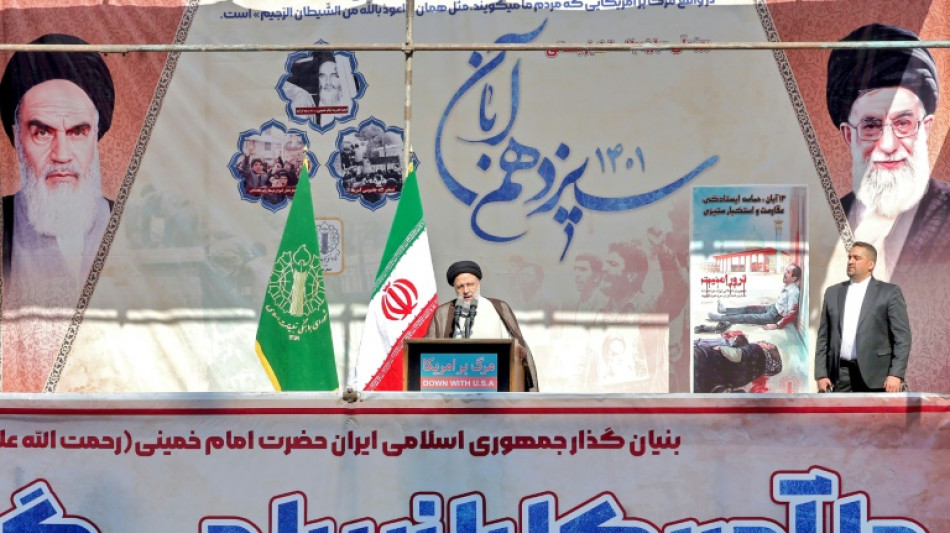
Iran seeks to quell protests with death sentences, activists warn / Photo: ATTA KENARE - AFP

 Kenya's economy faces climate change risks: World Bank
 Deja vu? Trump accused of economic denial and physical decline
 Hungary winemakers fear disease may 'wipe out' industry

 'Stop the slaughter': French farmers block roads over cow disease cull
 Why SpaceX IPO plan is generating so much buzz
 World stocks mostly slide, consolidating Fed-fuelled gains
 UK's king shares 'good news' that cancer treatment will be reduced in 2026
 Salah admired from afar in his Egypt home village as club tensions swirl
 Iran frees child bride sentenced to death over husband's killing: activists
 France updates net-zero plan, with fossil fuel phaseout
 EU agrees recycled plastic targets for cars

 British porn star fined, faces imminent Bali deportation
 Indonesia floods were 'extinction level' for rare orangutans
 Japan bear victim's watch shows last movements
 French indie 'Clair Obscur' dominates Game Awards
 Asian markets track Wall St record after Fed cut
 Vaccines do not cause autism: WHO
 'In her prime': Rare blooming of palm trees in Rio

 OpenAI beefs up GPT models in AI race with Google
 Cyclone causes blackout, flight chaos in Brazil's Sao Paulo
 US bringing seized tanker to port, as Venezuela war threats build

 Time magazine names 'Architects of AI' as Person of the Year
 OpenAI, Disney to let fans create AI videos in landmark deal
 Thyssenkrupp pauses steel production at two sites citing Asian pressure
 Stocks mixed as US rate cut offset by Fed outlook, Oracle earnings
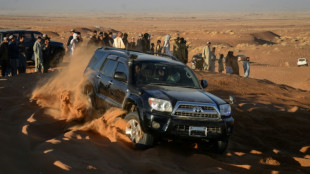
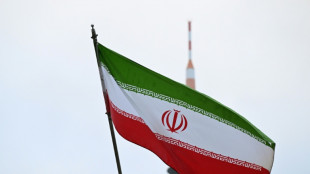
Iran, already one of the world's most prolific users of the death penalty, is planning to use capital punishment as a means to quell the protest movement by spreading a climate of fear in the population, activists warn.
The judiciary has already confirmed six death sentences over the protests, with Amnesty International saying that based on official reports at least 21 people currently on trial are charged with crimes that could see them hanged.
Iran currently executes more people annually than any nation other than China, according to rights groups.
Amnesty International says Iran put to death at least 314 people in 2021, while Norway-based Iran Human Rights (IHR) says the number of executions this year is already much higher at 482.
Campaigners warn that not only do the authorities plan to execute protesters on vague charges linked to alleged rioting or attacks on security forces during the demonstrations, but also step up hangings not related to the protest movement, notably of prisoners convicted on drug-related charges.
Amnesty said the authorities' pursuit of the death penalty is "designed to intimidate those participating in the popular uprising... and deter others from joining the movement".
The strategy aims to "instill fear among the public", it added, condemning a "chilling escalation in the use of the death penalty as a tool of political repression and the systematic violation of fair trial rights in Iran".
- 'Strong signal' -
The Iranian judiciary has conspicuously not named the six convicts already sentenced to death in a possible bid to prevent their names becoming rallying causes or hashtags on social media.
They have all been convicted either of "enmity against God" ("moharebeh") or "corruption on earth" ("efsad-e fel arz"), sharia-related charges that are capital crimes in Iran and which rights activists have long feared are used against opponents of the regime.
Amnesty has nonetheless said the nature of the charges makes it possible to deduce the names of those sentenced so far.
They include Mohammad Ghobadlou, a young man whose mother has been seen on social media making an impassioned plea for her son's life.
Among the 21 facing the death penalty is one woman, named by Amnesty as Farzaneh Ghare-Hasanlou, as well as her husband Hamid, a medical doctor.
Another risking capital punishment is Saman Seydi, also known as Saman Yasin, a Tehran-based rapper from Iran's Kurdish minority who has backed the protests on social media and is accused of firing into the air and harming national security.
Rights groups are calling for concerted action from the international community to stop the executions, especially with the UN Human Rights Council set to hold a rare special session on Iran on Thursday.
Campaigners had already noticed a troubling uptick in capital punishment this year even before the protest movement got underway, with Iran again executing large numbers on drug-related charges despite recent moves to limit such executions.
Rights groups also complain that disproportionately large numbers from Iran's ethnic minorities are executed, including Kurds but especially Baluch from the country's impoverished southeast.
"Unless the international community sends a very, very strong signal to the Islamic republic authorities, we will be facing mass executions," the director of IHR Mahmood Amiry-Moghaddam told the World Congress against the Death Penalty in Berlin.
He pointed to "not just political executions, but the ones that cost the least politically, particularly drug-related charges".
- 'Barrier of fear' -
The protests sparked by the death of Mahsa Amini, who had been arrested by morality police in Tehran, have turned into the biggest challenge for the authorities since the 1979 Islamic revolution.
Authorities in Iran describe the protests as "riots" with judiciary chief Gholamhossein Mohseni Ejei saying those on trial are "affiliated with counter-revolutionary elements" and will be "punished according to the law".
Earlier this month, 227 out of Iran's 290 MPs voted for a motion urging the use of the death penalty in relation to the protests, calling on the judiciary to apply "an eye for an eye" retributive justice.
The past year had already seen Iranians in and outside the country mobilising against the use of the death penalty, with the Persian hashtag #edam_nakon (#dont_execute) becoming a viral trend.
Among those currently languishing in jail in Iran is film director Mohammad Rasoulof, who was arrested even before the protests began and whose anti-death penalty film "There is No Evil" won the top prize at the 2020 Berlin film festival.
"The Islamic republic has used the death penalty to uphold the barrier of fear for 43 years," said Amiry-Moghaddam.
"The current protests have seen the collapse of that barrier which the Iranian authorities are now attempting to rebuild with the current repression and death sentences," he added.
A.Mykhailo--CPN