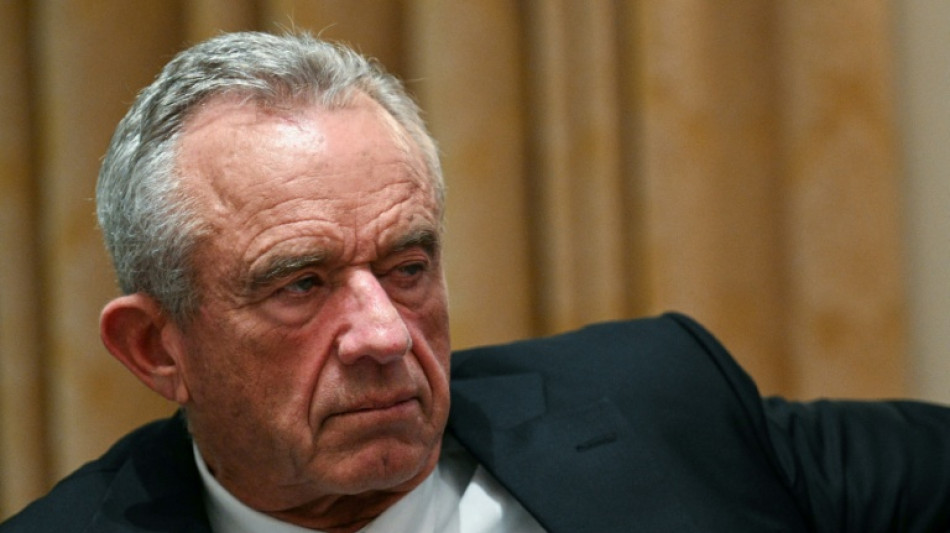
Vaccines do not cause autism: WHO / Photo: Jim WATSON - AFP

 France's Macron, Canada's Carney announce closer ties

 AI 'warning shots' focus Beijing on national security risks

 Philippine tribe in limbo over US-led tech hub

 Saudi-led coalition says Houthis fired ballistic missile at Riyadh
 Cuba works to restore power after another blackout
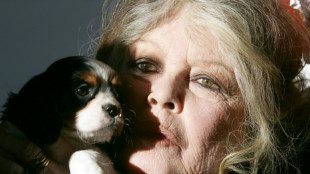 Brigitte Bardot widower slams sale of star's belongings

 Indonesia accepts Malaysia's help to tackle wildfires

 Nvidia, OpenAI CEOs to attend Xi dinner at White House

 Cuba hit with seventh major blackout of the year

 Nigeria miners struggled to breathe in cell before 37 died: survivors

 Warren Buffett steps down as Berkshire Hathaway chairman

 Isolated Syrian-Druze city blames Damascus for shortages

 Kerry James Marshall: American 'blackness' painter celebrated in Europe

 Infantino 'must go', says German FA vice-president

 Japan's busiest rail station tests robot bins

 Backpackers fret over Australian visa crackdown

 Bank of Japan hikes rates to 31-year high to battle inflation

 AI doomsday warnings unlikely to slow IPOs but questions linger

 In Brazil's Amazon, the hunt for oil fuels hopes and fears

 Baby orangutans in India expose 'frightening' scale of trafficking

 Oversight Board blasts 'inadequate' Meta safeguards for AI deepfakes

 Harry makes first public appearance since return to UK

 Princess Diana's brother makes new explosive claims against Charles

 Trump admin overhauls key protection for endangered species

 Mbappe draws political fire over Ceuta t-shirt controversy

A new analysis by the World Health Organization reaffirmed there is no link between vaccines and autism -- contrary to theories being propagated in the United States.
The US Centers for Disease Control and Prevention (CDC) last month revised its website with language that undermines its previous, scientifically-grounded position that immunisations do not cause the developmental disorder autism.
Years of research demonstrate that there is no causal link between vaccinations and autism or other neurodevelopmental disorders.
But Robert F. Kennedy Jr, the nation's health chief, has long voiced anti-vaccine rhetoric and inaccurate claims connecting the two.
WHO chief Tedros Adhanom Ghebreyesus told a press conference in Geneva that autism was not a side-effect of vaccines.
"Today, WHO is publishing a new analysis by the Global Advisory Committee on Vaccine Safety that has found, based on available evidence, no causal link between vaccines and autism," the UN health agency chief said.
The committee looked at 31 studies in multiple countries over 15 years relating to vaccines containing thiomersal -- a preservative that prevents bacterial and fungal contamination in multidose vials -- and aluminium adjuvants.
"The committee concluded that the evidence shows no link between vaccines and autism, including vaccines containing aluminium or thiomersal," said Tedros.
"This is the fourth such review of the evidence, following similar reviews in 2002, 2004 and 2012. All reached the same conclusion: vaccines do not cause autism.
"Like all medical products, vaccines can cause side effects, which WHO monitors. But autism is not a side effect of vaccines."
- Flawed 1998 study -
A purported connection between the measles, mumps and rubella (MMR) vaccine and autism stems from a flawed study published in 1998, which was retracted for including falsified data. Its results have not been replicated and are refuted by voluminous subsequent research.
"The study was later shown to be fraudulent and retracted, but the damage had been done, and the idea has never gone away," said Tedros.
Kennedy has a long history of promoting dubious claims, many of which have become articles of faith among adherents to his "Make America Healthy Again" movement, a vital part of President Donald Trump's fractious Make America Great Again coalition.
The CDC website edits were met with anger and fear by career scientists and other public health figures, including from within the agency, who have spent years fighting against false information.
Tedros said that over the past 25 years, under-five mortality has plunged by more than half, from 11 million deaths a year to 4.8 million, with vaccination being a major reason behind the drop.
"Vaccines are among the most powerful, transformative inventions in the history of humankind," he said.
"Vaccines save lives from about 30 different diseases, including measles, cervical cancer, malaria and more."
Ng.A.Adebayo--CPN